Top 70+ Project Manager Interview Questions and Answers (2026 Guide)
Top 70+ Project Manager Interview Questions and Answers (2026 Guide)
Landing a project management position requires far more than reciting textbook definitions. Today’s hiring panels look for leadership, emotional intelligence, and situational adaptability.
Rigid, scripted answers straight out of a manual no longer cut it. Modern organizations seek authentic leaders—professionals who can navigate Hybrid frameworks, manage high-stakes stakeholder expectations, and lead teams through digital transformation.
Whether interviewing to lead complex technical integrations or managing cross-functional enterprise teams, the core requirement remains consistent: interviewers want to see your real-world problem-solving logic.
This comprehensive guide breaks down the top 70+ foundational, behavioral, and scenario-based questions across five distinct categories to help you prepare with total clarity.
1. The Modern Interview Landscape: What Employers Look For
In modern interviews, panels evaluate candidates across three primary inquiry types:
- Honest Inquiries: Direct questions evaluating your resume, past project delivery, and standard operating procedures.
- Systematic Stumpers: Deep-dive questions testing your mastery of Agile, Predictive (Waterfall), and Hybrid methodologies.
- scenario-based project manager interview questions: Complex, real-world dilemmas designed to observe your decision-making under pressure.
Adopting a value-first mindset—prioritizing outcomes, clear communication, and servant leadership over rigid task-tracking—is essential to answering these effectively.
2. Category 1: Foundational & Behavioral Questions (Q1–Q15)
Q1: Tell me about your last project.
How to Answer: Structure your response using the STAR method (Situation, Task, Action, Result). State the business context, your specific leadership actions, and the final measurable outcome.
Q2: How do you choose between Agile and Predictive (Waterfall) methodologies?
How to Answer: Demonstrate flexibility. Explain that Predictive suits fixed-scope, strictly regulated environments, whereas Agile fits iterative products needing continuous feedback. For a deeper breakdown of this choice, review our guide on Agile vs. Predictive Project Management.
Q3: How do you define a successful project?
How to Answer: Look beyond delivering “on time and on budget.” True success lies in delivering measurable business value and aligning stakeholder expectations.
Q4: How do you handle project charter creation?
How to Answer: Explain how you collaborate with the project sponsor to establish clear objectives, success criteria, and high-level scope boundaries before team onboarding.
Q5: What is your approach to resource allocation?
How to Answer: Discuss balancing team capacity, skill availability, and project priorities using resource leveling and smoothing techniques.
Q6: How do you handle shifting business priorities mid-project?
How to Answer: Explain your change control process, emphasizing impact assessment on scope, cost, and schedule before seeking sponsor approval.
Q7: Describe a project that failed. What did you learn?
How to Answer: Take accountability. Outline the root cause, immediate recovery steps, and long-term lessons applied to subsequent projects.
Q8: How do you manage team motivation during prolonged work cycles?
How to Answer: Focus on servant leadership: recognizing incremental wins, removing daily friction, and maintaining open communication.
Q9: What project management tools do you prefer, and why?
How to Answer: Focus on how tools enable team collaboration and visibility rather than the software itself.
Q10: How do you establish project governance?
How to Answer: Outline reporting structures, escalation pathways, and review cadences that ensure transparency across leadership.
Q11: How do you manage a project with an undefined scope?
How to Answer: Recommend an iterative, Agile approach to refine requirements progressively through sprint cycles.
Q12: How do you ensure quality control on deliverables?
How to Answer: Explain your quality management plan, distinguishing between quality assurance (process reviews) and quality control (deliverable testing).
Q13: What is your experience with Hybrid project delivery?
How to Answer: Provide examples where high-level planning followed Predictive models while execution utilized Agile sprints.
Q14: How do you track project performance?
How to Answer: Highlight key metrics like Earned Value (CPI/SPI), burndown charts, and milestone completion tracking.
Q15: How do you onboard new team members mid-way through a project?
How to Answer: Detail your documentation process, pairing strategies, and clear goal setting to reduce ramp-up time.
3. Category 2: Scenario-based project manager interview questions (Q16–Q35)
Scenario-based questions evaluate how you make decisions under pressure and resolve conflicts. Use the STAR method (Situation, Task, Action, Result) to structure your responses.
Q: How do you handle severe scope creep when a client demands additional features without extending the deadline?
Why they ask this: To test your change control discipline and negotiation skills.
How to Answer: “In a previous rollout, a client requested major dashboards right before launch. Instead of refusing, I quantified that adding these would delay the release by three weeks. I proposed a phased rollout: Phase 1 on schedule with core functionality, and Phase 2 later. The client agreed, and the change was formalized.”
Q: Two senior team members have an ongoing technical disagreement that is stalling progress. How do you resolve it?
Why they ask this: To test conflict resolution techniques.
How to Answer: “I brought both into a private session and reframed the problem around our non-negotiables: latency, security, and timeline. By having them present their approaches against those criteria, we found a compromise that combined Option B with targeted caching. Refocusing on objectives diffused the tension.”
Q16: Your project is two weeks behind schedule. What immediate steps do you take?
How to Answer: Identify root causes before acting. Evaluate schedule compression techniques like crashing or fast-tracking, and communicate realistic updates to stakeholders. Review effective pacing strategies in our PMP Time Management and Pacing Guide.
Q17: How do you manage a difficult or resistant stakeholder?
How to Answer: Emphasize emotional intelligence. Schedule a direct conversation to understand their underlying objectives, address concerns, and document agreed alignments.
Q18: A key team member resigns right before a major launch. How do you recover?
How to Answer: Assess critical path impact immediately, redistribute high-priority tasks, and update executive sponsors on contingency plans.
Q19: Two senior technical leads disagree on system architecture. How do you resolve it?
How to Answer: Facilitate an objective evaluation based on project goals, architectural constraints, and risk profiles to reach a consensus.
Q20: Your project budget is cut by 20% mid-execution. How do you proceed?
How to Answer: Perform a scope-re-prioritization analysis using MoSCoW prioritization, presenting options to the sponsor for scope adjustment.
Q21: A client demands a major feature addition without adjusting timeline or budget. How do you respond?
How to Answer: Walk through the formal change request process, showing clear data on trade-offs regarding cost, schedule, and risk.
Q22: You discover a critical bug two days before production release. What do you do?
How to Answer: Convene a triage meeting with technical leads and business owners to evaluate workarounds versus delaying release.
Q23: Your team consistently misses sprint commitments. How do you address this?
How to Answer: Review historical velocity during retrospectives, analyze estimation accuracy, and adjust capacity planning.
Q24: Executive leadership asks for a status report in 10 minutes. What do you present?
How to Answer: Deliver a concise executive summary focusing on overall health (RAG status), key milestones, top risks, and required decisions.
Q25: A vendor fails to deliver a critical component on time. How do you handle it?
How to Answer: Review contract terms, activate contingency plans, and engage vendor management for remediation.
Q26: How do you manage scope creep when stakeholders keep making “small” requests?
How to Answer: Enforce a clear change management baseline, logging every request in the change log for evaluation.
Q27: How do you handle a situation where your project relies on another team that is delaying deliverables?
How to Answer: Establish cross-team dependency tracking, elevate visibility in joint syncs, and escalate through governance channels if necessary.
Q28: How do you manage project risks that turn into active issues?
How to Answer: Transition the risk from the risk register to the issue log, execute the planned response, and assign clear ownership.
Q29: What do you do if your project sponsor loses interest or stops attending reviews?
How to Answer: Realign project metrics directly to current executive priorities and schedule a brief 1-on-1 to re-engage them.
Q30: How do you handle working with a remote, multi-time-zone team?
How to Answer: Implement asynchronous communication norms, clear documentation standards, and flexible meeting cadences.
Q31: How do you manage ethical dilemmas on a project?
How to Answer: Ground your decision-making in corporate compliance standards and the PMI Code of Ethics and Professional Conduct.
Q32: What steps do you take when project assumptions turn out to be false?
How to Answer: Log the change, re-evaluate constraints, update risk assessments, and communicate updates to impacted leads.
Q33: How do you balance speed vs. quality when pressure mounts?
How to Answer: Maintain non-negotiable quality baselines while exploring trade-offs in scope or phased delivery options.
Q34: How do you conduct a lessons-learned session for a troubled project?
How to Answer: Create a psychological safety zone focusing on process improvements rather than personal fault.
Q35: How do you handle conflict between business units competing for the same project resources?
How to Answer: Align resource allocation with strategic enterprise goals via PMO governance channels.
4. Interview Questions for Experienced Project Managers
Q: How do you manage executive stakeholders who attempt to bypass the formal governance process?
Why they ask this: To see if you have the executive presence to maintain project boundaries.
How to Answer: “When a VP asked a lead engineer to build an unvetted feature, I stepped in. I met with the VP, acknowledged the urgency, but explained how diverting the developer would jeopardize two deliverables tied to organizational OKRs. I offered to expedite the request through the next Change Control Board (CCB) instead, maintaining governance.”
Q: How do you track project financial health beyond basic budget variance?
Why they ask this: To confirm proficiency in cost management and Earned Value Management (EVM).
How to Answer: “I use Cost Performance Index (CPI) and Schedule Performance Index (SPI) to measure real efficiency. I regularly calculate Estimate at Completion (EAC) to forecast our final spend trajectory early enough to take corrective action.”
5. Category 3: Agile, Scrum, & Framework Questions (Q36–Q50)
Q36: How do you facilitate daily stand-ups to keep them effective and short?
How to Answer: Maintain focus on progress, daily goals, and blocker identification, moving deep technical discussions offline. Explore sprint optimization techniques in our guide to Essential Scrum Events.
Q37: What is the difference between a Product Manager and a Product Owner?
How to Answer: Product Managers focus on customer discovery and market strategy, whereas Product Owners focus on backlog management and team execution.
Q38: How do you handle user stories that are too large for a single sprint?
How to Answer: Use story splitting techniques (e.g., by workflow steps, business rules, or data variations) to create testable backlog items.
Q39: What metrics do you track in Agile projects?
How to Answer: Highlight Velocity, Burndown/Burnup charts, Cumulative Flow Diagrams, and Cycle Time.
Q40: How do you manage technical debt in Agile teams?
How to Answer: Allocate a percentage of capacity each sprint specifically for refactoring and technical debt reduction.
Q41: How do you facilitate Sprint Planning when team estimates vary wildly?
How to Answer: Use Planning Poker or Planning by Abstraction to drive consensus discussions around assumptions.
Q42: What is the Definition of Done (DoD) and why is it critical?
How to Answer: Explain DoD as the shared agreement defining quality and completion criteria required for product increment release.
Q43: How do you handle external interruptions during an active Sprint?
How to Answer: Shield the development team from mid-sprint scope changes unless the Product Owner cancels the sprint due to strategic shifts.
Q44: What is the difference between Scrum and Kanban?
How to Answer: Scrum uses fixed-length sprints and predefined roles; Kanban uses continuous flow and Work-In-Progress (WIP) limits.
Q45: How do you run a Sprint Retrospective that generates real action items?
How to Answer: Focus on concrete, measurable improvements and assign clear owners for top action items in the next sprint.
Q46: What is a Minimum Viable Product (MVP)?
How to Answer: The simplest version of a product required to validate core business hypotheses with early users.
Q47: How do you manage backlog prioritization?
How to Answer: Utilize frameworks like MoSCoW, WSJF (Weighted Shortest Job First), or Value vs. Effort matrices.
Q48: What is the role of a Servant Leader in Agile?
How to Answer: Removing organizational roadblocks, coaching team autonomy, and fostering psychological safety.
Q49: How do you scale Agile across multiple teams?
How to Answer: Discuss frameworks like SAFe, LeSS, or Scrum of Scrums, emphasizing alignment and dependency management.
Q50: How do you transition a traditional team to Agile mindset?
How to Answer: Focus on cultural principles—collaboration, feedback, iterative learning—before introducing tooling and rituals.
6. Category 4: Tech, AI, & Strategic Career Questions (Q51–Q65)
Q51: How do you manage compensation discussions during an interview?
How to Answer: Ground negotiation in established benchmark data. Reference regional and market trends, such as our analysis of PMP Salary Expectations in India vs. Global Averages.
Q52: How do you prepare to move into Technical Project Manager (TPM) roles?
How to Answer: Emphasize technical fluency and systems design awareness. For detailed steps, refer to our guide on How to Become a Technical Project Manager.
Q53: How do you evaluate Earned Value Management (EVM) metrics during project tracking?
How to Answer: Explain CPI and SPI interpretation. Review formulas using our PMP EVM Formulas Cheat Sheet.
Q54: How do you demonstrate project management experience without an official PM title?
How to Answer: Highlight cross-functional leadership, budget management, and delivery experience. Read our advice on Becoming a Project Manager with No Prior Experience.
Q55: How do you handle AI tool adoption within your project workflows?
How to Answer: Focus on human-in-the-loop validation, data privacy, and leveraging automation for meeting notes and scheduling.
Q56: What is your approach to managing cloud infrastructure project deployment?
How to Answer: Discuss environment staging, security compliance, CI/CD pipeline integration, and cloud cost management.
Q57: How do you handle cybersecurity risk planning?
How to Answer: Integrate security audits and compliance reviews directly into definition-of-done criteria and risk logs.
Q58: How do you manage third-party API integration dependencies?
How to Answer: Set up early interface agreements, mock service testing, and fallback error-handling procedures.
Q59: How do you communicate complex technical blockers to C-level executives?
How to Answer: Translate technical jargon into business language focusing on cost, timeline, customer impact, and recommended solutions.
Q60: How do you evaluate technical debt vs. new feature delivery?
How to Answer: Quantify the operational cost of technical debt against potential revenue from new feature releases.
Q61: What role does data analytics play in your project monitoring?
How to Answer: Utilize velocity charts, cycle time trends, and automated dashboard reporting to make data-backed decisions.
Q62: How do you ensure regulatory compliance (e.g., GDPR, HIPAA) in tech projects?
How to Answer: Partner with legal and compliance teams early during requirement gathering to embed privacy-by-design.
Q63: How do you manage software release management across multiple environments?
How to Answer: Coordinate automated deployment strategies, rollback protocols, and clear release windows.
Q64: How do you manage remote technical talent engagement?
How to Answer: Build clear documentation standards, flexible core hours, and structured virtual syncs.
Q65: How do you approach continuous professional learning in tech?
How to Answer: Detail ongoing certifications, industry community participation, and hands-on tool experimentation.
7. IT & Technical Project Manager Interview Questions
Q: How do you bridge the gap between technical engineering teams and non-technical business clients?
Why they ask this: Technical PMs must act as translators between these groups.
How to Answer: “When engineers need to refactor a database, I don’t explain normalization to the sponsor. I present it in business terms: ‘Investing two sprints into this upgrade prevents outages during Q4 sales.’ Conversely, I explain business demands to engineers in terms of maintenance and reliability.”
Q: How do you choose between Agile, Waterfall, or a Hybrid approach for a technical project?
Why they ask this: To ensure you are pragmatic rather than dogmatically attached to one methodology.
How to Answer: “If requirements are fluid (like a web app), I use Agile. If it involves physical infrastructure, Waterfall is necessary. For most enterprise software, I use a Hybrid model: predictive milestone planning at the governance level, with Agile sprint execution at the engineering level.”
8. Category: Strategic Questions YOU Should Ask the Interviewer (Q66–Q70+)
Q66: “What is the biggest challenge the PMO or team is facing this quarter?”
Q67: “How does this organization measure project success—value delivery or schedule output?”
Q68: “Can you describe the dynamic between technical development teams and executive stakeholders?”
Q69: “What change management processes are in place when project priorities shift unexpectedly?”
Q70+: “What opportunities for professional growth and certification support does the company offer?”
Keep advancing in your PMP journey — explore our other in-depth guides
- Agile vs Waterfall: Which Methodology is Right for Your Project?
- The 5 Scrum Events Explained: Purpose, Attendees, and Effective Execution
- Why PMP Aspirants Fail? – And How to Avoid Them
- Confused Between Agile, Hybrid, and Predictive? Here’s a Clear Comparison
- Why You Should Track Your Errors — and How to Do It Right
Your first project is calling—will you answer? Join the ShriLearning Community Connect with fellow PMP aspirants and expert instructors. Crete your study plan for free from ShriLearning study-plan-generator.
FAQs
More for you
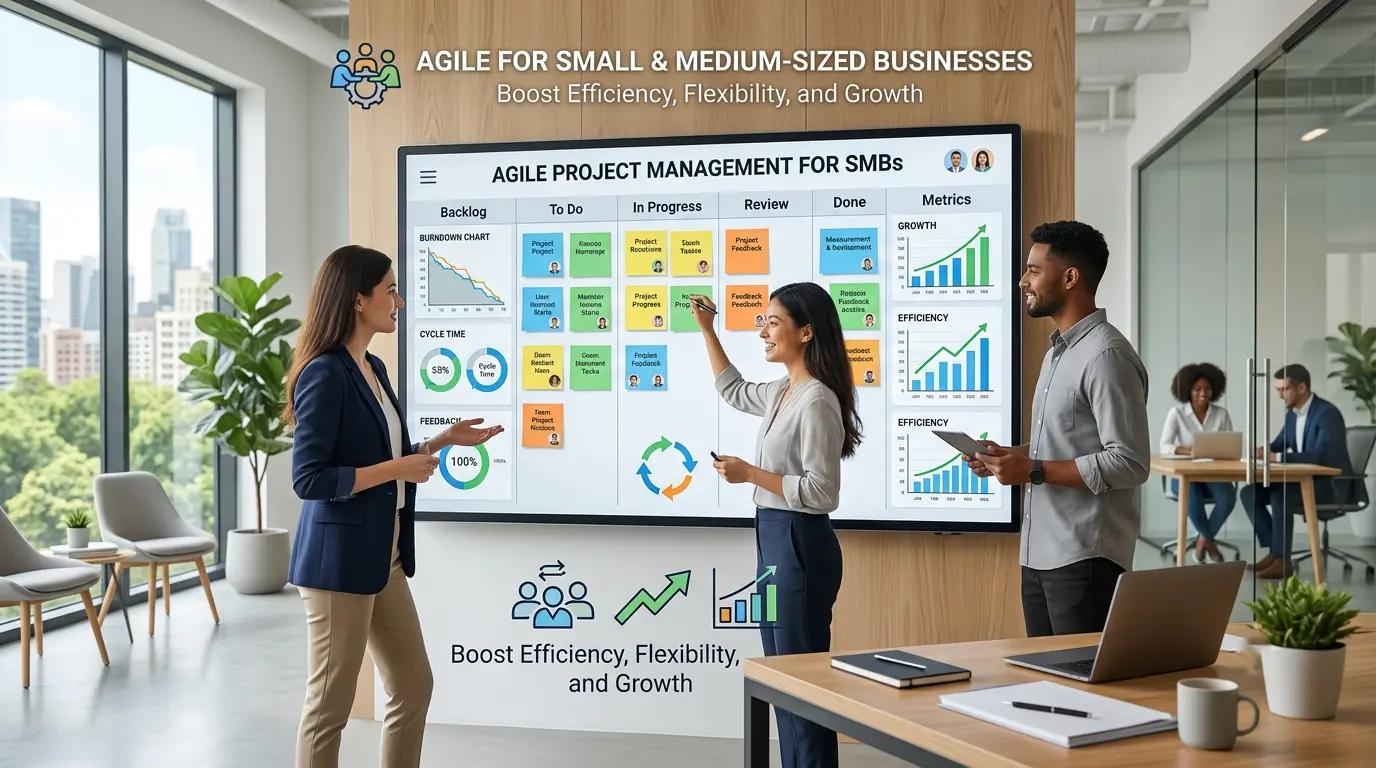
Benefits of Agile Project Management for Small and Medium-Sized Businesses
saketpratapsinghdm2026-09-28T10:12:30+05:30September 28th, 2026|

Work Breakdown Structure (WBS): The Complete PMP Guide, With a Worked Example
saketpratapsinghdm2026-09-21T16:48:15+05:30September 21st, 2026|
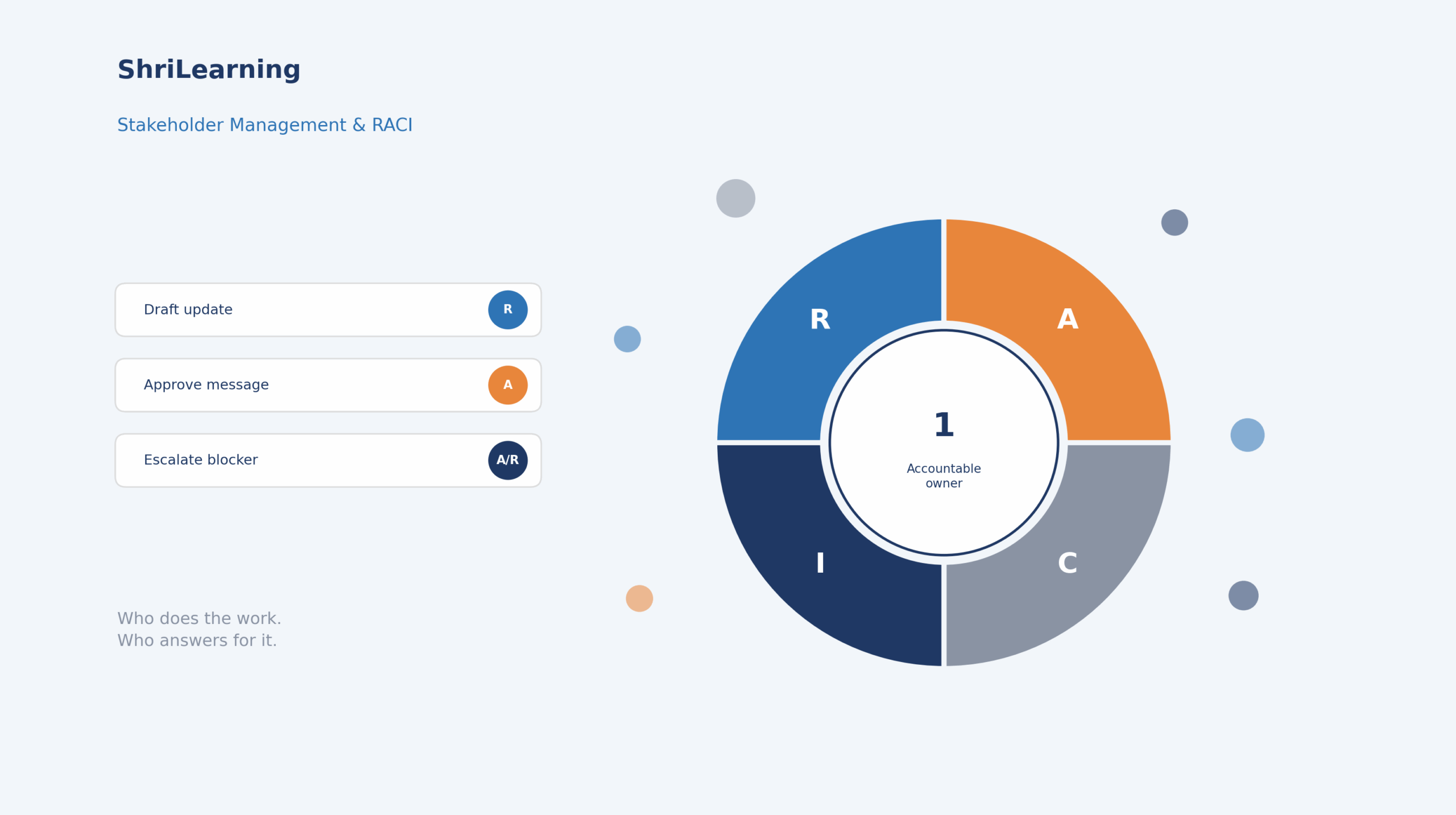
Stakeholder Management and RACI: The Complete PMP Guide (With a Worked Example)
saketpratapsinghdm2026-09-21T15:07:42+05:30September 21st, 2026|
How to Write a Problem Statement (With a PMP-Ready Template and Examples)
saketpratapsinghdm2026-09-21T14:42:27+05:30September 21st, 2026|

Earned Value Management: How to Actually Read CPI and SPI (Not Just Calculate Them)
saketpratapsinghdm2026-09-17T15:32:44+05:30September 17th, 2026|

Agile Practice Guide – Second Edition: What Changed, and What It Means for Your PMI-ACP Prep
saketpratapsinghdm2026-09-17T14:45:53+05:30September 17th, 2026|

Why the PMP People Domain Dropped to 33% (And How to Master It in 2026)
saketpratapsinghdm2026-08-27T21:18:31+05:30August 27th, 2026|

CSM Certification Guide India (2026): Cost, Eligibility, Salary & Exam Steps
saketpratapsinghdm2026-09-17T15:37:52+05:30August 21st, 2026|