Agile vs Waterfall: Which Methodology is Right for Your Project?
Agile vs Waterfall: Which Methodology is Right for Your Project?
Choosing the right project management methodology is one of the most critical decisions you’ll make, significantly impacting your team’s workflow, communication, and ultimately, the project’s success. Two of the most prominent approaches are Agile and Waterfall. While both aim to deliver successful projects, they operate on fundamentally different principles. Understanding the core differences, strengths, and weaknesses of Agile vs Waterfall is crucial for any project manager or team member.
Failing to choose the right approach can lead to frustration, missed deadlines, and budget overruns. This guide will break down both methodologies, explore their pros and cons, and help you determine which framework – or perhaps a hybrid approach – is the best fit for your specific project needs and aligns with an effective agile way of working where appropriate.
What is the Waterfall Methodology?
The Waterfall model is a traditional, linear, and sequential approach to project management. Think of it like a literal waterfall – progress flows steadily downwards through distinct phases, and each phase must be fully completed before moving on to the next. There’s typically little room for going back to a previous phase once it’s signed off.
Key Phases in Waterfall:
- Requirements Gathering: All project requirements are collected and documented upfront.
- System Design: Architects and senior developers design the system based on the approved requirements (both logical and physical design).
- Implementation: Developers write the code and build the product according to the design specifications.
- Testing/Verification: The quality assurance team tests the entire system to find and fix bugs against the initial requirements.
- Deployment/Installation: The finished product is released to the customer or deployed into the production environment.
- Maintenance: Ongoing support and updates are provided after the product launch.
Pros of Waterfall:
- Clear Structure & Simplicity: Easy to understand, manage, and track progress due to its rigid structure.
- Well-Defined Stages & Deliverables: Each phase has specific outcomes, making planning and documentation straightforward.
- Disciplined Approach: Enforces rigor in requirements and design before coding begins.
- Good for Stable Projects: Works well when requirements are well-understood, fixed, and unlikely to change significantly.
Cons of Waterfall:
- Inflexible & Resistant to Change: Extremely difficult and costly to incorporate changes once a phase is complete.
- Delayed Feedback: Customers often don’t see the working product until late in the cycle.
- Slow Delivery: The sequential nature means a longer time-to-market compared to iterative approaches.
- Risk of Misunderstood Requirements: If requirements are not perfectly captured at the start, the final product might not meet user needs.
What is the Agile Methodology?
Agile is not a single method, but rather an umbrella term for a set of principles and practices based on iterative development. Instead of a linear path, Agile breaks projects down into smaller, manageable cycles called iterations or sprints. Each sprint typically results in a potentially shippable product increment. Collaboration, flexibility, and responding to change are core tenets.
Adopting an agile way of working means embracing adaptability and continuous feedback.
Key Concepts in Agile (using Scrum as an example):
- Sprints: Short, time-boxed periods (usually 1-4 weeks) where a specific set of work is completed.
- Product Backlog: A prioritized list of features, requirements, and tasks for the project.
- Sprint Backlog: The specific items from the product backlog selected for completion during a sprint.
- Daily Stand-ups (Daily Scrum): Short daily meetings for the team to sync on progress, roadblocks, and plans.
- Sprint Review: A meeting at the end of the sprint to demonstrate the completed work to stakeholders.
- Sprint Retrospective: A team meeting to reflect on the sprint process and identify areas for improvement.
Scrum in project management is one of the most popular Agile frameworks, focusing on specific roles (Product Owner, Scrum Master, Development Team), events, and artifacts to manage complex product development.
Pros of Agile:
- Flexibility & Adaptability: Easily accommodates changing requirements throughout the project lifecycle.
- Faster Time-to-Market: Delivers functional pieces of the product quickly and frequently.
- Enhanced Customer Satisfaction: High level of customer involvement and feedback ensures the product meets evolving needs.
- Improved Quality: Continuous testing and feedback loops help identify and fix issues early.
- Increased Team Morale: Empowers teams and fosters collaboration.
Cons of Agile:
- Less Predictability: Difficult to determine the exact final timeline and budget at the very beginning.
- Requires Strong Commitment: Needs active involvement from both the development team and customer representatives.
- Potential for Scope Creep: The flexibility can sometimes lead to the project expanding beyond its original vision if not managed carefully.
- Documentation Can Be Lighter: Focus is more on working software than extensive upfront documentation (though not necessarily absent).
- Challenging Transition: Shifting from traditional methods can be difficult for teams and organizations.
Agile vs Waterfall: Key Differences Summarized
| Feature | Waterfall | Agile |
| Structure | Linear, Sequential | Iterative, Incremental |
| Flexibility | Low; Changes are difficult and costly | High; Changes are expected and welcomed |
| Customer Input | Primarily at the beginning (Requirements) | Continuous throughout the project |
| Delivery | Single final product at the end | Frequent delivery of working increments |
| Documentation | Often extensive and upfront | Streamlined; focuses on “just enough” |
| Risk Management | Addressed upfront; less adaptable later | Addressed iteratively throughout |
| Team Approach | Distinct roles, phase-based handoffs | Cross-functional, collaborative teams |
| Best For | Stable projects, clear fixed requirements | Complex projects, evolving requirements |
Which Methodology is Right for Your Project?
There’s no single “best” methodology – the ideal choice depends entirely on your project’s context. Ask yourself these questions:
- How clear are the requirements? (Waterfall thrives on clarity; Agile excels with ambiguity).
- How likely are requirements to change? (Agile is built for change; Waterfall struggles with it).
- How critical is speed-to-market? (Agile generally delivers usable features faster).
- What level of customer involvement is possible/desired? (Agile demands high involvement).
- What is your team’s experience and culture? (Is your team trained/comfortable with Agile principles?
- Are there strict regulatory or compliance constraints requiring upfront documentation? (Waterfall might be easier in some highly regulated environments).
- How complex is the project? (Agile often handles complexity better due to iterative feedback).
Hybrid Approaches: It’s also increasingly common to see hybrid models that blend elements of both Waterfall and Agile to suit specific organizational needs.
The Importance of Foundational Knowledge
Understanding methodologies like Agile and Waterfall is fundamental for effective project management. This knowledge is a core component of certifications like the PMP (Project Management Professional), which validates your expertise in managing projects, regardless of the chosen framework. [Strong link opportunity: What Is a PMP Course and Why Does It Matter? or Complete Guide to PMP Course Syllabus: What You’ll Learn or Why Every Project Manager Needs PMP Certification]. Whether you lean towards Agile certifications like CSM or PMI-ACP, or the broader PMP, mastering these concepts is key to career growth. Which is Right for You? or CSM Vs PMI-ACP Certifications: Which One To Choose?
Conclusion
The Agile vs Waterfall debate isn’t about choosing a winner, but about selecting the right tool for the job. Waterfall provides structure and predictability for stable projects with well-defined requirements. Agile offers flexibility, speed, and adaptability for complex projects in dynamic environments.
By carefully evaluating your project’s characteristics, stakeholder needs, and team capabilities, you can make an informed decision that sets your project up for success. Remember, the goal is always effective delivery, and understanding both paradigms gives you a broader toolkit to achieve that.
Your first project is calling—will you answer? Join the ShriLearning Community Connect with fellow PMP aspirants and expert instructors. Crete your study plan for free from ShriLearning study-plan-generator.
More for you
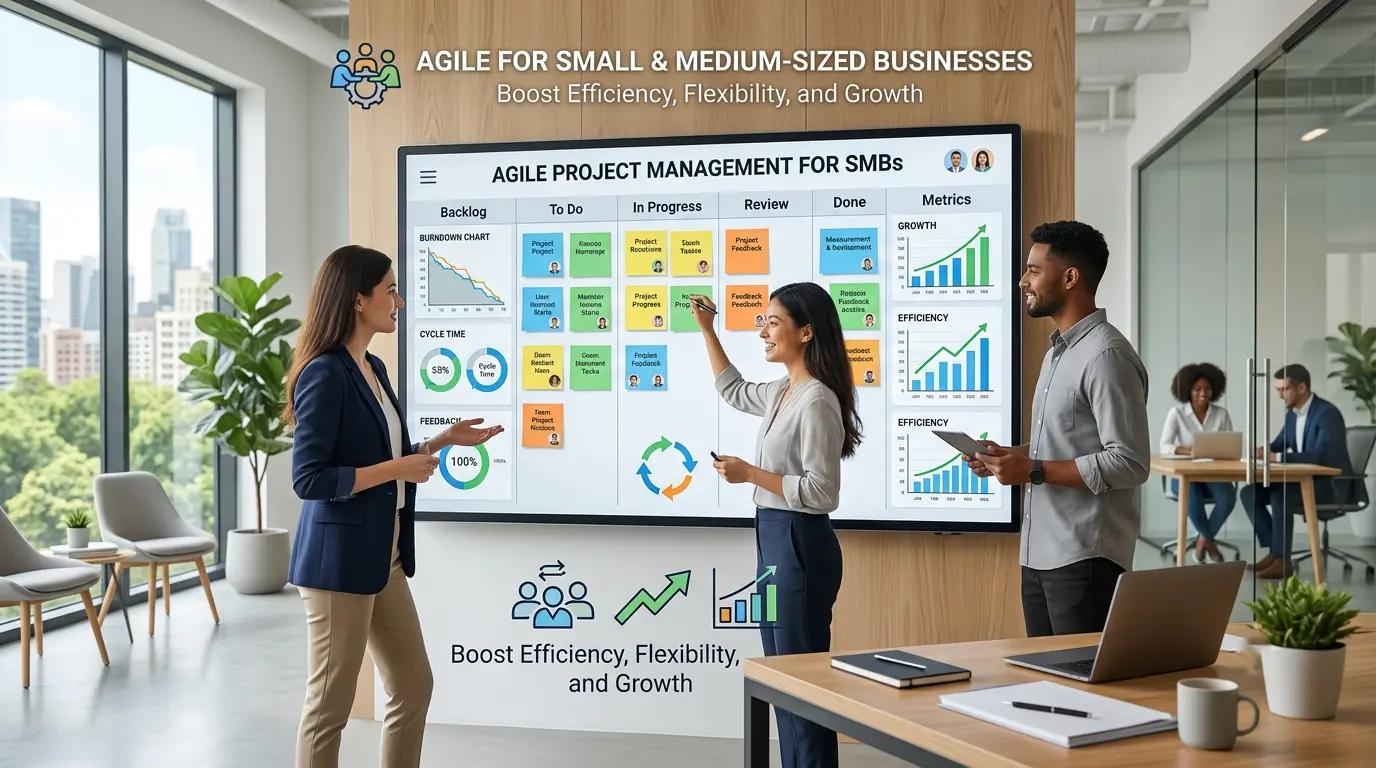
Benefits of Agile Project Management for Small and Medium-Sized Businesses
saketpratapsinghdm2026-09-28T10:12:30+05:30September 28th, 2026|

Work Breakdown Structure (WBS): The Complete PMP Guide, With a Worked Example
saketpratapsinghdm2026-09-21T16:48:15+05:30September 21st, 2026|
Stakeholder Management and RACI: The Complete PMP Guide (With a Worked Example)
saketpratapsinghdm2026-09-21T15:07:42+05:30September 21st, 2026|
How to Write a Problem Statement (With a PMP-Ready Template and Examples)
saketpratapsinghdm2026-09-21T14:42:27+05:30September 21st, 2026|

Earned Value Management: How to Actually Read CPI and SPI (Not Just Calculate Them)
saketpratapsinghdm2026-09-17T15:32:44+05:30September 17th, 2026|

Agile Practice Guide – Second Edition: What Changed, and What It Means for Your PMI-ACP Prep
saketpratapsinghdm2026-09-17T14:45:53+05:30September 17th, 2026|

Why the PMP People Domain Dropped to 33% (And How to Master It in 2026)
saketpratapsinghdm2026-08-27T21:18:31+05:30August 27th, 2026|

CSM Certification Guide India (2026): Cost, Eligibility, Salary & Exam Steps
saketpratapsinghdm2026-09-17T15:37:52+05:30August 21st, 2026|