Glossary or PMI Lexicon of Project Management Terms
Glossary or PMI Lexicon of Project Management Terms
A set of conditions that are met before deliverables are accepted. See also deliverable and requirement.
Products, results, or capabilities produced by a project and validated by the project customer or sponsors as meeting their specified acceptance criteria.
A method of collaboratively creating acceptance test criteria that are used to create acceptance tests before delivery begins.
The condition of being answerable for the outcome of a task or project. It is an individual responsibility and is not shared.
Within the quality management system, accuracy is an assessment of correctness.
The process of obtaining team members, facilities, equipment, materials, supplies, and other resources necessary to complete project work.
Obtaining human and material resources necessary to perform project activities. Acquisition implies a cost of resources, and is not necessarily financial.
A distinct, scheduled portion of work performed during the course of a project.
Multiple attributes associated with each schedule activity that can be included within the activity list. Activity attributes include activity codes, predecessor activities, successor activities, logical relationships, leads and lags, resource requirements, imposed dates, constraints, and assumptions.
A documented tabulation of schedule activities that shows the activity description, activity identifier, and a sufficiently detailed scope of work description so project team members understand what work is to be performed.
See precedence diagramming method (PDM).
The realized cost incurred for the work performed on an activity during a specific time period. See also budget at completion (BAC), earned value (EV), estimate at completion (EAC), estimate to complete (ETC), and planned value (PV).
The time, in calendar units, between the actual start date of the schedule activity and either the data date of the project schedule, if the schedule activity is in progress, or the actual finish date if the schedule activity is complete.
A project life cycle that is iterative or incremental.
The quantitative assessments of the likely number of time periods that are required to complete an activity.
A development approach in which the requirements are subject to a high level of uncertainty and volatility and are likely to change throughout the project.
A diagram that shows large numbers of ideas classified into groups for review and analysis.
A term used to describe a mindset of values and principles as set forth in the Manifesto for Agile Software Development.
Any document or communication that defines the initial intentions of a project. This can take the form of a contract, memorandum of understanding (MOU), letters of agreement, verbal agreements, email, etc.
A method used to evaluate identified options in order to select the options or approaches to use when performing the work of the project.
A technique for estimating the duration, cost, or required resources for an activity or project using historical data from a similar activity or project. See also bottom-up estimating, parametric estimating, program evaluation and review technique (PERT), and multipoint estimating.
Various techniques used to evaluate, analyze, or forecast potential outcomes based on possible variations of project or environmental variables and their relationships with other variables.
An activity where effort is allotted proportionately across certain discrete efforts and not divisible into discrete efforts. See also discrete effort and level of effort.
Documents and other items created during a portfolio, program, or project to help manage it and provide information to the project team, stakeholders, and management.
A factor in the planning process considered to be true, real, or certain, without proof or demonstration.
A project document used to record all assumptions and constraints throughout the project.
Method of measuring quality that consists of noting the presence (or absence) of some characteristic (attribute) in each of the units under consideration.
The right to apply project resources, expend funds, make decisions, or give approvals.
An ordered list of work to be done, often written as user stories, and prioritized by the business to manage and organize an adaptive or agile project’s work.
Progressive elaboration of the content in the backlog and (re)prioritization of it to identify the work that can be accomplished in an upcoming iteration.
A critical path method technique for calculating the late start and late finish dates by working backward through the schedule model from the project end date. See also forward pass.
A graphic display of schedule-related information. In the typical bar chart, schedule activities or work breakdown structure components are listed down the left side of the chart, dates are shown across the top, and activity durations are shown as date-placed horizontal bars. See also Gantt chart.
The approved version of a work product that can be changed using formal change control procedures and is used as the basis for comparison to actual results. See also cost baseline, performance measurement baseline, schedule baseline, and scope baseline.
Supporting documentation outlining the details used in establishing project estimates such as assumptions, constraints, level of detail, ranges, and confidence levels.
The comparison of actual or planned products, processes, and practices to those of comparable organizations to identify best practices, generate ideas for improvement, and provide a basis for measuring performance.
The gains and assets realized by the organization and other stakeholders as the result of outcomes delivered.
The documented explanation defining the processes for creating, maximizing, and sustaining the benefits provided by a program or project.
A document outlining the activities necessary for achieving the planned benefits. It identifies a timeline and the tools and resources necessary to ensure the benefits are fully realized over time.
All documents used to solicit information, quotations, or proposals from prospective sellers.
The meetings with prospective sellers prior to the preparation of a bid or proposal to ensure all prospective vendors have a clear and common understanding of the procurement. Also known as contractor conferences, vendor conferences, or pre-bid conferences.
An obstacle that prevents the team from achieving its objectives. Also known as a impediment.
A method of estimating the duration, cost, or required resources by aggregating the estimates of the lower-level components of the work breakdown structure. See also analogous estimating, parametric estimating, program evaluation and review technique (PERT), and multipoint estimating.
The approved estimate for the portfolio, program, or project, or any work breakdown structure component or schedule activity.
The sum of all budgets established for the work to be performed. See also actual cost (AC), earned value (EV), estimate at completion (EAC), estimate to complete (ETC), and planned value (PV).
See reserve.
A graphical representation of the work remaining versus the time left in a timebox.
A graphical representation of the work completed toward a milestone.
The set of activities performed to support delivery of solutions that align to business objectives and provide continuous value to the organization.
A documented economic feasibility study used to establish validity of the benefits to be delivered by a portfolio component, program, or project.
The impetus for a change in an organization, based on an existing problem or opportunity. The business need provides the rationale for initiating a program or project.
A measurable representation of the goals the business is seeking to achieve. Business objectives are specific and should align to the organizational objectives.
A listing of all the requirements for a specific project.
A constraint about how the organization wants to operate. These constraints are enforced by data and/or processes and are under the jurisdiction of the business. Business rules need to be supported by solution requirements.
The net quantifiable benefit derived from a business endeavor that may be tangible, intangible, or both.
The ability to add value or achieve objectives in an organization through a function, process, service, or other proficiency.
Events or circumstances that currently exist or are certain to exist in the future, which might give rise to risks.
A visual representation that helps trace an effect back to its root cause. A cause-and-effect diagram may also be known as a fishbone or Ishikawa diagram.
A modification to any formally controlled deliverable, project management plan component, or project document.
A process whereby modifications to documents, deliverables, or baselines associated with the project are identified, documented, approved, or rejected. See also change control board (CCB) and change control system.
A formally chartered group responsible for reviewing, evaluating, approving, delaying, or rejecting changes to the project, and for recording and communicating such decisions. See also change control and change control system.
A component of the project management plan that establishes the change control board, documents the extent of its authority, and describes how the change control system will be implemented. See also project management plan.
A set of procedures that describes how modifications to the project deliverables and documentation are managed and controlled. See also change control and change control board (CCB).
Manual or automated tools to assist with change and/or configuration management. At a minimum, the tools should support the activities of the CCB.
A comprehensive list of changes submitted during the project and their current status.
A component of the project management plan that establishes the change control board, documents the extent of its authority, and describes how the change control system will be implemented.
A formal proposal to modify a document, deliverable, or baseline.
See project charter.
A technique for systematically reviewing materials using a list for accuracy and completeness.
A tally sheet that can be used as a checklist when gathering data.
A request, demand, or assertion of rights by a seller against a buyer, or vice versa, for consideration, compensation, or payment under the terms of a legally binding contract, such as for a disputed change.
The process of processing, adjudicating, and communicating contract claims.
The process of finalizing all activities for the project, phase, or contract.
The process(es) performed to formally complete or close a project, phase, or contract.
A numbering system used to uniquely identify each component of the work breakdown structure (WBS).
The process of determining, documenting, and managing stakeholder needs and requirements to meet project objectives.
An organizational placement strategy where the project team members are physically located close to one another in order to improve communication, working relationships, and productivity.
A systematic procedure, technique, or process used to transfer information among project stakeholders.
A description, analogy, or schematic used to represent how the communication process will be performed for the project.
An analytical technique to determine the information needs of the project stakeholders through interviews, workshops, study of lessons learned from previous projects, etc.
A component of the portfolio, program, or project management plan that describes how, when, and by whom information will be administered and disseminated. See also project management plan.
A technique to identify the preferred communication method, format, and content for stakeholders for planned communication activities.
Specific tools, systems, computer programs, etc., used to transfer information among project stakeholders.
A characteristic of a program or project or its environment that is difficult to manage due to human behavior, system behavior, and ambiguity.
A predetermined element of a portfolio, program, or project that is work related to the achievement of the strategic objectives of the portfolio, program, or project.
The process of obtaining seller responses, selecting a seller, and awarding a contract.
A component of the project management plan that describes how to identify and account for project artifacts under configuration control, and how to record and report changes to them.
A collection of procedures used to track project artifacts and monitor and control changes to these artifacts.
A limiting factor that affects the execution of a portfolio, program, project, or process.
Within the quality management system, conformance is a general concept of delivering results that fall within the limits that define acceptable variation for a quality requirement.
A visual depiction of the product scope showing a business system (process, equipment, computer system, etc.), and how people and other systems (actors) interact with it.
An event or occurrence that could affect the execution of the project, which may be accounted for with a reserve.
A document that describes actions to take if predetermined trigger conditions occur.
Time or money allocated in the schedule or cost baseline for known risks with active response strategies. See also management reserve and project budget.
Responses provided which may be used in the event that a specific trigger occurs.
A contract is a mutually binding agreement that obligates the seller to provide the specified product or service or result and obligates the buyer to pay for it.
The system used to collect, track, adjudicate, and communicate changes to a contract.
The practice of delivering feature increments immediately to customers, often through the use of small batches of work and automation technology.
Comparing actual performance with planned performance, analyzing variances, assessing trends to effect process improvements, evaluating possible alternatives, and recommending appropriate corrective action as needed.
A management control point where scope, budget, actual cost, and schedule are integrated and compared to earned value for performance measurement.
A graphic display of process data over time and against established control limits, which has a centerline that assists in detecting a trend of plotted values toward either control limit.
The process of monitoring the status of the project to update the project costs and manage changes to the cost baseline.
The area composed of three standard deviations on either side of the centerline or mean of a normal distribution of data plotted on a control chart, which reflects the expected variation in the data. See also specification limits.
The process of managing procurement relationships, monitoring contract performance, making changes and corrections as appropriate, and closing out contracts.
The process of monitoring and recording results of executing the quality management activities to assess performance and ensure the project outputs are complete, correct, and meet customer expectations.
The process of ensuring that the physical resources assigned and allocated to the project are available as planned, as well as monitoring the planned versus actual utilization of resources and performing corrective action as necessary.
The process of monitoring the status of the project to update the project schedule and manage changes to the schedule baseline.
The process of monitoring the status of the project and product scope and managing changes to the scope baaseline.
An intentional activity that realigns the performance of the project work with the project management plan. See also preventive action.
Summing the lower-level cost estimates associated with the various work packages for a given level within the project’s WBS or for a given cost control account.
The approved version of the time-phased project budget, excluding any management reserves, which can be changed only through formal change control procedures and is used as a basis for comparison to actual results. See also baseline, performance measurement baseline, schedule baseline, and scope baseline.
A financial analysis method used to determine the benefits provided by a project against its costs.
A component of a program or project management plan that describes how costs will be planned, structured, and controlled. See also project management plan.
All costs incurred over the life of the product by investment in preventing nonconformance to requirements, appraisal of the product or service for conformance to requirements, and failure to meet requirements.
A measure of the cost efficiency of budgeted resources expressed as the ratio of earned value to actual cost. See also schedule performance index (SPI).
A category of contract that involves payments to the seller for all legitimate actual costs incurred for completed work, plus an award fee representing seller profit.
A type of cost-reimbursable contract where the buyer reimburses the seller for the seller’s allowable costs (allowable costs are defined by the contract) plus a fixed amount of profit (fee).
A type of cost-reimbursable contract where the buyer reimburses the seller for the seller’s allowable costs (allowable costs are defined by the contract), and the seller earns its profit if it meets defined performance criteria.
A type of contract involving payment to the seller for the seller’s actual costs, plus a fee typically representing the seller’s profit.
The amount of budget deficit or surplus at a given point in time, expressed as the difference between the earned value and the actual cost. See also schedule variance (SV).
A schedule compression technique used to shorten the schedule duration for the least incremental cost by adding resources. See also fast tracking and schedule compression.
The process of subdividing project deliverables and project work into smaller, more manageable components.
Standards, rules, or tests on which a judgment or decision can be based or by which a product, service, result, or process can be evaluated.
A schedule method that allows the project team to place buffers on any project schedule path to account for limited resources and project uncertainties.
The sequence of activities that represents the longest path through a project, which determines the shortest possible duration. See also critical path activity and critical path method.
Any activity on the critical path in a project schedule. See also critical path and critical path method.
A method used to estimate the minimum project duration and determine the amount of scheduling flexibility on the logical network paths within the schedule model. See also critical path and critical path activity.
A team that includes practitioners with all the skills necessary to deliver valuable product increments.
The total elapsed time from the start of a particular activity or work item to its completion.
A brief, daily collaboration meeting in which the team reviews progress from the previous day, declares intentions for the current day, and highlights any obstacles encountered or anticipated. (Previously, this was commonly referred to as a standup meeting.)
A set of charts and graphs showing progress or performance against important measures of the project.
Discrete, unorganized, unprocessed measurements or raw observations.
Techniques used to organize, assess, and evaluate data and information.
A point in time when the status of the project is recorded.
Techniques used to collect data and information from a variety of sources.
Graphic representations or other methods used to convey data and information.
Techniques used to select a course of action from different alternatives.
A diagramming and calculation technique for evaluating the implications of a chain of multiple options in the presence of uncertainty.
A technique used for dividing and subdividing the project scope and project deliverables into smaller, more manageable parts.
An imperfection or deficiency in a project component where that component does not meet its requirements or specifications and needs to be either repaired or replaced.
An intentional activity to modify a nonconforming product or product component.
The process of identifying and documenting the specific actions to be performed to produce the project deliverables.
The process of developing a detailed description of the project and product.
A checklist of all the criteria required to be met so that a deliverable can be considered ready for customer use.
A team’s checklist for a user-centric requirement that has all the information the team needs to be able to begin working on it.
Any unique and verifiable product, result, or capability to perform a service that is required to be produced to complete a process, phase, or project.
A logical relationship between two or more activities where the timing, sequencing, or completion of one activity is dependent upon another activity.
The process of aggregating the estimated costs of individual activities or work packages to establish an authorized cost baseline.
A nonlinear, iterative process that teams use to understand users, challenge assumptions, redefine problems, and create innovative solutions to prototype and test.
A method used to create and evolve the product, service, or result during the project life cycle such as an adaptive, predictive, or hybrid method.
The process of developing a document that formally authorizes the existence of a project and provides the project manager with the authority to apply organizational resources to project activities.
The process of defining, preparing, and coordinating all plan components and consolidating them into an integrated project management plan.
The process of analyzing activity sequences, durations, resource requirements, and schedule constraints to create the project schedule model for project execution and monitoring and controlling.
The process of improving competences, team member interaction, and overall team environment to enhance project performance.
Approaches to presenting information with logical linkages that aid in understanding.
The process of leading and performing the work defined in the project management plan and implementing approved changes to achieve the project’s objectives.
A collection of practices for creating a smooth flow of delivery by improving collaboration between development and operations staff.
The measurable result from an outcome that is perceived as negative by one or more stakeholders. Disbenefits use activities and processes that are similar to those used in benefits management and should be identified, categorized, quantified, and measured in the same manner as benefits.
An activity that can be planned and measured and that yields a specific output. See also apportioned effort and level of effort.
A relationship that is established based on knowledge of best practices within a particular application area or an aspect of the project where a specific sequence is desired.
The process of gathering a corpus of information and reviewing it to determine accuracy and completeness.
The total number of work periods required to complete an activity or work breakdown structure component, expressed in hours, days, or weeks. See also effort.
In the critical path method, the earliest possible point in time when the uncompleted portions of a schedule activity can finish based on the schedule network logic, the data date, and any schedule constraints. See also early start date, late start date, late finish date, and schedule network analysis.
In the critical path method, the earliest possible point in time when the uncompleted portions of a schedule activity can start based on the schedule network logic, the data date, and any schedule constraints. See also early finish date, late finish date, late start date, and schedule network analysis.
The measure of work performed expressed in terms of the budget authorized for that work. See also actual cost (AC), budget at completion (BAC), estimate at completion (EAC), estimate to complete (ETC), and planned value (PV).
A methodology that combines scope, schedule, cost, and resource measurements to assess project performance and progress.
The number of labor units required to complete a schedule activity or work breakdown structure component, often expressed in hours, days, or weeks. See also duration.
The activity of drawing out information from stakeholders and other sources for the purpose of further understanding the needs of the business, addressing a problem or opportunity, and determining stakeholder preferences and conditions for the solution that will address those needs.
A risk that arises that could not have been identified earlier.
The ability to identify, assess, and manage the personal emotions of oneself and other people, as well as the collective emotions of groups of people.
Conditions, not under the immediate control of the team, that influence, constrain, or direct the portfolio, program, or project.
An approach to managing risk that reflects the organization’s culture, capability, and strategy to create and sustain value.
A large, related body of work intended to hierarchically organize a set of requirements and deliver specific business outcomes.
A quantitative assessment of the likely amount or outcome of a variable, such as project costs, resources, effort, or durations.
The process of estimating the number of work periods needed to complete individual activities with the estimated resources.
The process of estimating team resources and the type and quantities of material, equipment, and supplies necessary to perform project work.
The expected total cost of completing all work expressed as the sum of the actual cost to date and the estimate to complete. See also actual cost (AC), budget at completion (BAC), earned value (EV), estimate to complete (ETC), and planned value (PV).
The process of developing an approximation of the monetary resources needed to complete project work.
The expected cost to finish all the remaining project work. See also actual cost (AC), budget at completion (BAC), earned value (EV), estimate at completion (EAC), and planned value (PV).
Directing, managing, performing, and accomplishing the project work; providing the deliverables; and providing work performance information.
Those processes performed to complete the work defined in the project management plan to satisfy the project requirements.
The estimated value of an outcome expressed in monetary terms.
Judgment provided based upon expertise in an application area, knowledge area, discipline, industry, etc., as appropriate for the activity being performed. Such expertise may be provided by any group or person with specialized education, knowledge, skill, experience, or training.
Knowledge that can be codified using symbols such as words, numbers, and pictures.
A relationship between project activities and non-project activities.
Fallback plans include an alternative set of actions and tasks available in the event that the primary plan needs to be abandoned because of issues, risks, or other causes.
A schedule compression technique in which activities or phases normally done in sequence are performed in parallel for at least a portion of their duration. See also crashing and schedule compression.
Represents profit as a component of compensation to a seller.
A study that produces a potential recommendation to address business needs. It examines feasibility using one or more of the following variables: operational, technology/system, cost-effectiveness, and timeliness of the potential solution.
A set of related requirements or functionalities that provides value to an organization.
A point in time associated with a schedule activity’s completion. Usually qualified by one of the following: actual, planned, estimated, scheduled, early, late, baseline, target, or current.
A logical relationship in which a successor activity cannot finish until a predecessor activity has finished. See also finish-to-start, start-to-finish, start-to-start, and logical relationship.
A logical relationship in which a successor activity cannot start until a predecessor activity has finished. See also finish-to-finish, start-to-finish, start-to-start, and logical relationship.
A type of fixed-price contract where the buyer pays the seller a set amount (as defined by the contract), regardless of the seller’s costs.
See Cause and Effect Diagram.
A type of activity where the length of time required to complete the activity remains constant regardless of the number of people or resources assigned to the activity.
A method of estimating earned value in which a specified percentage of the budget value of a work package is assigned to the start milestone and the remaining percentage is assigned when the work package is complete. See also weighted milestone method.
An agreement that sets the fee that will be paid for a defined scope of work regardless of the cost or effort to deliver it.
A type of contract where the buyer pays the seller a set amount (as defined by the contract) and the seller can earn an additional amount if the seller meets defined performance criteria.
A fixed-price contract, but with a special provision allowing for predefined final adjustments to the contract price due to changed conditions such as inflation changes or cost increases (or decreases) for specific commodities.
Also called slack. See total float and free float.
The depiction in a diagram format of the inputs, process actions, and outputs of one or more processes within a system.
An elicitation technique that brings together prequalified stakeholders and subject matter experts to learn about their expectations and attitudes about a proposed product, service, or result.
An estimate or prediction of conditions and events in the project’s future based on information and knowledge available at the time of the forecast.
A critical path method technique for calculating the early start and early finish dates by working forward through the schedule model from the project start date or a given point in time. See also backward pass.
The amount of time that a schedule activity can be delayed without delaying the early start date of any successor or violating a schedule constraint. See also total float, critical path, near-critical activity, and near-critical path.
An organizational structure in which staff is grouped by areas of specialization and the project manager has limited authority to assign work and apply resources. See also matrix organization and projectized organization.
The process of comparing the planned expenditure of project funds against any limits on the commitment of funds for the project to identify any variances between the funding limits and the planned expenditures.
A bar chart of schedule information where activities are listed on the vertical axis, dates are shown on the horizontal axis, and activity durations are shown as horizontal bars placed according to start and finish dates.
The process of determining if an initiative should continue or be stopped. This process usually involves analysis of the current state of the initiative.
The framework for directing and enabling an organization through its established policies, practices, and other relevant documentation.
A category or rank used to distinguish items that have the same functional use but do not share the same requirements for quality.
Expectations regarding acceptable behavior by project team members.
A bar chart that shows the graphical representation of numerical data.
Documents and data on prior projects including project files, records, correspondence, closed contracts, and closed projects.
A combination of elements from both adaptive and predictive approaches that is useful when there is uncertainty or risk around the requirements.
The process of identifying individual risks as well as sources of overall risk and documenting their characteristics.
The process of identifying project stakeholders regularly and analyzing and documenting relevant information regarding their interests, involvement, interdependencies, influence, and potential impact on project success.
A measure of the effect of a risk on one or more objectives if it occurs.
An obstacle that prevents the team from achieving its objectives. Also known as a blocker.
The process of implementing agreed-upon risk response plans.
A fixed date imposed on a schedule activity or schedule milestone, usually in the form of a “start no earlier than” and “finish no later than” date.
A set of financial incentives related to cost, schedule, or technical performance of the seller.
A functional, tested, and accepted deliverable that is a subset of the overall project output.
An adaptive development approach in which the deliverable is produced successively, adding functionality until the deliverable contains the necessary and sufficient capability to be considered complete.
An adaptive project life cycle in which the deliverable is produced through a series of iterations that successively add functionality within a predetermined time frame. The deliverable contains the necessary and sufficient capability to be considered complete only after the final iteration.
A process of using a third party to obtain and analyze information to support prediction of cost, schedule, or other items.
A graphical representation of situations showing causal influences, time ordering of events, and other relationships among variables and outcomes.
Organized or structured data, processed for a specific purpose to make it meaningful, valuable, and useful in specific contexts.
Facilities, processes, and procedures used to collect, store, and distribute information between producers and consumers of information in physical or electronic format.
A visible, physical display that provides information to the rest of the organization, enabling timely knowledge sharing.
The coordination of all project elements so that the elements work together effectively, ensuring objectives are met within the goals of the project.
Those processes performed to define a new project or a new phase of an existing project by obtaining authorization to start the project or phase.
Any item, whether internal or external to the project, which is required by a process before that process proceeds. May be an output from a predecessor process.
Examination of a work product to determine whether it conforms to documented standards.
Skills used to effectively lead and interact with team members and other stakeholders.
Skills used to establish and maintain relationships with other people.
A formal or informal approach to elicit information from stakeholders by talking to them directly.
Generally, this term is equivalent to request for proposal. However, in some application areas, it may have a narrower or more specific meaning.
A current condition or situation that may have an impact on one or more objectives.
A project document where information about issues is recorded and monitored.
A short cycle of development during which a product or deliverable is released or further matured. See also sprint.
A detailed plan for the current iteration. See also project management plan.
A meeting held at the end of an iteration to demonstrate the work that was accomplished during the iteration.
A development approach that focuses on an initial, simplified implementation then progressively elaborates, adding to the feature set until the final deliverable is complete.
A project life cycle where the project scope is generally determined early in the project life cycle, but time and cost estimates are routinely modified as the project team’s understanding of the product increases. Iterations develop the product through a series of repeated cycles, while increments successively add to the functionality of the product.
“Just-in-Time” (JIT) is a lean inventory strategy where materials, goods, and labor are scheduled to arrive or be produced exactly when needed for production or customer demand, minimizing waste, storage costs, and excess stock by having minimal inventory on hand. It’s a “pull” system driven by actual demand, not speculation, ensuring efficiency by delivering the right item, in the right quantity, at the right time, originating from Toyota’s production system in Japan.
A visualization tool that shows work in progress to help identify bottlenecks and overcommitments, thereby allowing the team to optimize the workflow.
Metric defined by an organization’s leadership that is used to evaluate an organization’s progress toward meeting the targets or end states identified in their objectives or goals, helping to achieve strategic alignment.
A gathering of team members and other key stakeholders at the beginning of a project to formally set expectations, gain a common understanding, and commence work.
A mixture of experience, values and beliefs, contextual information, intuition, and insight that people use to make sense of new experiences and information.
The amount of time whereby a successor activity will be delayed with respect to a predecessor activity. See also lead.
In the critical path method, the latest possible point in time when the uncompleted portions of a schedule activity can finish based on the schedule network logic, the project completion date, and any schedule constraints. See also early finish date, early start date, late start date, and schedule network analysis.
In the critical path method, the latest possible point in time when the uncompleted portions of a schedule activity can start based on the schedule network logic, the project completion date, and any schedule constraints. See also early finish date, late finish date, early start date, and schedule network analysis.
The amount of time whereby a successor activity can be advanced with respect to a predecessor activity. See also lag.
The knowledge gained during a project that shows how project events were addressed or should be addressed in the future for the purpose of improving future performance.
A project document or repository used to record knowledge gained during a project, phase, or iteration so that it can be used to improve future performance for the team and the organization.
A store of historical information about lessons learned in projects.
An activity that does not produce definitive end products and is measured by the passage of time. See also apportioned effort and discrete effort.
See project life cycle.
A document used to record and describe or denote selected items identified during execution of a process or activity. Usually used with a modifier, such as issue, change, issue, or assumption.
A dependency between two activities or between an activity and a milestone. See also finish-to-finish, finish-to-start, start-to-finish, and start-to-start.
The decision-making process of gathering and organizing data about product requirements and analyzing them against available alternatives, including the purchase or internal manufacture of the product.
Decisions made regarding the external purchase or internal manufacture of a product.
Manage Communications is the process of ensuring timely and appropriate collection, creation, distribution, storage, retrieval, management, monitoring, and the ultimate disposition of project information.
Time or money that management sets aside in addition to the schedule or cost baseline and releases for unforeseen work that is within the scope of the portfolio, program, or project. See also contingency reserve and project budget.
The ability to plan, organize, direct, and control individuals or groups of people to achieve specific goals.
The process of using existing knowledge and creating new knowledge to achieve the project’s objectives and contribute to organizational learning.
The process of translating the quality management plan into executable quality activities that incorporate the organization’s quality policies into the project.
The process of communicating and working with stakeholders to meet their needs and expectations, address issues, and foster appropriate stakeholder involvement.
The process of tracking team member performance, providing feedback, resolving issues, and managing team changes to optimize project performance.
A relationship that is contractually required or inherent in the nature of the work.
A summary-level project schedule that identifies the major deliverables and work breakdown structure components and key schedule milestones. See also milestone schedule.
A quality management and control tool used to perform data analysis within the organizational structure created in the matrix. The matrix diagram seeks to show the strength of relationships between factors, causes, and objectives that exist between the rows and columns that form the matrix.
An organizational structure in which the project manager shares authority with the functional manager temporarily to assign work and apply resources. See also functional organization and projectized organization.
A means for achieving an outcome, output, result, or project deliverable.
A system of practices, techniques, procedures, and rules used by those who work in a discipline.
A significant point or event in a portfolio, program, or project.
A type of schedule that presents milestones with planned dates.
A technique used to consolidate ideas created through individual brainstorming sessions into a single map to reflect commonality and differences in understanding and to generate new ideas.
The smallest piece of functionality that can be delivered that has value to the business. It helps the organization focus on realizing that value quickly.
A product that has just enough features to be marketable and is designed to quickly test the viability of an idea with real users.
A concept used to define the scope of the first release of a solution to customers by identifying the fewest number of features or requirements that would deliver value.
A visual representation of information, both abstract and specific, that operates under a set of guidelines in order to efficiently arrange and convey a lot of information in an efficient manner.
Creating simplified representations of systems, solutions, or deliverables such as prototypes, diagrams, or storyboards.
Collect project performance data, produce performance measures, and report and disseminate performance information.
The process of tracking, reviewing, and reporting overall progress to meet the performance objectives defined in the project management plan.
The process of ensuring that the information needs of the project and its stakeholders are met.
Those processes required to track, review, and regulate the progress and performance of the project; identify any areas in which changes to the plan are required; and initiate the corresponding changes.
The process of monitoring the implementation of agreed-upon risk response plans, tracking identified risks, identifying and analyzing new risks, and evaluating risk process effectiveness throughout the project.
The process of monitoring project stakeholder relationships, and tailoring strategies for engaging stakeholders through the modification of engagement strategies and plans.
A method of identifying the potential impacts of risk and uncertainty using multiple iterations of a computer model to develop a probability distribution of a range of outcomes that could result from a decision or course of action.
An estimate of the most probable activity duration that takes into account all of the known variables that could affect performance. See also optimistic duration and pessimistic duration.
A technique that utilizes a decision matrix to provide a systematic analytical approach for establishing criteria, such as risk levels, uncertainty, and valuation, to evaluate and rank many ideas.
A method used to estimate cost or duration by applying an average or weighted average of optimistic, pessimistic, and most likely estimates when there is uncertainty with the individual activity estimates.
An activity with a total float that is deemed to be low based on expert judgment. See also critical path, free float, near-critical path, and total float.
A sequence of activities with low float that, if exhausted, becomes a critical path sequence for the project. See also critical path, free float, near-critical activity, and total float.
See project schedule network diagram.
All activity dependencies in a project schedule network diagram. See also early finish date, early start date, late finish date, late start date, and network path.
A sequence of activities connected by logical relationships in a project schedule network diagram. See also early finish date, early start date, late finish date, late start date, and network logic.
Establishing connections and relationships with other people from the same or other organizations.
A point at which dependency lines connect on a schedule network diagram. See also precedence diagramming method and project schedule network diagram.
A technique that enhances brainstorming with a voting process used to rank the most useful ideas for further brainstorming or for prioritization.
Something toward which work is to be directed—a strategic position to be attained, a purpose to be achieved, a result to be obtained, a product to be produced, or a service to be performed.
A goal-setting framework used to define and track objectives and their outcomes. OKRs are typically used in business settings to align individual, team, and organizational goals with measurable results.
A risk that would have a positive effect on one or more portfolio, program, or project objectives.
An estimate of the shortest activity duration that takes into account all of the known variables that could affect performance. See also most likely duration and pessimistic duration.
A hierarchical representation of the project organization that illustrates the relationship between project activities and the organizational units that will perform those activities. See also resource breakdown structure, risk breakdown structure, and work breakdown structure (WBS).
A discipline concerned with the way individuals, groups, and organizations develop knowledge.
Plans, processes, policies, procedures, and knowledge bases specific to and used by the performing organization.
A framework in which portfolio, program, and project management are integrated with organizational enablers in order to achieve strategic objectives.
The level of an organization’s ability to deliver the desired strategic outcomes in a predictable, controllable, and reliable manner.
An end result or consequence of a process or project.
A product, result, or service generated by a process. May be an input to a successor process.
The effect of uncertainty on the portfolio, program, or project as a whole.
The effect of uncertainty on the project as a whole, arising from all sources of uncertainty including individual risks, representing the exposure of stakeholders to the implications of variations in project outcome, both positive and negative.
An estimating technique in which an algorithm is used to calculate cost or duration based on historical data and project parameters. See also analogous estimating, bottom-up estimating, program evaluation and review technique (PERT), and multipoint estimating.
A relationship in which a schedule activity has more than one predecessor. See also path divergence, predecessor activity, and successor activity.
A relationship in which a schedule activity has more than one successor. See also path convergence, predecessor activity, and successor activity.
An estimate expressed as a percent of the amount of work that has been completed on an activity or a work breakdown structure component.
Integrated scope, schedule, and cost baselines used for comparison to manage, measure, and control project execution. See also baseline, cost baseline, schedule baseline, and scope baseline.
A technique that is used to measure, compare, and analyze actual performance of work in progress on the project against the baseline.
The process of reviewing all change requests; approving changes and managing changes to deliverables, organizational process assets, project documents, and the project management plan; and communicating the decisions.
The process of prioritizing individual project risks for further analysis or action by assessing their probability of occurrence and impact as well as other characteristics.
The process of numerically analyzing the combined effect of identified individual project risks and other sources of uncertainty on overall project objectives.
An enterprise whose personnel are the most directly involved in doing the work of the program or project.
An archetype user representing a set of similar end users described with their goals, motivations, and representative personal characteristics.
A strategic planning tool used to systematically evaluate political, economic, sociocultural, technological, legal, and environmental factors. These factors provide a view of the project’s external operating environment and indicate potential opportunities and threats.
An estimate of the longest activity duration that takes into account all of the known variables that could affect performance. See also most likely duration and optimistic duration.
See project phase.
A review at the end of a phase in which a decision is made to continue to the next phase, to continue with modification, or to end a program or project. See also project phase.
The process of developing an appropriate approach and plan for project communication activities based on the information needs of each stakeholder or group, available organizational assets, and the needs of the project.
The process of defining how the project costs will be estimated, budgeted, managed, monitored, and controlled.
An iterative management method used in organizations to facilitate the control and continual improvement of processes and products.
The authorized budget assigned to scheduled work. See also actual cost (AC), budget at completion (BAC), earned value (EV), estimate at completion (EAC), and estimate to complete (ETC).
A work breakdown structure component below the control account with known work content but without detailed schedule activities. See also control account.
Those processes required to establish the scope of the project, refine the objectives, and define the course of action required to attain the objectives that the project was undertaken to achieve.
The process of documenting project procurement decisions, specifying the approach, and identifying potential sellers.
The process of identifying quality requirements and/or standards for the project and its deliverables, and documenting how the project will demonstrate compliance with quality requirements and/or standards.
The process of defining how to estimate, acquire, manage, and utilize physical and team resources.
The process of defining how to conduct risk management activities for a project.
The process of developing options, selecting strategies, and agreeing on actions to address overall project risk exposure, as well as to treat individual project risks.
The process of establishing the policies, procedures, and documentation for planning, developing, managing, executing, and controlling the project schedule.
The process of creating a scope management plan that documents how the project and product scope will be defined, validated, and controlled.
The process of developing approaches to involve project stakeholders, based on their needs, expectations, interests, and potential impact on the project.
Decisions made by the largest block in a group, even if a majority is not achieved.
A structured pattern of actions adopted by an organization such that the organization’s policy can be explained as a set of basic principles that govern the organization’s conduct.
Projects, programs, subsidiary portfolios, and operations managed as a group to achieve strategic objectives. See also program and project.
The centralized management of one or more portfolios to achieve strategic objectives.
The process of optimizing the mix of portfolio components to further the strategic objectives of the organization.
A document issued by a sponsor that authorizes and specifies the portfolio structure and links the portfolio to the organization’s strategic objectives. See also program charter and project charter.
The centralized management of one or more portfolios to achieve strategic objectives. See also program management and project management.
A document that specifies how a portfolio will be organized, monitored, and controlled. See also program management plan and project management plan.
The person or group assigned by the performing organization to establish, balance, monitor, and control portfolio components in order to achieve strategic business objectives. See also program manager and project manager.
A specific type of professional or management activity that contributes to the execution of a process and that may employ one or more techniques and tools.
A technique used for constructing a schedule model in which activities are represented by nodes and are graphically linked by one or more logical relationships to show the sequence in which the activities are to be performed. See also node and project schedule network diagram.
A logical dependency used in the precedence diagramming method.
An activity that logically comes before a dependent activity in a schedule. See also successor activity and summary activity.
A form of project life cycle in which the project scope, time, and cost are determined in the early phases of the life cycle.
A development approach in which the project scope, time, and cost are determined in the early phases of the life cycle.
An intentional activity that ensures the future performance of the project work is aligned with the project management plan. See also corrective action.
A grid for mapping the probability of occurrence of each risk and its impact on project objectives if that risk occurs. See also risk.
An established method of accomplishing a consistent performance or result, a procedure typically can be described as the sequence of steps that will be used to execute a process.
A systematic series of activities directed toward causing an end result such that one or more inputs will be acted upon to create one or more outputs.
A business analysis model that visually shows the steps taken in a process by a human user as it interacts with an implementation. A set of steps taken by a system can be shown in a similar model as a system flow.
The review of contracts and contracting processes for completeness, accuracy, and effectiveness.
The documents utilized in bid and proposal activities, which include the buyer’s Invitation for bid, invitation for negotiations, request for information, request for quotation, request for proposal, and seller’s responses.
All documents used in signing, executing, and closing an agreement. Procurement documentation may include documents predating the project.
A component of the program or project management plan that describes how a team will acquire goods and services from outside of the performing organization. See also project management plan.
An artifact that is produced, is quantifiable, and can be either an end item in itself or a component item.
A series of phases that represent the evolution of a product, from concept through delivery, growth, maturity, and to retirement.
The integration of people, data, processes, and business systems to create, maintain, and evolve a product or service throughout its life cycle.
Describes the procurement item in sufficient detail to allow prospective sellers to determine if they are capable of providing the products, services, or results.
The approach by the buyer to determine the project delivery method and the type of legally binding agreement(s) that should be used to deliver the desired results.
An artifact that is produced, is quantifiable, and can be either an end item in itself or a component item. Additional words for products are material and goods. See also deliverable.
For projects that have a product as a deliverable, it is a tool to define scope that generally means asking questions about a product and forming answers to describe the use, characteristics, and other relevant aspects of what is going to be manufactured.
The series of phases that represent the evolution of a product, from concept through delivery, growth, maturity, and to retirement.
A person responsible for maximizing the value of the product and accountable for the end product.
The features and functions that characterize a product, service, or result.
The documented narrative description of the product scope.
Related projects, subsidiary programs, and program activities managed in a coordinated manner to obtain benefits not available from managing them individually. See also portfolio and project.
A document issued by a sponsor that authorizes the program management team to use organizational resources to execute the program and links the program to the organization’s strategic objectives. See also portfolio charter and project charter.
A technique used to estimate project duration through a weighted average of optimistic, pessimistic, and most likely activity durations when there is uncertainty with the individual activity estimates. See also analogous estimating, bottom-up estimating, parametric estimating, and multipoint estimating.
The application of knowledge, skills, and principles to a program to achieve the program objectives and to obtain benefits and control not available by managing program components individually. See also portfolio management and project management.
A management entity that standardizes the program-related governance processes and facilitates the sharing of resources, methodologies, tools, and techniques to maximize the return on program investments. See also project management office.
A document that integrates the program’s subsidiary plans and establishes the management controls and overall plan for integrating and managing the program’s individual components. See also portfolio management plan and project management plan.
The person authorized by the performing organization to lead the team or teams responsible for achieving program objectives. See also portfolio manager and project manager.
The iterative process of increasing the level of detail in a project management plan as greater amounts of information and more accurate estimates become available. See also rolling wave planning.
A temporary endeavor undertaken to create a unique product, service, or result. See also portfolio and program.
The sum of work package cost estimates, contingency reserve, and management reserve. See also contingency reserve and management reserve.
A calendar that identifies working days and shifts that are available for scheduled activities.
A document issued by the project initiator or sponsor that formally authorizes the existence of a project and provides the project manager with the authority to apply organizational resources to project activities. See also portfolio charter and program charter.
Project Communications Management includes the processes required to ensure timely and appropriate planning, collection, creation, distribution, storage, retrieval, management, control, monitoring, and ultimate disposition of project information.
Project Cost Management includes the processes involved in planning, estimating, budgeting, financing, funding, managing, and controlling costs so the project can be completed within the approved budget.
Forecast project costs to be paid that are derived from the cost baseline for total or periodic requirements, including projected expenditures plus anticipated liabilities.
The framework, functions, and processes that guide project management activities in order to meet or exceed target project objectives.
Launching a process that can result in the authorization of a new project.
Project Integration Management includes the processes and activities to identify, define, combine, unify, and coordinate the various processes and project management activities within the Project Management Process Groups.
The series of phases that a project passes through from its start to its completion. See also product life cycle.
The application of knowledge, skills, tools, and techniques to project activities to meet the project requirements. See also portfolio management and program management.
A term that describes the knowledge within the profession of project management. The project management body of knowledge includes proven traditional practices that are widely applied as well as innovative practices that are emerging in the profession.
An information system consisting of the tools and techniques used to gather, integrate, and disseminate the outputs of project management processes.
An identified area of project management defined by its knowledge requirements and described in terms of its component processes, practices, inputs, outputs, tools, and techniques.
A management entity that standardizes the project-related governance processes and facilitates the sharing of resources, methodologies, tools, and techniques to maximize the return on project investments. See also program management office.
The document that describes how the project will be executed, monitored and controlled, and closed. See also portfolio management plan, program management plan, change control plan, communications management plan, cost management plan, iteration plan, procurement management plan, quality management plan, requirements management plan, release plan, resource management plan, risk management plan, schedule management plan, scope management plan, stakeholder engagement plan, and test plan.
A logical grouping of project management inputs, tools and techniques, and outputs. The Project Management Process Groups include initiating processes, planning processes, executing processes, monitoring and controlling processes, and closing processes. Project Management Process Groups are not project phases.
The aggregation of the processes, tools, techniques, methodologies, resources, and procedures to manage a project.
The members of the project team who are directly involved in project management activities. See also Project Team.
The person assigned by the performing organization to lead the team that is responsible for achieving the project objectives. See also portfolio manager and program manager.
A document that graphically depicts the project team members and their interrelationships for a specific project.
A collection of logically related project activities that culminates in the completion of one or more deliverables. See also phase gate.
Project Procurement Management includes the processes necessary to purchase or acquire products, services, or results needed from outside the project team.
Project Quality Management includes the processes for incorporating the organization’s quality policy regarding planning, managing, and controlling project and product quality requirements, in order to meet stakeholders’ expectations.
Project Resource Management includes the processes to identify, acquire, and manage the resources needed for the successful completion of the project.
Project Risk Management includes the processes of conducting risk management planning, identification, analysis, response planning, response implementation, and monitoring risk on a project.
An output of a schedule model that presents linked activities with planned dates, durations, milestones, and resources.
Project Schedule Management includes the processes required to manage the timely completion of the project.
A graphical representation of the logical relationships among the project schedule activities. See also node and precedence diagramming method.
The work performed to deliver a product, service, or result with the specified features and functions.
Project Scope Management includes the processes required to ensure that the project includes all the work required, and only the work required, to complete the project successfully.
The description of the project scope, major deliverables, assumptions, and constraints.
Project Stakeholder Management includes the processes required to identify the people, groups, or organizations that could impact or be impacted by the project, to analyze stakeholder expectations and their impact on the project, and to develop appropriate management strategies for effectively engaging stakeholders in project decisions and execution.
A set of individuals who support the project manager in performing the work of the project to achieve its objectives. See also Project Management Team.
A documented list of project team members, their project roles, and communication information.
The process of reviewing proposals provided by suppliers to support contract award decisions.
An organizational structure in which the project manager has full authority to assign work and apply resources. See also functional organization and matrix organization.
A method of obtaining early feedback on requirements by providing a working model of the expected product before actually building it.
The degree to which a set of inherent characteristics fulfills requirements.
The consideration of a range of characteristics such as probability of occurrence, degree of impact on the objectives, manageability, timing of possible impacts, relationships with other risks, and common causes or effects.
A structured, independent process to determine if project activities comply with organizational and project policies, processes, and procedures.
A structured tool used to verify that a set of required steps has been performed.
The documented results of control quality activities.
A component of the program or project management plan that describes how an organization’s policies, procedures, and guidelines will be implemented to achieve the quality objectives. See also project management plan.
The organizational framework whose structure provides the policies, processes, procedures, and resources required to implement the quality management plan. The typical project quality management plan should be compatible to the organization’s quality management system.
A description of a project or product attribute and how to measure it.
A policy specific to the Project Quality Management Knowledge Area, it establishes the basic principles that should govern the organization’s actions as it implements its system for quality management.
A project document that includes quality management issues, recommendations for corrective actions, and a summary of findings from quality control activities and may include recommendations for process, project, and product improvements.
A condition or capability that will be used to assess conformance by validating the acceptability of an attribute for the quality of a result.
The combined effect of identified risks on the desired outcome.
Written sets of questions designed to quickly accumulate information from a large number of respondents.
A type of responsibility assignment matrix that uses responsible, accountable, consulted, and informed statuses to define the involvement of stakeholders in project activities.
An assessment that occurs as the organization approaches solution deployment. It helps the organization understand the extent to which the organization is prepared for the transition and evaluates the organization’s readiness to integrate and sustain the solution.
An analytical method where a series of input variables are examined in relation to their corresponding output results in order to develop a mathematical or statistical relationship.
Requirements imposed by a governmental body. These requirements can establish product, process, or service characteristics, including applicable administrative provisions that have government-mandated compliance.
A method for creating estimates that are derived from performing a comparison against a similar body of work, taking effort, complexity, and uncertainty into consideration.
One or more components of one or more products, which are intended to be put into production at the same time.
The plan that sets expectations for the dates, features, and/or outcomes expected to be delivered over the course of multiple iterations. See also project management plan.
The process of identifying a high-level plan for releasing or transitioning a product, deliverable, or increment of value.
A type of procurement document whereby the buyer requests a potential seller to provide various pieces of information related to a product or service or seller capability.
A type of procurement document used to request proposals from prospective sellers of products or services. In some application areas, it may have a narrower or more specific meaning.
A type of procurement document used to request price quotations from prospective sellers of common or standard products or services. Sometimes used in place of request for proposal and, in some application areas, it may have a narrower or more specific meaning.
A condition or capability that is necessary to be present in a product, service, or result to satisfy a business need.
A description of how individual requirements meet the business need for the project.
A component of the program or project management plan that describes how requirements will be analyzed, documented, and managed. See also project management plan.
A grid that links product requirements from their origin to the deliverables that satisfy them.
A provision in the project management plan to mitigate cost and/or schedule risk, often used with a modifier (e.g., management reserve, contingency reserve) to provide further detail on what types of risk are meant to be mitigated.
A method used to evaluate the amount of risk on the project and the amount of schedule and budget reserve to determine whether the reserve is sufficient for the remaining risk.
The risk that remains after risk responses have been implemented. See also secondary risk.
A team member or any physical item needed to complete the project.
A hierarchical representation of resources by category and type. See also organizational breakdown structure, risk breakdown structure, and work breakdown structure (WBS).
A calendar that identifies the working days and shifts during which each specific resource is available.
A bar chart showing the amount of time that a resource is scheduled to work over a series of time periods.
A resource optimization technique in which adjustments are made to the project schedule to optimize the allocation of resources and which may affect the critical path. See also resource smoothing and resource optimization technique.
A component of the project management plan that describes how project resources are acquired, allocated, monitored, and controlled. See also project management plan.
An individual with management authority over one or more resources.
A technique in which activity start and finish dates are adjusted to balance demand for resources with the available supply. See also resource leveling and resource smoothing.
The types and quantities of resources required for each activity in a work package.
A resource optimization technique in which free and total float are used without affecting the critical path. See also resource leveling and resource optimization technique.
A high-level approach to address an individual risk or overall risk, broken down into a set of risk actions.
An assignment that can be delegated within a portfolio, program, or project management plan such that the assigned resource incurs a duty to perform the requirements of the assignment.
A grid that shows the project resources assigned to each work package.
An output from performing project management processes and activities. See also deliverable.
A regularly occurring workshop in which participants explore their work and results in order to improve both the process and product.
Action taken to bring a defective or nonconforming component into compliance with requirements or specifications.
An uncertain event or condition that, if it occurs, has a positive or negative effect on one or more portfolio, program, or project objectives. See also issue, opportunity, and threat.
A risk response strategy that involves acknowledging the risk and taking no action unless it occurs. Acceptance of the risk’s implication(s) usually means using schedule and/or cost reserves and accepting scope and/or quality reduction(s). See also risk avoidance, risk enhancement, risk exploiting, risk mitigation, risk sharing, and risk transference.
A detailed task that implements, in whole or in part, a response strategy in order to address an individual risk or overall risk.
The person(s) responsible for carrying out the approved risk actions when responding to a given risk. Also known as a response owner.
The activities related to defining the characteristics of a risk and the degree to which it can impact objectives.
The degree of uncertainty an organization or individual is willing to accept in anticipation of a reward. See also risk threshold.
The process of identifying, analyzing, and determining the probability of occurrence of a risk and its impacts if it does occur.
A disposition toward uncertainty, adopted explicitly or implicitly by individuals and groups, driven by perception, and evidenced by observable behavior.
A type of audit used to consider the effectiveness of the risk management process.
A risk response strategy that involves eliminating the threat or protecting the portfolio, program, or project from its impact. See also risk acceptance, risk enhancement, risk exploiting, risk mitigation, risk sharing, and risk transference.
A hierarchical representation of potential sources of risk. See also organizational breakdown structure, resource breakdown structure, and work breakdown structure (WBS).
Organization by sources of risk (e.g., using the RBS), the area of the project affected (e.g., using the WBS), or other useful category (e.g., project phase) to determine the areas of the project most exposed to the effects of uncertainty.
A group of potential causes of risk.
Technique to evaluate the degree to which the data about risks is useful for risk management.
A risk response strategy that involves increasing the probability of occurrence or impact of an opportunity. See also risk acceptance, risk avoidance, risk exploiting, risk mitigation, risk sharing, and risk transference.
A risk response strategy that involves transferring the ownership of the risk to a relevant party in the organization because the risk is outside of scope or the team does not have sufficient authority to address it.
A risk response strategy whereby the project team acts to ensure that an opportunity occurs. See also risk acceptance, risk avoidance, risk enhancement, risk mitigation, risk sharing, and risk transference.
An aggregate measure of the potential impact of all risks at any given point in time in a portfolio, program, or project.
The process of locating and profiling the characteristics of risks related to work objectives.
Activities used to identify, analyze, respond to, and monitor risks at the enterprise, portfolio, program, or project level.
A structure that organizes the process and activities of managing risks in an iterative fashion.
A structured approach for undertaking a comprehensive view of risk throughout the enterprise, portfolio, program, and project domains.
A component of the portfolio, program, or project management plan that describes how risk management activities will be structured and performed. See also project management plan.
A risk response strategy that involves decreasing the probability of occurrence or impact of a threat. See also risk acceptance, risk avoidance, risk enhancement, risk exploiting, risk sharing, and risk transference.
The person responsible for monitoring the risk and for selecting and implementing an appropriate risk response strategy.
A repository in which outputs of risk management processes are recorded.
A project document developed progressively throughout the Project Risk Management processes, which summarizes information on individual project risks and the level of overall project risk.
A meeting to examine and document the effectiveness of risk responses in dealing with overall project risk and with identified individual project risks.
An action, planned or implemented, to address particular threats and opportunities.
A risk response strategy that involves allocating ownership of an opportunity to a third party that is best able to capture the opportunity or absorb the impact of the threat. See also risk acceptance, risk avoidance, risk enhancement, risk exploiting, risk mitigation, and risk transference.
The measure of acceptable variation around an objective that reflects the risk appetite of the organization and stakeholders. See also risk appetite.
A risk response strategy that involves shifting the impact of a threat to a third party, together with ownership of the response. See also risk acceptance, risk avoidance, risk enhancement, risk exploiting, risk mitigation, and risk sharing.
A defined function to be performed by a project team member, such as testing, filing, inspecting, or coding.
A high-level timeline that depicts such things as milestones, significant events, reviews, and decision points.
An iterative planning technique in which the work to be accomplished in the near term is planned in detail, while the work in the future is planned at a higher level. See also progressive elaboration.
An analytical method used to determine the basic underlying reason that causes a variance, defect, or risk.
An initial estimate of the cost of a project or parts of a project, with a rough accuracy range. This estimate provides stakeholders and decision makers with a general idea of the project cost’s order of magnitude. The ROM estimate is refined over time as more information becomes available during the project, following the concept of progressive elaboration.
See project schedule and schedule model.
The approved version of a schedule model that can be changed using formal change control procedures and is used as the basis for comparison to actual results. See also baseline, cost baseline, performance measurement baseline, and scope baseline.
A technique used to shorten the schedule duration without reducing the project scope. See also crashing and fast tracking.
The collection of information for describing and controlling the schedule.
Estimates or predictions of conditions and events in the project’s future based on information and knowledge available at the time the schedule is calculated.
A component of the program or project management plan that establishes the criteria and the activities for developing, monitoring, and controlling the schedule. See also project management plan.
A representation of the plan for executing the project’s activities, including durations, dependencies, and other planning information, used to produce a project schedule along with other scheduling artifacts. See also schedule model analysis.
A process used to investigate or analyze the output of the schedule model in order to optimize the schedule. See also schedule model.
A technique to identify early and late start dates, as well as early and late finish dates, for the uncompleted portions of project activities. See also early finish date, early start date, late finish date, and late start date.
A measure of schedule efficiency expressed as the ratio of earned value to planned value. See also cost performance index (CPI).
A measure of schedule performance expressed as the difference between the earned value and the planned value. See also cost variance (CV).
A tool that provides schedule component names, definitions, structural relationships, and formats that support the application of a scheduling method.
The sum of the products, services, and results to be provided as a project. See also project scope and product scope.
The approved version of formal scope documents that can be changed using formal change control procedures and is used as the basis for comparison to actual results. See also baseline, cost baseline, performance measurement baseline, and schedule baseline.
The uncontrolled expansion to product or project scope without adjustments to time, cost, and resources.
A component of the program or project management plan that describes how the scope will be defined, developed, monitored, controlled, and validated. See also project management plan.
A technique used to indicate performance trends by using a graph that displays cumulative costs over a specific time period.
A risk that arises as a direct result of implementing a risk response. See also residual risk.
A team formation where the team functions with an absence of centralized control.
A provider or supplier of products, services, or results to an organization.
Formal responses from sellers to a request for proposal or other procurement document specifying the price, commercial terms of sale, and technical specifications or capabilities the seller will do for the requesting organization that, if accepted, would bind the seller to perform the resulting agreement.
An analysis technique to determine which individual project risks or other sources of uncertainty have the most potential impact on project outcomes, by correlating variations in project outcomes with variations in elements of a quantitative risk analysis model.
The process of identifying and documenting relationships among the project activities.
A contract between a service provider (either internal or external) and the end user that defines the level of service expected from the service provider.
An analytical technique that models the combined effect of uncertainties to evaluate their potential impact on objectives.
A set of attributes desired by the buyer which a seller is required to meet or exceed to be selected for a contract.
A precise statement of the needs to be satisfied and the essential characteristics that are required.
The area, on either side of the centerline, or mean, of data plotted on a control chart that meets the customer’s requirements for a product or service. This area may be greater than or less than the area defined by the control limits. See also control limits.
The practice of leading the team by focusing on understanding and addressing the needs and development of team members in order to enable the highest possible team performance.
An estimating method that involves using data to calculate a single value that reflects a best guess estimate.
A timeboxed user story or task that is created in order to research a question or resolve a problem.
An individual or a group that provides resources and support for the portfolio, program, or project, and is accountable for enabling success. See also stakeholder.
The entity responsible for providing the project’s sponsor and a conduit for project funding or other project resources.
A timeboxed interval within a project during which a usable and potentially releasable increment of a product is created. See also iteration.
A collaborative review session where the team demonstrates the work that was completed during the sprint to stakeholders and solicits their feedback.
An individual, group, or organization that may affect, be affected by, or perceive itself to be affected by a decision, activity, or outcome of a portfolio, program, or project. See also sponsor.
A technique of systematically gathering and analyzing quantitative and qualitative information to determine whose interests should be taken into account throughout the project.
Activities conducted to identify and analyze stakeholder needs and manage expectations and communications to foster stakeholder support.
A matrix that compares current and desired stakeholder engagement levels.
A component of the program or project management plan that identifies the strategies and actions required to promote productive involvement of stakeholders in program or project decision-making and execution. See also project management plan.
A project document that includes information about project stakeholders including an assessment and classification of project stakeholders.
A document established by an authority, custom, or general consent as a model or example.
A point in time associated with a schedule activity’s start, usually qualified by one of the following: actual, planned, estimated, scheduled, early, late, target, baseline, or current.
A logical relationship in which a successor activity cannot finish until a predecessor activity has started. See also finish-to-finish, finish-to-start, start-to-start, and logical relationship.
A logical relationship in which a successor activity cannot start until a predecessor activity has started. See also finish-to-finish, finish-to-start, start-to-finish, and logical relationship.
A narrative description of products, services, or results to be delivered by the project.
Choosing part of a population of interest for inspection.
An advisory body of senior stakeholders who provide direction and support for the portfolio, program, or project team and make decisions outside of the team’s authority.
A visual model of all the features and functionality desired for a given product, created to give the team a holistic view of what they are building and why.
A unit used to estimate the relative level of effort needed to implement a user story.
A dependent activity that logically comes after another activity in a schedule. See also predecessor activity and summary activity.
A group of related schedule activities aggregated and displayed as a single activity. See also predecessor activity and successor activity.
Analysis of strengths, weaknesses, opportunities, and threats of an organization, project, or option.
The deliberate adaptation of approach, governance, and processes to make them more suitable for the given environment and the work at hand.
A specific activity or work that needs to be completed in order to achieve a project goal.
The deferred cost of work not done at an earlier point in the product life cycle.
A document describing deliverables that will be tested, tests that will be conducted, and the processes that will be used in testing. See also project management plan.
A risk that would have a negative effect on one or more portfolio, program, or project objectives. See also issue, opportunity, and risk.
The number of items passing through a process.
A type of contract that is a hybrid contractual arrangement containing aspects of both cost-reimbursable and fixed-price contracts.
A short, fixed period of time in which work is to be completed.
A measure of the cost performance that should be achieved with the remaining resources in order to meet a specified management goal, expressed as the ratio of the cost to finish the outstanding work to the remaining budget. See also actual cost (AC), budget at completion (BAC), earned value (EV), and estimate at completion (EAC).
A financial estimate intended to help buyers and owners to determine the direct and indirect costs of a product or service.
The amount of time that a schedule activity can be delayed or extended from its early start date without delaying the project finish date or violating a schedule constraint. See also free float, critical path, near-critical activity, and near-critical path.
The ability to track information across the product life cycle by establishing linkages among objects.
An analytical method that uses mathematical models to forecast future outcomes based on historical results.
An event or situation that indicates that a risk is about to occur.
An artifact for describing and exploring how a user interacts with a system to achieve a specific goal.
A brief description of an outcome for a specific user, which is a promise for a conversation to clarify details.
The assurance that a product, service, or result meets the needs of the customer and other identified stakeholders. See also verification.
The ratio of benefit to investment that is gained from achieving the goals of a portfolio, program, or project.
A project delivery support structure that focuses on coaching teams, building agile skills and capabilities throughout the organization, and mentoring sponsors and product owners to be more effective in those roles.
A collection of strategic business activities aimed at building, sustaining, and/or advancing an organization.
The value of a product or service that an organization communicates to its customers.
A display of the critical steps in a process and the time taken in each step used to identify waste.
A quantifiable deviation, departure, or divergence away from a known baseline or expected value.
A technique for determining the cause and degree of difference between the baseline and actual performance. See also cost variance (CV), schedule variance (SV), and variance at completion (VAC).
A projection of the amount of budget deficit or surplus, expressed as the difference between the budget at completion and the estimate at completion. See also budget at completion (BAC), cost variance (CV), estimate at completion (EAC), and variance analysis.
A measure of a team’s productivity rate at which the deliverables are produced, validated, and accepted within a predefined interval.
The evaluation of whether or not a product, service, or result complies with a regulation, requirement, specification, or imposed condition. See also validation.
Activities that consume resources and/or time without adding value.
A document that provides detailed deliverable, activity, scheduling, cost, and resource information about each component in the work breakdown structure. See also work breakdown structure (WBS).
A method of estimating earned value in which the budget value of a work package is divided into measurable segments, each ending with a milestone that is assigned a weighted budget value. See also fixed formula method.
The process of evaluating scenarios in order to predict their effect on project objectives.
An immediate and temporary response to a realized risk for which a prior response has not been planned or was not effective. See also risk mitigation.
A hierarchical decomposition of the total scope of work to be carried out by the project team to accomplish the project objectives and create the required deliverables. See also organizational breakdown structure, resource breakdown structure, risk breakdown structure, and WBS dictionary.
The project tasks or activities that are in progress but have not yet been completed.
The work defined at the lowest level of the work breakdown structure for which cost, effort, duration, and resources are estimated and managed.
More for you

Work Breakdown Structure (WBS): The Complete PMP Guide, With a Worked Example
saketpratapsinghdm2026-09-21T16:48:15+05:30September 21st, 2026|
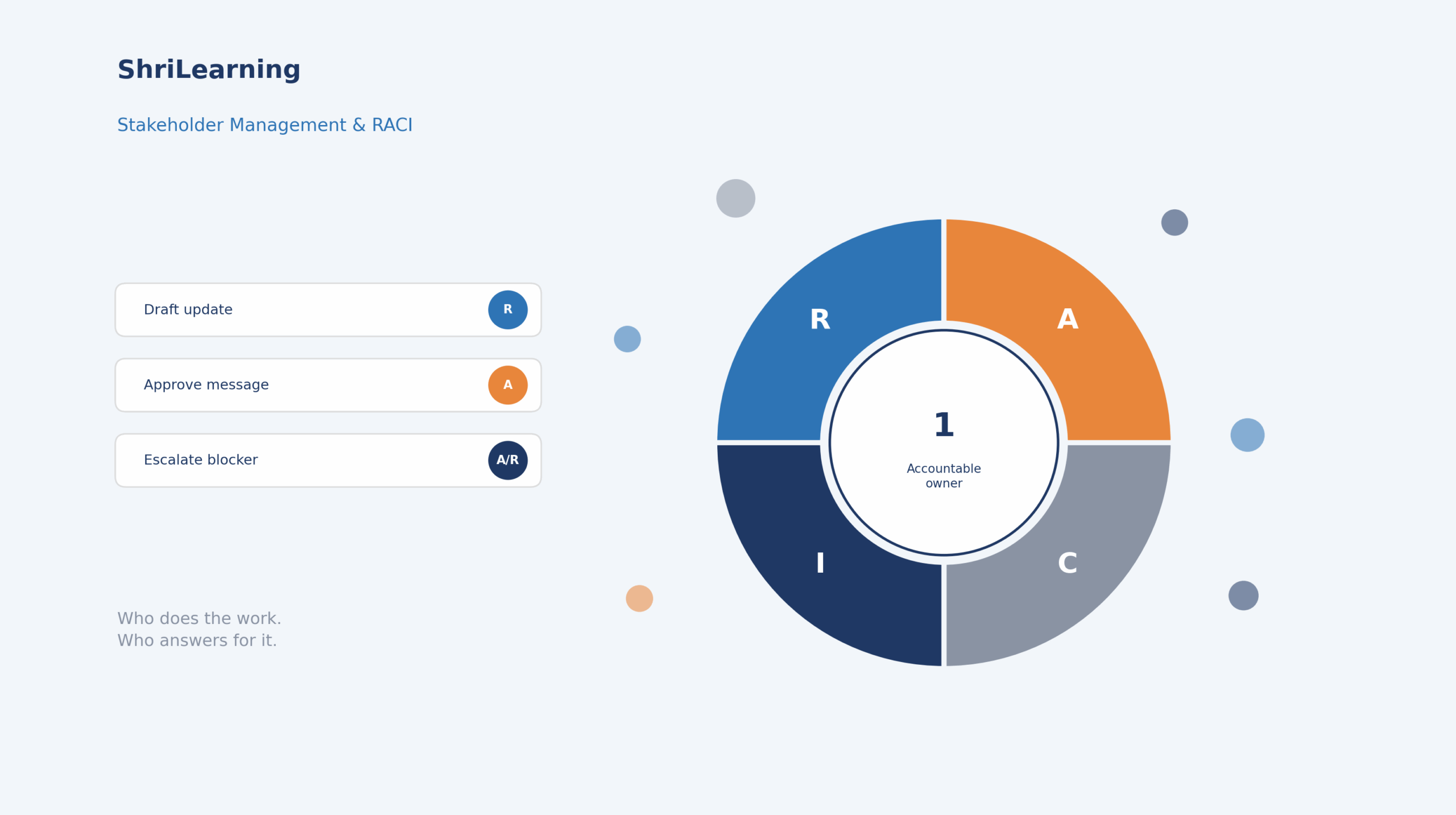
Stakeholder Management and RACI: The Complete PMP Guide (With a Worked Example)
saketpratapsinghdm2026-09-21T15:07:42+05:30September 21st, 2026|
How to Write a Problem Statement (With a PMP-Ready Template and Examples)
saketpratapsinghdm2026-09-21T14:42:27+05:30September 21st, 2026|

Earned Value Management: How to Actually Read CPI and SPI (Not Just Calculate Them)
saketpratapsinghdm2026-09-17T15:32:44+05:30September 17th, 2026|

Agile Practice Guide – Second Edition: What Changed, and What It Means for Your PMI-ACP Prep
saketpratapsinghdm2026-09-17T14:45:53+05:30September 17th, 2026|

Why the PMP People Domain Dropped to 33% (And How to Master It in 2026)
saketpratapsinghdm2026-08-27T21:18:31+05:30August 27th, 2026|

CSM Certification Guide India (2026): Cost, Eligibility, Salary & Exam Steps
saketpratapsinghdm2026-09-17T15:37:52+05:30August 21st, 2026|

Stakeholder Management Plan for PMP: The Complete Guide
saketpratapsinghdm2026-08-21T14:04:07+05:30August 13th, 2026|