How to Get Your PMP Certification in 2026: Step-by-Step Guide & Application Templates
How to Get Your PMP Certification in 2026: Step-by-Step Guide & Application Templates
The Project Management Professional (PMP) certification is one of the most respected credentials in project management, recognized globally by the Project Management Institute (PMI). This guide walks through the full path — eligibility, the application process, the updated July 2026 exam format, and how to prepare — so you know exactly what’s ahead before you start.
What Is PMP Certification?
PMP certification validates a project manager’s ability to lead and direct projects across predictive, Agile, and hybrid environments. It’s recognized across industries — IT, construction, finance, and healthcare alike. If you’re brand new to the credential, start with our Beginner’s Guide to PMP Certification for the essentials before diving into the process below.
Top Benefits of PMP Certification in 2026
- Higher salary potential: PMP-certified professionals earn a documented 17-33% premium over non-certified peers depending on region, with some of the strongest gains in Indian IT hubs like Bengaluru and Hyderabad.
- Credibility and global recognition: You join a credential recognized in over 200 countries, trusted by hiring managers across sectors.
- Expanded career opportunities: Many mid-to-senior PM roles use PMP as a baseline ATS filter — without it, your resume may never reach a human reviewer.
- Deeper practical skills: The certification process itself — not just the exam — builds real capability in planning, execution, and team leadership.
- Professional network: PMI’s global community connects you to over a million project management professionals worldwide.
PMP Certification Eligibility Criteria (2026)
PMI requires a combination of education, project leadership experience, and formal training. The breakdown depends on your educational background:
| Your Education | Experience Required | Hours Leading Projects | Training Required |
|---|---|---|---|
| 4-year degree (any discipline) | 36 months (3 years) | 4,500 hours | 35 contact hours |
| Secondary diploma / high school | 60 months (5 years) | 7,500 hours | 35 contact hours |
Note: PMI has expanded the recognized educational pathways in 2026 — associate degrees and approved vocational qualifications may now qualify for faster tracks. Check current specifics in our PMP Exam Changes 2026 guide. Also important: starting late Q4 2026, live training hours must come through verified official channels — a PMI Authorized Training Partner is the only guaranteed way to have those hours accepted.
For a full breakdown of what your total investment looks like across membership, exam fees, and training, see our PMP Certification Cost Breakdown.
How to Write Your PMP Application Experience (Without Getting Audited)
The number one reason PMP applications get rejected in 2026 isn’t a lack of experience—it’s how that experience is written. PMI reviewers do not want to see your daily job duties. They want to see that you led and directed projects across the five process groups (Initiating, Planning, Executing, Monitoring/Controlling, and Closing).
The Golden Rule for PMP Descriptions: Keep it between 200–500 words. Do not use industry jargon; use PMI terminology.
PMP Project Description Template
To ensure your application is approved smoothly, use this exact structure for every project you submit:
- Objective: [1 sentence explaining the goal of the project]
- Role: [Your specific title, e.g., Project Manager]
- Initiating (IN): [Describe how you defined the scope and identified stakeholders]
- Planning (PL): [Describe how you created the WBS, schedule, and budget]
- Executing (EX): [Describe how you managed the team, communications, and risk execution]
- Monitoring & Controlling (MC): [Describe how you tracked variance and managed scope creep/change requests]
- Closing (CL): [Describe how you handed over deliverables and archived lessons learned]
- Outcome: [1 sentence on the final result]
Example of a Winning Description: “Objective: Develop and launch a new mobile banking app for retail customers. Role: Project Manager. (IN) I defined the high-level scope and conducted stakeholder analysis to gather initial requirements. (PL) I developed the project schedule, created the WBS, and allocated a $500k budget. (EX) I directed the software development team, managed weekly sprint communications, and executed the risk response plan. (MC) I monitored schedule variance using EVM and managed two major change requests from the sponsor. (CL) I obtained final client sign-off, transitioned the app to operations, and archived project documents. Outcome: The app launched on time and achieved 10,000 downloads in month one.”
What Triggers a PMP Audit in 2026?
PMI audits approximately 10% to 20% of all applications randomly. However, you can accidentally trigger a targeted audit if you:
- Overlap Project Dates: Claiming 12 months of experience across two projects running at the same time only counts as 12 months, not 24.
- Use “We” Instead of “I”: PMI wants to know what you did. Using “we” implies you were just a team member, not the project leader.
- List Operations as Projects: Running a helpdesk or doing daily IT maintenance are operations, not temporary endeavors with a unique result. Do not list them.
If you are audited, don’t panic. You will simply need to provide copies of your degree, your 35-hour training certificate (which ShriLearning provides), and a signature from your former manager verifying your experience.
The PMP Application Process, Step by Step
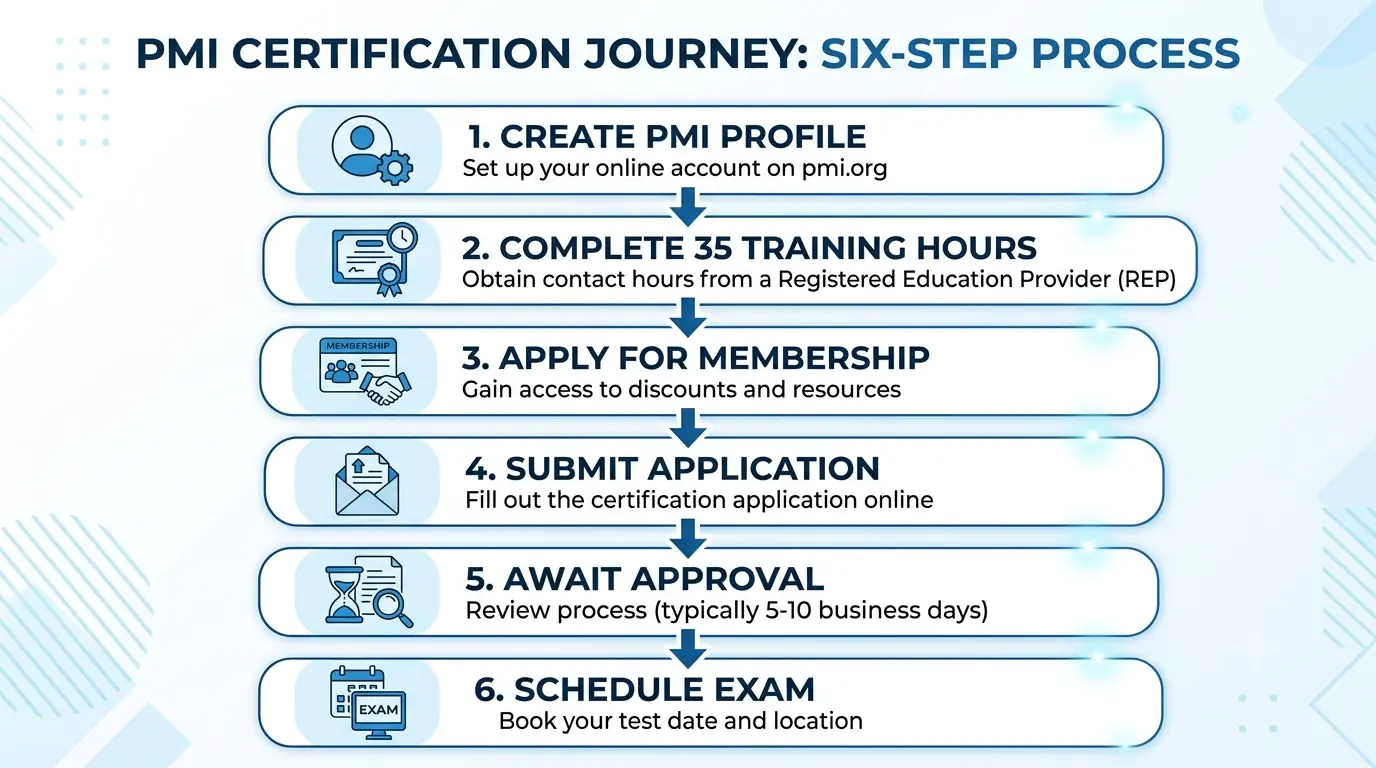
- 1. Create a PMI profile. Visit PMI’s official website (pmi.org) and set up your account — this is where the entire application lives.
- 2. Complete your 35 hours of formal training. Join a recognized program to earn your contact hours while preparing for the exam content itself.
- 3. Apply for PMI membership (optional but recommended). Membership lowers your exam fee and unlocks the official PMBOK Guide plus other PMI standards — it typically pays for itself before you even sit the exam.
- 4. Submit your application. You have 90 days to complete the online form. Document your experience and training with specific detail — vague descriptions are the most common cause of audit delays.
- 5. Await approval. PMI typically reviews applications within 5-10 business days and notifies you by email. A percentage of applications are randomly selected for audit — if that happens, you’ll have 90 days to submit supporting documents.
- 6. Schedule your exam. Once approved, pay the exam fee and pick a date — either at a test center or through Pearson VUE’s OnVUE online proctoring.
Top Tips for PMP Exam Preparation
- Plan your study schedule. Build a realistic timeline covering each domain, with dedicated time for revision near the end. Most working professionals need 3-6 months.
- Master the PMBOK Guide, but don’t stop there. The 2026 exam leans heavily on scenario judgment, not process recall — pair PMBOK study with situational practice questions from day one.
- Practice with full-length simulators. Aim for at least three full-length practice exams under timed conditions before your real exam date — this builds the pacing and endurance the actual test demands.
- Use flashcards for quick-recall review. Terminology and formulas benefit from spaced repetition alongside your deeper study sessions.
- Join a study community. Peer accountability and shared troubleshooting consistently correlate with more consistent study habits.
Build a personalized week-by-week plan with the ShriLearning Study Plan Generator, tuned to your specific exam date.
The PMP Exam Format in 2026
The exam changed significantly on July 9, 2026, under the updated Exam Content Outline (ECO). The current structure:
| Detail | 2026 Format |
|---|---|
| Duration | 240 minutes |
| Questions | 180 total (170 scored + 10 unscored pretest items) |
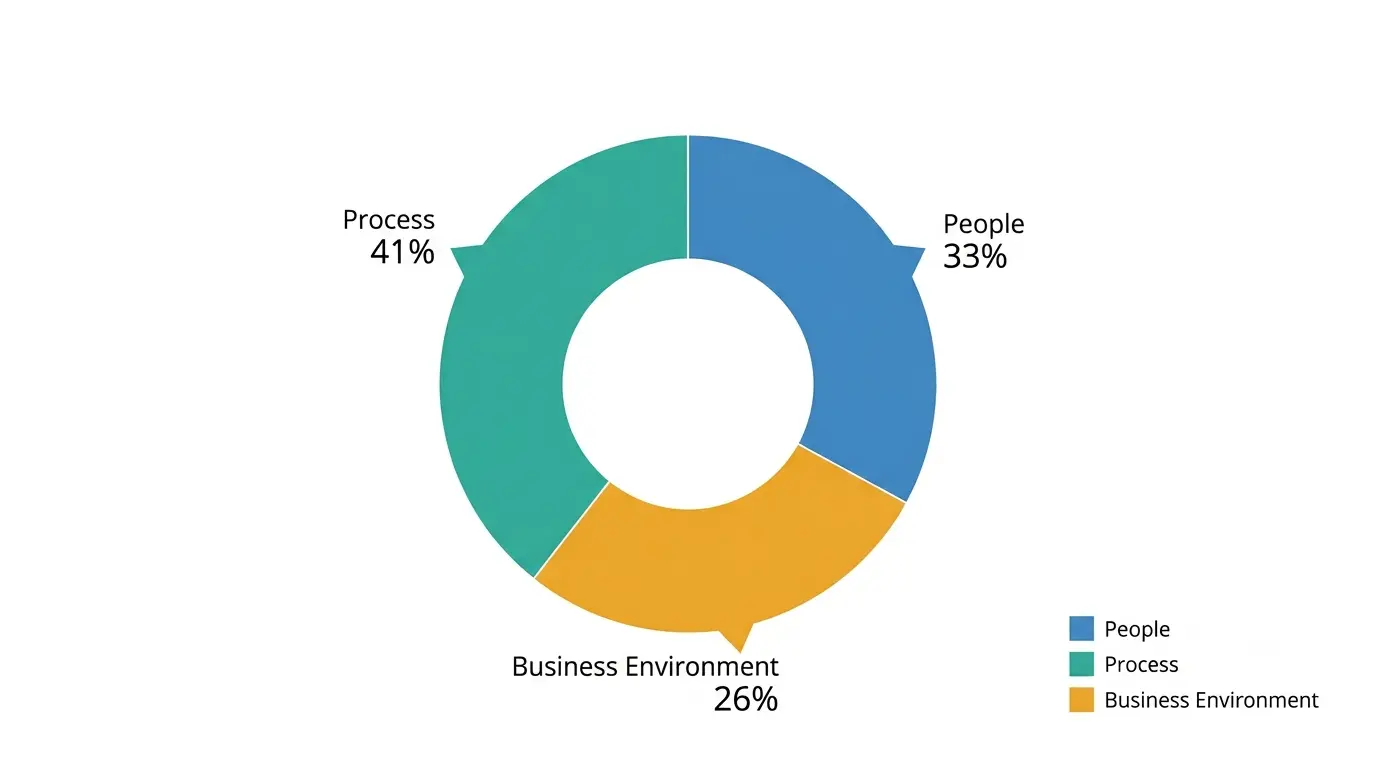
| People domain | 33% |
| Process domain | 41% |
| Business Environment domain | 26% |
| Question types | Multiple choice, multiple response, matching, drag-and-drop, hotspot |
Roughly 60% of questions now involve Agile or hybrid framing rather than pure predictive scenarios — a significant shift from earlier exam versions. For the complete breakdown of what changed and why, see our PMP Exam Changes 2026 guide.
Receiving Your Results and Next Steps
You’ll typically see a pass/fail indication on screen shortly after finishing. If you pass, PMI issues your digital badge and certification. If not, you have two more attempts within your one-year eligibility period. Once certified, your PMP is valid for three years — after that, you’ll need 60 PDUs (Professional Development Units) to renew. For exactly how to earn them without scrambling near the deadline, see our Complete Guide to Earning PMI PDUs.
Start Your PMP Journey with ShriLearning
Ready to begin? Build your study plan with the ShriLearning Study Plan Generator, test yourself with the free 75-question PMP mock exam, or explore our upcoming PMP Online Training batches — live, instructor-led, and fully aligned to the July 2026 exam syllabus.
FAQs
More for you

How to Use AI in Project Management: 10 Practical Workflows
saketpratapsinghdm2026-10-24T15:48:41+05:30October 24th, 2026|
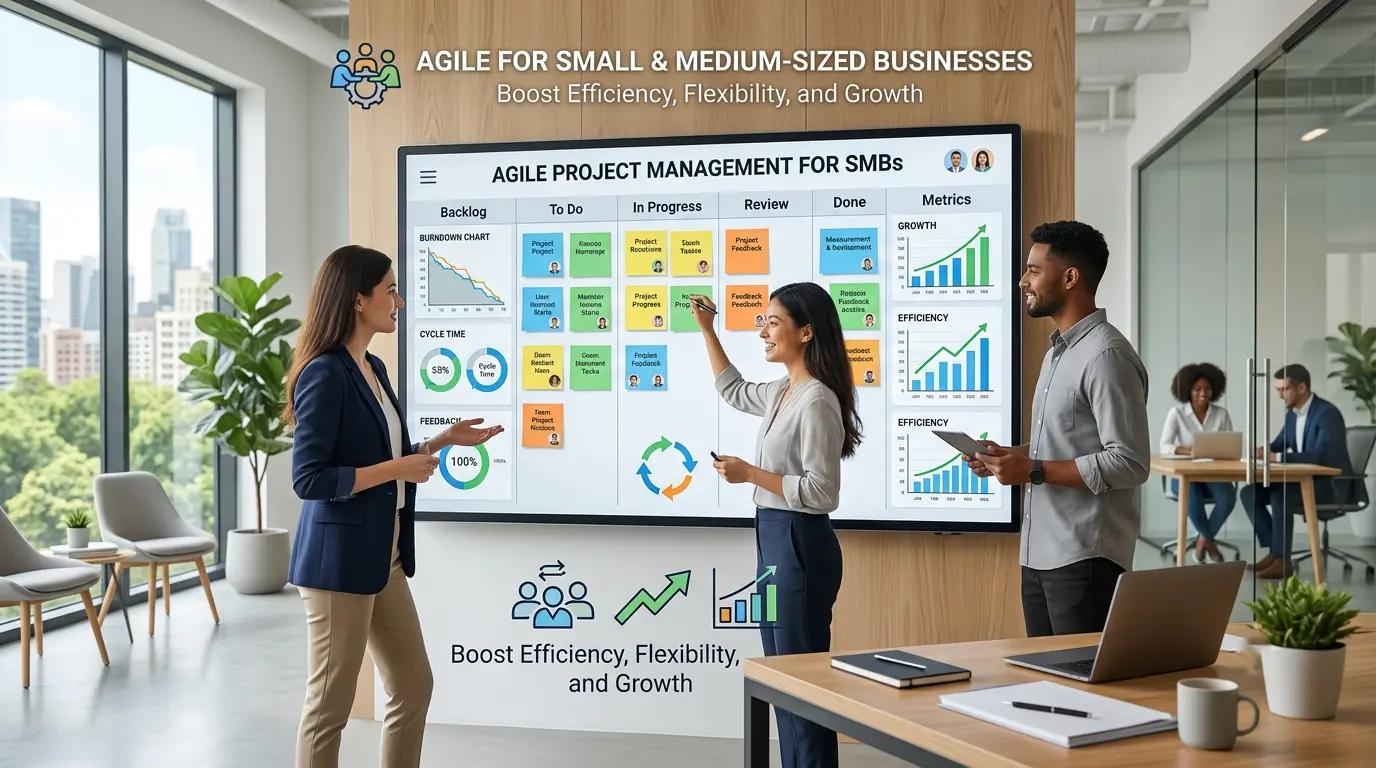
Benefits of Agile Project Management for Small and Medium-Sized Businesses
saketpratapsinghdm2026-09-28T10:12:30+05:30September 28th, 2026|

Work Breakdown Structure (WBS): The Complete PMP Guide, With a Worked Example
saketpratapsinghdm2026-09-21T16:48:15+05:30September 21st, 2026|
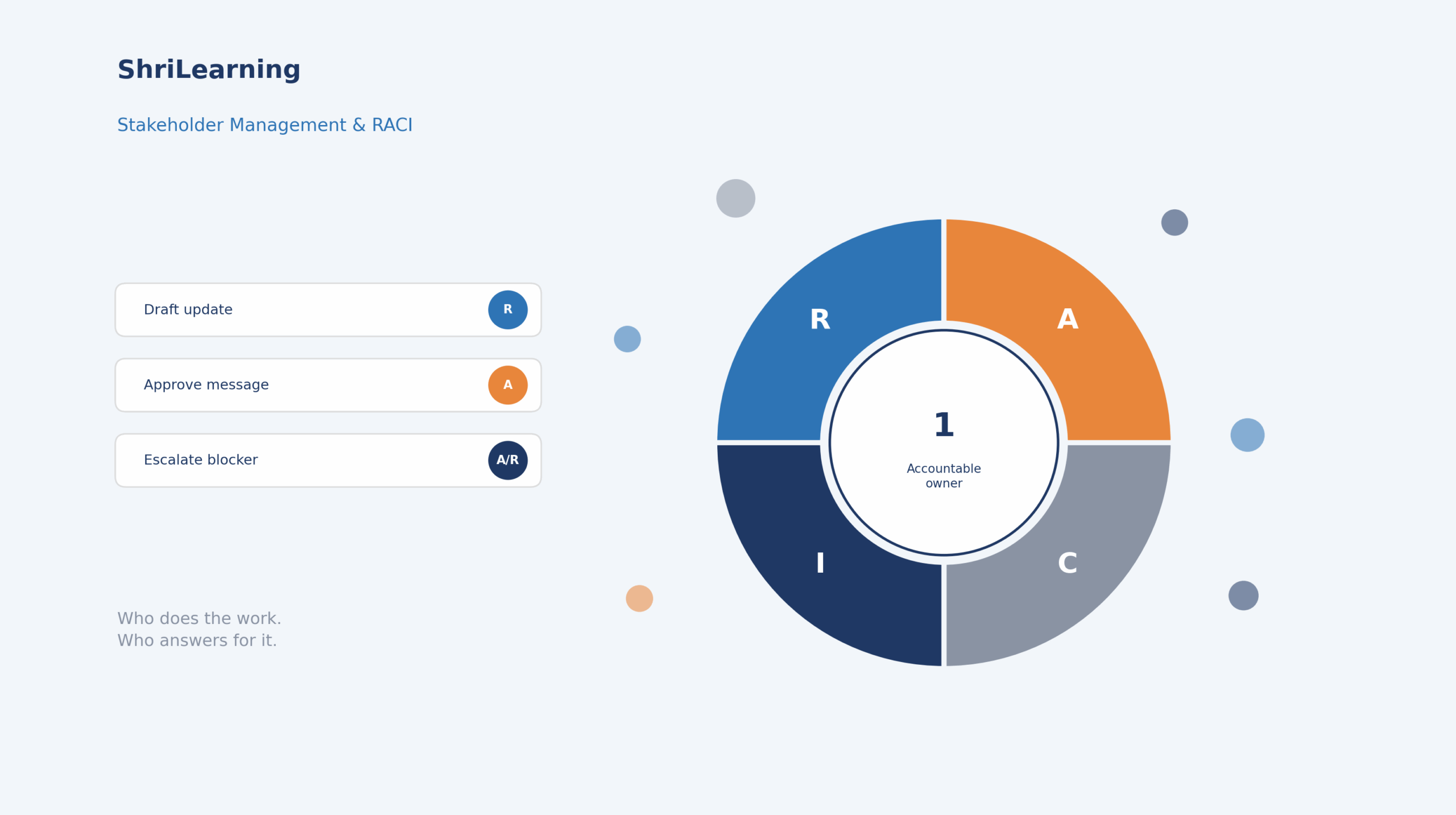
Stakeholder Management and RACI: The Complete PMP Guide (With a Worked Example)
saketpratapsinghdm2026-09-21T15:07:42+05:30September 21st, 2026|
How to Write a Problem Statement (With a PMP-Ready Template and Examples)
saketpratapsinghdm2026-09-21T14:42:27+05:30September 21st, 2026|

Earned Value Management: How to Actually Read CPI and SPI (Not Just Calculate Them)
saketpratapsinghdm2026-09-17T15:32:44+05:30September 17th, 2026|

Agile Practice Guide – Second Edition: What Changed, and What It Means for Your PMI-ACP Prep
saketpratapsinghdm2026-09-17T14:45:53+05:30September 17th, 2026|

Why the PMP People Domain Dropped to 33% (And How to Master It in 2026)
saketpratapsinghdm2026-08-27T21:18:31+05:30August 27th, 2026|