Leading Teams Through Change: How Project Managers Can Drive Successful Transformation in 2026
Leading Teams Through Change: How Project Managers Can Drive Successful Transformation in 2026
Change is no longer a one-time event in 2026. It has become a continuous reality that project managers must handle almost every day. Whether you are rolling out new technology, restructuring teams, or shifting business strategy, the ability to lead teams through change now decides whether your project succeeds or fails. According to PMI’s Projectified podcast, change management is a team sport. It is not just the responsibility of the change manager or project leader. Everyone must own their part. As Sharon Casey clearly stated, “It’s up to everybody to own change management. It’s not just up to the change manager. You have to really think about who’s doing what, and then, where can we get help?” As project environments evolve with technology, understanding will AI replace project managers becomes essential for driving human-centered transformation.
In this comprehensive guide, you will learn practical strategies to lead teams through change effectively in 2026, reduce resistance, and achieve lasting adoption. These insights are especially useful for PMP-certified professionals and aspiring project managers who want to stay ahead in today’s fast-moving business environment.
Why Leading Teams Through Change Remains Challenging in 2026
Leading teams through organizational change in 2026 is challenging primarily due to low people engagement, fear of automation, and unclear role accountability. Studies show nearly 70% of change initiatives fail because organizations focus on technical deliverables while neglecting human sentiment, emotional readiness, and clear communication.
For a deeper understanding of structured change approaches, read our guide on 10 Principles One Should Follow In Their Organization To Manage Possibly Wrenching Change .

8 Proven Strategies to Lead Teams Through Change in 2026
Here is a practical framework you can apply immediately:
-
Make Change a Shared Responsibility
Stop trying to drive change alone. Use a RACI matrix at the beginning of every project to define who is Responsible, Accountable, Consulted, and Informed. This simple step reduces confusion and builds collective ownership across departments and remote teams.
-
Start with the “Who” Before the “What”
Before announcing new processes or tools, map out key stakeholders and influencers. Assess team capabilities and readiness using the skill vs. will matrix to tailor leadership styles for each group and mitigate resistance proactively.
-
Communicate the “Why” Multiple Times Through Multiple Channels
People need to hear the reason for change at least seven times before it truly registers. Combine town halls, team meetings, one-on-ones, and written updates. Connect the change directly to business results and individual career growth.
-
Create Psychological Safety for Honest Conversations
Encourage team members to share concerns without fear. When doubts are expressed openly, you can address them early instead of dealing with hidden resistance later.
-
Break Large Changes into Small, Visible Wins
Big transformations feel overwhelming. Celebrate quick wins publicly. This builds momentum and shows the team that progress is real and rewarding.
-
Equip Your Team with Skills and Support
Many people resist change because they lack confidence in the new way of working. Provide targeted training, coaching, and structured learning resources like the ultimate 2026 PMP study roadmap to help team members adapt smoothly to evolving project standards.
-
Measure Adoption, Not Just Deliverables
Track training completion rates, system usage, and team sentiment. Adjust your approach based on real data instead of assumptions.
-
Use AI and Digital Tools Wisely
In 2026, many organizations are using AI for change communication and training. However, technology alone does not create adoption. Use AI to support conversations, not replace them.
For more insights on advanced skills, see our article Beyond the Basics: 5 Advanced PMP Skills.

How Leading Teams Through Change Connects to PMP Skills in 2026
Change leadership directly maps to several PMP knowledge areas including Stakeholder Engagement, Communications Management, Risk Management, and Resource Management. Developing the PMP mindset 2026 allows project managers to tackle complex situational challenges on both the exam and real-world projects. If you are preparing for PMP certification, check our Complete Guide to PMP Course Syllabus: What You’ll Learn. Great project managers are also skilled at regaining momentum when teams stall. Read our practical tips in 6 Ways Project Managers Can Regain Momentum When the Team Stalls.
Real-World Example of Leading Teams Through Change
Consider a mid-sized company that rolled out a new enterprise system in early 2026. The project manager did not simply send an announcement email. Instead, she created a change champion network across departments, held weekly listening sessions, tied the new system to reduced manual work, and publicly celebrated early adopters. The result was 92% adoption within the first month and almost no productivity drop during the transition. This example shows how following the strategies above can deliver measurable results.

Common Mistakes to Avoid in 2026
- Assuming everyone sees the benefits as clearly as you do
- Underestimating the emotional side of change, especially with AI and automation
- Failing to involve middle managers, who often have the strongest influence
- Stopping communication too early once the system goes live
Final Thoughts and Action Plan
Leading teams through change is one of the most important skills a project manager can develop in 2026. The most successful leaders treat change not as a project phase, but as an ongoing leadership responsibility.
Key Takeaway: Change succeeds when it stops being “my change initiative” and becomes “our shared journey.”
Start today by identifying one upcoming change in your project and applying at least three strategies from this article. For more guidance on modern project management roles, explore our Project Manager Job Description: Roles, Skills, and Career Path in 2026.
FAQs
More for you
How to Use AI in Project Management: 10 Practical Workflows
saketpratapsinghdm2026-10-24T15:48:41+05:30October 24th, 2026|
Benefits of Agile Project Management for Small and Medium-Sized Businesses
saketpratapsinghdm2026-09-28T10:12:30+05:30September 28th, 2026|

Work Breakdown Structure (WBS): The Complete PMP Guide, With a Worked Example
saketpratapsinghdm2026-09-21T16:48:15+05:30September 21st, 2026|
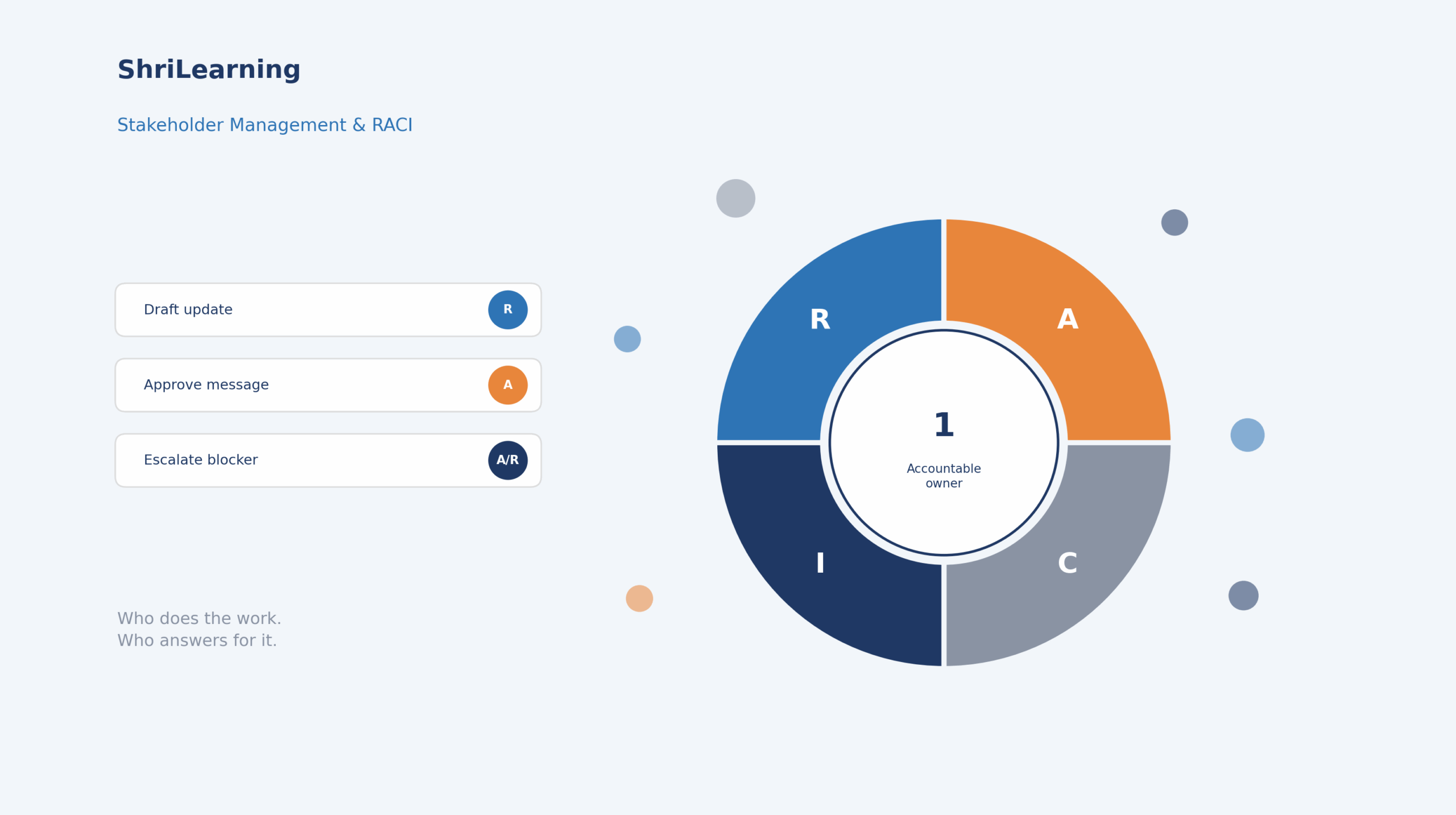
Stakeholder Management and RACI: The Complete PMP Guide (With a Worked Example)
saketpratapsinghdm2026-09-21T15:07:42+05:30September 21st, 2026|
How to Write a Problem Statement (With a PMP-Ready Template and Examples)
saketpratapsinghdm2026-09-21T14:42:27+05:30September 21st, 2026|

Earned Value Management: How to Actually Read CPI and SPI (Not Just Calculate Them)
saketpratapsinghdm2026-09-17T15:32:44+05:30September 17th, 2026|

Agile Practice Guide – Second Edition: What Changed, and What It Means for Your PMI-ACP Prep
saketpratapsinghdm2026-09-17T14:45:53+05:30September 17th, 2026|

Why the PMP People Domain Dropped to 33% (And How to Master It in 2026)
saketpratapsinghdm2026-08-27T21:18:31+05:30August 27th, 2026|