6 Phases to Run a Successful AI Project
6 Phases to Run a Successful AI Project
The 6 phases of a successful AI project lifecycle are 1. Business Understanding, 2. Data Understanding, 3. Data Preparation, 4. Model Development, 5. Model Evaluation, and 6. Model Operationalization (Deployment & Monitoring). Based on the Cognitive Project Management for AI (CPMAI) methodology—an evolution of CRISP-DM—this vendor-neutral lifecycle provides an iterative, data-first blueprint to ensure business ROI, ethical AI governance, and continuous post-deployment monitoring.
Artificial intelligence projects fail at an alarming rate—over 80% according to industry benchmarks—when teams treat them like traditional software rollouts. Unlike traditional IT projects that follow deterministic rules, AI and Machine Learning (ML) solutions rely on probabilistic algorithms and dynamic data patterns. To prevent scope creep, model drift, and unbudgeted costs, project managers must adopt a structured AI lifecycle. Grounded in the Cognitive Project Management for AI (CPMAI) framework and aligned with 2026 Project Management Institute (PMI) standards, this guide details the exact six-phase roadmap to build, deploy, and scale enterprise AI solutions successfully.
Why AI Projects Require a Specialized Lifecycle (Deterministic vs. Probabilistic)
Traditional software engineering is deterministic: developers write explicit code logic where input A always produces output B. In contrast, Artificial Intelligence and Machine Learning initiatives are probabilistic: models learn patterns from training data to infer statistical probabilities. Because output quality depends on underlying data distributions rather than rigid code, standard waterfall or agile software methodologies fall short when managing model uncertainty, hallucination risks in Large Language Models (LLMs), and continuous system adaptation.
To address these unique dynamics, project leaders rely on the CPMAI (Cognitive Project Management for AI) framework. Built upon the classic CRISP-DM data mining standard, CPMAI enforces a cyclical, step-by-step process where teams continuously re-evaluate assumptions as data insights evolve. Adopting this rigorous framework ensures alignment with corporate governance, legal compliance, and organizational KPIs. For a broader overview of adaptive project frameworks, explore our detailed guide on Types of Project Management Methodologies.
The 6 Phases to Run a Successful AI Project
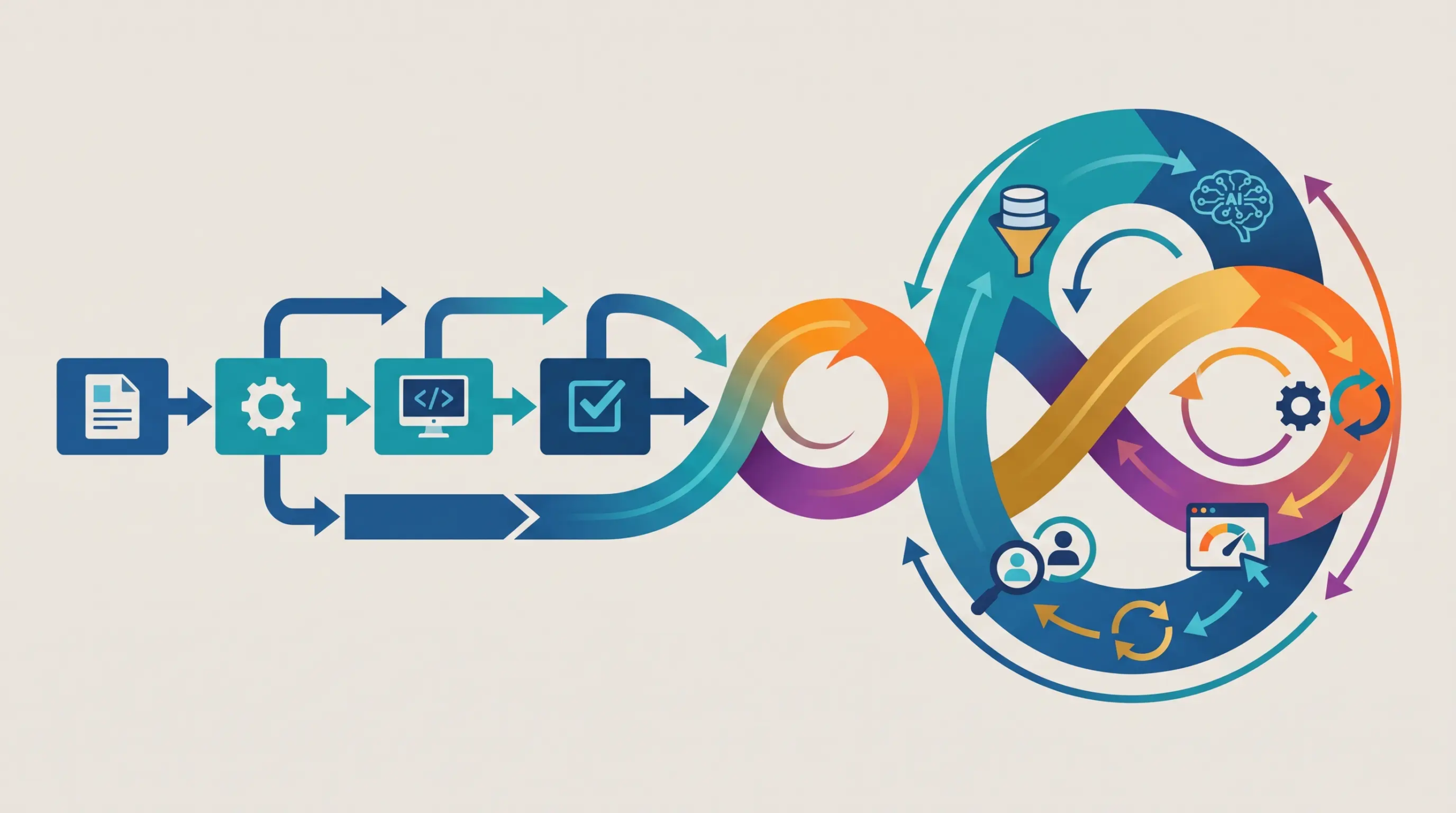
The CPMAI methodology structures AI initiatives into six interconnected, iterative phases. While sequence matters, teams frequently circle back to earlier steps as technical validation and data availability dictate.
Phase 1: Business Understanding
The baseline phase focuses on defining business objectives, scope, and key success metrics before selecting technologies. Project managers must evaluate whether AI is truly necessary or if a simpler heuristic approach suffices. Key tasks include identifying executive sponsors, defining measurable Key Performance Indicators (KPIs) like ROI or customer churn reduction, assessing ethical considerations, and establishing clear project milestones.
Phase 2: Data Understanding
Phase 2 audits the available data ecosystem to verify quality, accessibility, and volume. AI models require clean, representative data to function effectively. Project leaders must locate structured and unstructured data sources, audit datasets for historical bias or missing values, enforce data governance and privacy policies (such as GDPR or India’s DPDP Act), and confirm that available data aligns directly with the business problem.
Phase 3: Data Preparation
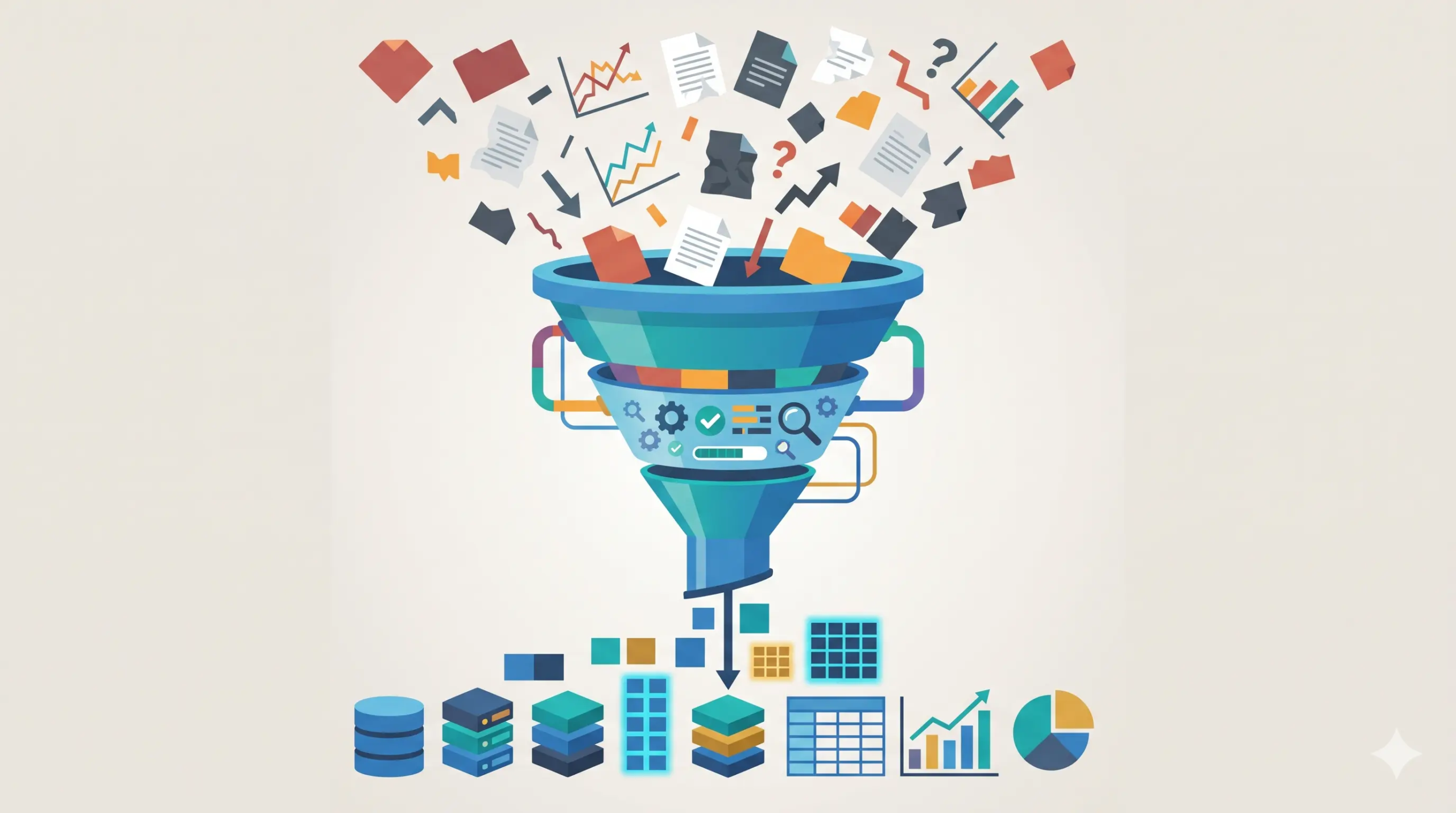
Data Preparation consumes 60% to 80% of an AI project’s timeline. This critical phase transforms raw data into high-quality datasets suitable for model training. Core activities include data cleaning, feature engineering, normalisation, aggregation, and splitting datasets into training, validation, and testing sets. Rigorous data preparation minimizes downstream risks such as overfitting and biased model outputs.
Phase 4: Model Development
During Phase 4, data scientists and machine learning engineers construct, train, and fine-tune algorithms using the prepared data. Tasks include selecting appropriate algorithm families (e.g., supervised learning, neural networks, or LLM fine-tuning), training baseline models, optimizing hyperparameters, and documenting model architecture and decision boundaries to maintain algorithmic transparency.
Phase 5: Model Evaluation
Phase 5 rigorously tests candidate models against both technical benchmark metrics (precision, recall, F1-score, accuracy) and real-world business objectives established in Phase 1. Evaluation involves validating performance on unseen test data, verifying algorithmic fairness, ensuring compliance with responsible AI frameworks, and securing stakeholder approval prior to production release.
Phase 6: Model Operationalization
Phase 6 transitions the model into live operational environments (MLOps). Deployment is not the final step; continuous operationalization requires establishing real-time monitoring infrastructure to detect model drift, data drift, and performance degradation. Project managers must establish feedback mechanisms, automated retraining schedules, and clear maintenance protocols to ensure long-term value delivery.
Common Mistakes in AI Project Management
Managing these specific phases requires strict discipline. Avoid these frequent pitfalls to keep your initiative on track:
- Starting with algorithm selection over business value: Selecting complex generative models before defining precise ROI goals leads to costly proof-of-concepts that fail in production.
- Neglecting data governance and privacy: Inadequate data vetting violates data compliance laws (like DPDP Act or GDPR) and risks severe reputational damage.
- Underestimating MLOps and model drift: Treating AI deployment as a traditional “launch-and-forget” software update causes model accuracy to decay rapidly as production data evolves.
- Siloing data science from business stakeholders: Isolating engineering teams from domain experts produces technically sound models that solve the wrong operational problems.
How AI Lifecycles Feature in the 2026 PMP Exam
For project managers seeking certification, understanding how emerging technologies alter the project lifecycle is essential. The PMP exam tests your ability to navigate complex, hybrid environments where traditional planning meets agile execution.
The Project Management Professional (PMP)® exam, updated under the 2026 Examination Content Outline (ECO), emphasizes AI project governance within the Business Environment domain. Candidates must understand how to integrate predictive insights, establish ethical guardrails, and manage hybrid project lifecycles.
How is AI tested on the 2026 PMP exam? The 2026 PMP exam tests AI focus areas including validating AI predictive models against human judgement, ensuring data privacy and ethical compliance, managing team capabilities across cross-functional data science groups, and balancing algorithmic outputs with strategic business value.
Key Terms Table
| Term | Definition |
| Probabilistic Logic | A system that calculates outcomes based on statistical probabilities rather than fixed rules. |
| Data Governance | The overall management of data availability, usability, integrity, and security in an organization. |
| Model Drift | The degradation of a machine learning model’s predictive power due to changes in real-world environments. |
| CPMAI Methodology | Cognitive Project Management for Artificial Intelligence; an iterative, vendor-neutral methodology optimizing CRISP-DM for AI implementations. |
Machine Learning Operations; practices for automating and monitoring the deployment, pipeline maintenance, and governance of production ML models.
Related Reading on ShriLearning
Expand your knowledge of modern project lifecycles with these resources:
- Artificial Intelligence in the Field of Project Management
- The 5 Phases of Project Management: How the 2026 PMP Exam Tests the Lifecycle
- What Is a Project in Project Management: Life Cycle and More
- Project Life Cycle: Stages, Types, and Why It’s Your Guide
If you are ready to master project lifecycles and pass the PMP exam on your first try, join Head Coach Shriram Kumar D in our upcoming weekend live batches (Sat-Sun, 6 to 10 PM IST). ShriLearning provides the mandatory 35 Contact Hours Certificate. You can take a free PMP mock at ShriLearning today to test your readiness. Please check current pricing at the live events page on shrilearning.com.
Your first project is calling—will you answer? Join the ShriLearning Community Connect with fellow PMP aspirants and expert instructors. Crete your study plan for free from ShriLearning study-plan-generator.
FAQs
More for you

6 Phases to Run a Successful AI Project
saketpratapsinghdm2026-10-25T15:57:35+05:30October 25th, 2026|

How to Transition From Project Manager to PMO Leader
saketpratapsinghdm2026-10-25T14:09:58+05:30October 25th, 2026|

Sustainable AI Starts with Trustworthy AI: A 2026 Guide for Project Managers
saketpratapsinghdm2026-10-24T17:34:12+05:30October 24th, 2026|

Leading Teams Through Change: How Project Managers Can Drive Successful Transformation in 2026
saketpratapsinghdm2026-10-24T16:59:20+05:30October 24th, 2026|

How to Use AI in Project Management: 10 Practical Workflows
saketpratapsinghdm2026-10-24T15:55:17+05:30October 24th, 2026|
Benefits of Agile Project Management for Small and Medium-Sized Businesses
saketpratapsinghdm2026-09-28T10:12:30+05:30September 28th, 2026|

Work Breakdown Structure (WBS): The Complete PMP Guide, With a Worked Example
saketpratapsinghdm2026-09-21T16:48:15+05:30September 21st, 2026|
Stakeholder Management and RACI: The Complete PMP Guide (With a Worked Example)
saketpratapsinghdm2026-09-21T15:07:42+05:30September 21st, 2026|