Artificial Intelligence in the field of Project Management
Artificial Intelligence in the field of Project Management
The most immediate and practical way professionals are leveraging this technology is through generative AI assistants.
Industry experts often highlight that modern project management is no longer just about tracking tasks; it is about steering entire organizations toward strategic excellence through the power of intelligent technology.
Join the ShriLearning Community Connect with fellow PMP aspirants and expert instructors. Crete your study plan for free from ShriLearning study-plan-generator.
Generative assistants are introducing a massive, overdue evolution to the profession. Historically, leaders relied heavily on static spreadsheets, manual presentations, and siloed documents to convey status updates. These legacy methods required exhausting manual input from everyone involved.
Today, intelligent algorithms seamlessly manage these data-heavy, administrative burdens. By offloading repetitive duties, project managers can redirect their focus toward complex problem-solving, team leadership, and strategic planning—areas where human expertise is irreplaceable.
Throughout the project life cycle, AI and machine learning actively support teams by:
- Automating mundane, repetitive activities.
- Generating data-backed insights to drive smarter decisions.
- Predicting potential risks and forecasting final outcomes.
- Optimizing resource allocation and master scheduling.
- Improving risk evaluation and active control measures.
- Accelerating the upskilling process for team members.
As these capabilities expand, leaders who embrace them will continuously drive superior project results with far less manual friction.
The Impact of AI on Project Management
While we are still in the early phases of AI integration, the technology is advancing at an unprecedented speed. By the close of this decade, the entire project management landscape will be fundamentally transformed.
- By 2026: Due to the rapid adoption of strategic portfolio management AI, approximately 70% of traditional hierarchy titles (portfolio, project, program) are expected to transition into dynamic, role-based descriptions.
- By 2028: PMO leaders will likely rely on predictive algorithms to forecast budget overruns and schedule delays with over 90% accuracy, empowering teams to take immediate corrective action and safeguard portfolio resilience.
- By 2030: Machine learning is projected to successfully automate nearly 80% of all standard project management tasks.
It is crucial to approach these forecasts with the right mindset: technology is designed to augment human capability, not replace it. The core pillars of successful project management—emotional intelligence, nuanced stakeholder negotiation, and creative problem-solving—will always demand human judgment.
Ultimately, algorithms will eliminate the busywork that currently forces professionals to prop up inefficient systems. By mastering these tools today, you position yourself as a highly valuable asset in a rapidly shifting industry. The project managers who remain in peak demand will be those who seamlessly blend technological fluency with irreplaceable human leadership.
Instead of fearing obsolescence, focus entirely on upskilling. Dive into data analytics, champion AI adoption in your PMO, and refine the uniquely human soft skills that code cannot replicate.
Applying Artificial Intelligence in the world of Project Management
Integrating this technology means embedding intelligent tools natively into every phase of your project life cycle. Here are practical ways these systems actively support your workflow:
Planning and Scheduling
Algorithms drastically improve the precision of your initial project plans. By analyzing years of historical project data, machine learning models can accurately estimate task durations, map out complex dependencies, and instantly generate optimized master schedules.
Resource Management
Intelligent systems optimize resource allocation by automatically matching team members to specific tasks based on their documented skills. Predictive analytics also forecast future capacity needs, ensuring you never over-allocate your top performers.
Risk Management
Proactive risk mitigation becomes effortless. Using natural language processing (NLP), systems scan dense project documents to identify hidden vulnerabilities, while machine learning evaluates the statistical probability and potential impact of those risks.
Project Monitoring
AI-driven dashboards deliver real-time, automated updates on overall project health. In construction or manufacturing, computer vision can even visually track the physical progress of site activities.
Decision Support
When faced with complex crossroads, project managers can lean on virtual assistants to evaluate multiple scenarios, suggest the most viable corrective actions, and provide instant answers to urgent operational queries.
Task Automation
Robotic Process Automation (RPA) eliminates administrative drag. Managers can configure these models to automatically update status reports, sync documentation, and handle routine communication across platforms.
Predictive Analytics
Advanced forecasting tools proactively identify bottlenecks, estimate exact cost overruns, and predict schedule delays long before they impact the critical path, allowing for rapid course correction.
Upskilling Talent
AI drastically shortens the learning curve for new team members. Intelligent assistants act as on-demand mentors, instantly retrieving operational guidelines, product information, and process solutions exactly when an employee needs them.
Advantages of AI in the field of Project Management
Adopting these intelligent systems maximizes overall performance, skyrockets productivity, and drastically reduces the manual effort required to launch and track initiatives.
The project manager of the future will operate alongside a digital co-pilot, handing off the time-consuming administrative work that used to dominate their calendar. The primary advantages of this shift include:
- Highly efficient scheduling and sprint planning.
- Robust, proactive risk evaluation.
- Optimized, burnout-free resource utilization.
- Deep predictive analytics for accurate forecasting.
- Frictionless automation of routine tasks.
- Data-backed decision-making support.
- Pinpoint accuracy in final cost estimation.
To unlock this value, it is critical to select solutions that integrate natively with your existing platforms. For example, modern generative AI assistants built directly into enterprise work management software are specifically engineered to elevate decision-making and automate routine tasks without forcing your team to switch between a dozen different applications.
Applying Artificial Intelligence Tools and platforms to Project Management
Deploying these systems might feel intimidating, but the roadmap is highly straightforward. Follow these five steps to smoothly integrate intelligent automation into your daily operations.
Select suitable AI-powered project management tools and software. Begin by evaluating your organization’s precise needs. Compare platforms by prioritizing features that solve your biggest pain points, such as natural language processing or advanced predictive analytics.
Integrate AI tools with your current systems. Determine how the new solution will interface with your existing ERP, CRM, and communication stacks. Work closely with your IT department to ensure seamless compatibility. A well-integrated system pulls data from across the enterprise, offering a holistic view of project health and highly reliable insights.
Train team members to use AI-enabled software and understand AI-generated insights. Technology is useless without adoption. Host comprehensive training sessions that cover both the technical mechanics of the software and the critical thinking required to interpret its data. Ensure your team understands that the system is there to eliminate their busywork, not their jobs.
Keep project data safe and secure. Implement rigorous cybersecurity protocols to protect your proprietary data from breaches and unauthorized access. Utilize strict encryption, multi-factor authentication, and routine security audits. Always ensure your chosen platforms comply fully with regulations like the CCPA and GDPR.
Continuously provide project data to improve AI performance. Machine learning thrives on volume. The more data you feed the system, the more accurate its future predictions become. Maintaining a steady flow of high-quality, up-to-date inputs allows the algorithms to adapt to changing environments and deliver increasingly sharper strategic recommendations.
AI and Automation in the field of Project Management
Intelligent automation transforms execution through real-time status tracking, automated data collection, automatic task assignment, and RPA models designed for repetitive workflows.
Deploying these technologies minimizes human error, allows for highly precise estimation, drives data-backed decision-making, and guarantees you are maximizing your available resources. Managers can deploy these tools across every phase of the project life cycle, from initial budgeting and risk mapping to team collaboration and final performance reporting.
However, leaders must navigate several common challenges during implementation:
- System Integration: Ensuring your new tools communicate flawlessly with legacy enterprise software.
- Data Consistency: Guaranteeing that automated pipelines transfer information without corrupting or dropping data points.
- Change Management: Giving your teams the time, training, and support they need to confidently adapt to automated workflows.
- Human Oversight: Recognizing that blind trust in automation introduces massive risk. Always maintain appropriate governance and human-in-the-loop validation for critical decisions.
Artificial Intelligence Platforms for Project Management
For teams ready to modernize, the market is saturated with options. However, adopting a single, unified AI platform is vastly more efficient than attempting to stitch together multiple fragmented tools.
- Generative AI Assistant
These conversational interfaces allow users to query their project databases using natural language, receiving instant strategic recommendations and operational insights.
- AI Help and Upskilling
In-app digital assistants can instantly search thousands of internal knowledge base articles, providing immediate, text-based guidance to team members learning a new process.
- Sentiment Analysis
By leveraging computational linguistics, systems can analyze the emotional tone of team communications and status updates. This allows managers to spot burnout, frustration, or declining morale long before it derails a deliverable.
- Summarizers
Intelligent summarization tools instantly condense massive comment threads, issue logs, and risk registers into clear, concise executive summaries or release notes.
- Optimizations and Simulations
Advanced scenario planning empowers PMOs to simulate multiple project paths. Organizations can compare different resource allocation strategies to identify the most capital-efficient route to success.
Project Management and AI: Saving Time via Conversation
While overhauling enterprise workflows sounds daunting, the actual user experience is remarkably intuitive. Because these tools utilize natural language processing (NLP), interacting with them feels just like chatting with a colleague.
Instead of spending hours manually compiling data for a status report, project managers can simply ask their generative assistant to pull the numbers, format the update, and highlight any scheduling conflicts. This conversational approach drastically reduces the friction of daily reporting, empowering teams to make faster, better-informed decisions.
AI in Portfolio Management
While the underlying technology is the same, artificial intelligence serves a uniquely different purpose at the portfolio level compared to individual project management. Here, the focus shifts toward strategic alignment, capital allocation, and macro-level visibility.
Project, Program, or Initiative Selection and Prioritization Algorithms evaluate potential ROI, resource availability, risk profiles, and strategic alignment to recommend exactly which initiatives the organization should fund.
Resource Optimization At the portfolio level, AI resolves complex capacity conflicts across dozens of concurrent projects, ensuring the right skills are deployed to the highest-priority tasks without creating organizational bottlenecks.
Portfolio Performance Analysis Automated, macro-level dashboards highlight unusual trends and performance patterns across the entire enterprise, translating complex global data into clear, actionable executive insights.
Scenario Planning Business leaders can simulate the cascading impacts of major decisions—like budget cuts or schedule shifts—understanding the exact outcomes before officially implementing a change.
Objectives and Key Results (OKRs) Integrating OKR frameworks with intelligent portfolio management ensures that every funded initiative directly supports the company’s high-level strategic goals.
Just like individual project management, the success of AI in portfolio management hinges entirely on data quality, seamless integration, and strong change management. Balancing machine-generated insights with experienced executive judgment remains the key to mitigating risk.
Project Management and AI: Unlocking New Potential
For decades, the project management profession has been anchored to manual tools that required exhausting effort simply to maintain. We are now entering a totally new era.
Artificial intelligence is unlocking unprecedented potential, replacing static spreadsheets with dynamic, intelligent partners. By automating the mundane and elevating the strategic, this technology is empowering the next generation of project managers to lead with unparalleled clarity and focus.
Check out this PMP Exam Tricky Questions Explanation Series to see how understanding situational challenges can elevate your problem-solving skills, complementing the strategic benefits of AI in project management.
Related guides on ShriLearning:
- How to Analyze Your PMP Mock Test Like a Pro
- Best PMP Exam Simulator 2026: The Complete Comparison Guide
- What to Do When You Score 60% on PMP Mocks
- How to Maximize Your PMP Practice Tests
Join the ShriLearning Community Connect with fellow PMP aspirants and expert instructors. Crete your study plan for free from ShriLearning study-plan-generator.
FAQs
More for you
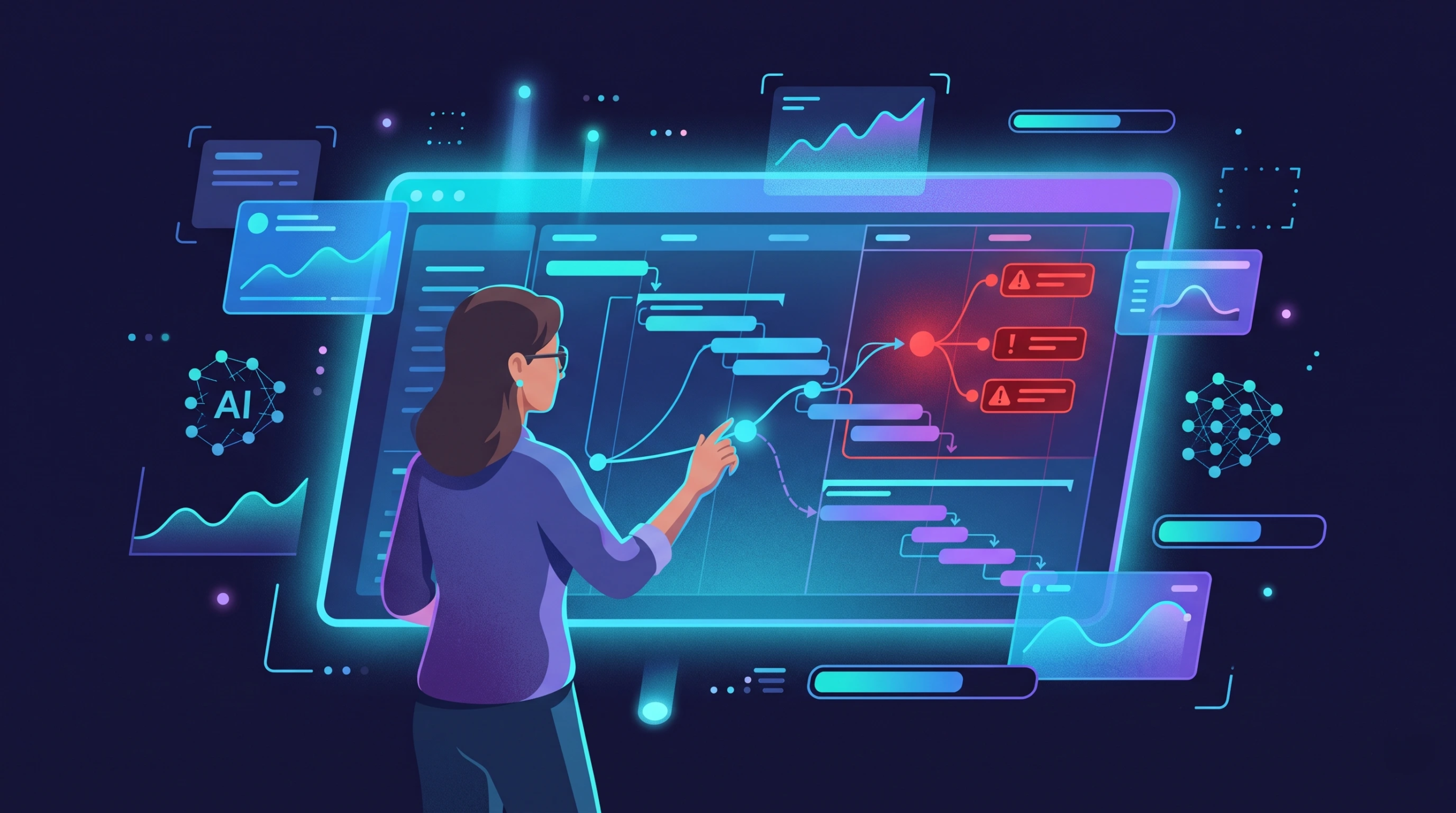
How to Use AI in Project Management: 10 Practical Workflows
saketpratapsinghdm2026-10-24T15:48:41+05:30October 24th, 2026|
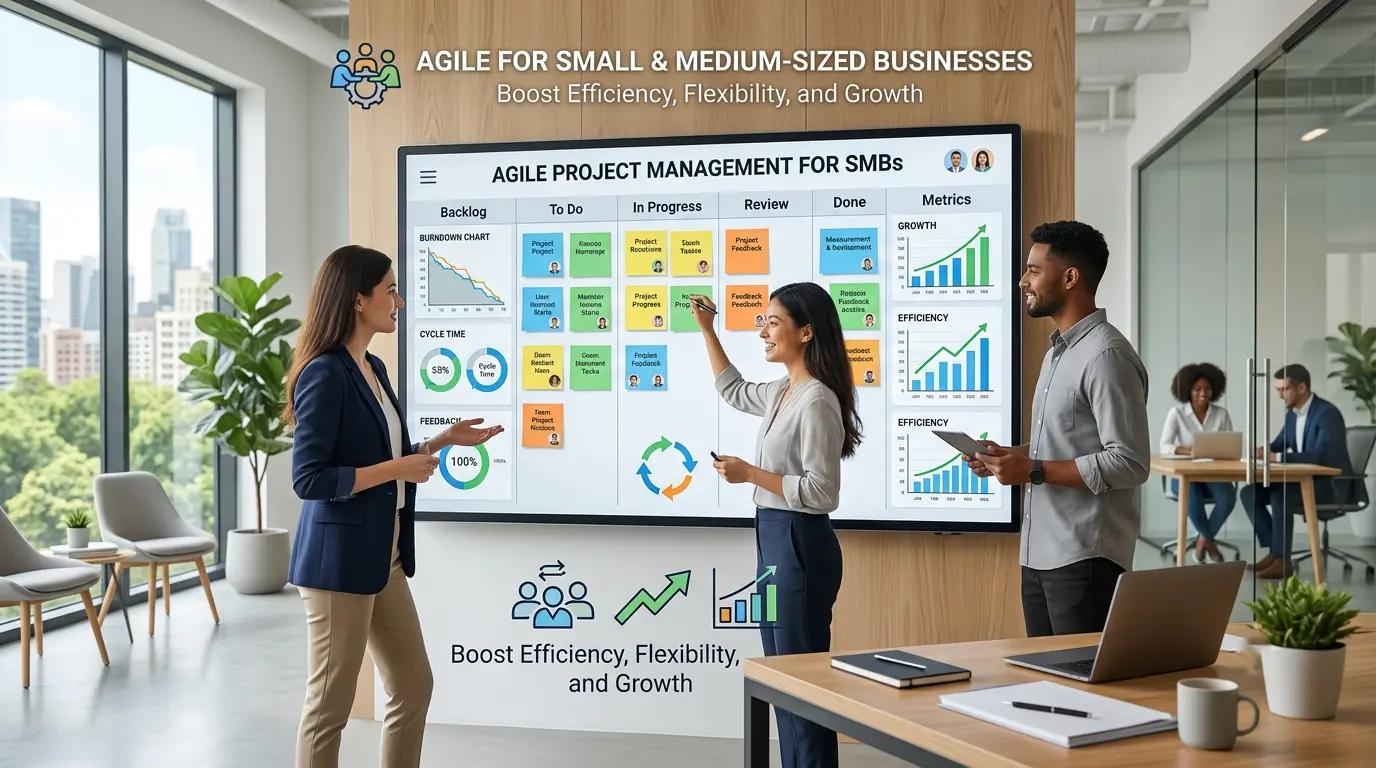
Benefits of Agile Project Management for Small and Medium-Sized Businesses
saketpratapsinghdm2026-09-28T10:12:30+05:30September 28th, 2026|

Work Breakdown Structure (WBS): The Complete PMP Guide, With a Worked Example
saketpratapsinghdm2026-09-21T16:48:15+05:30September 21st, 2026|
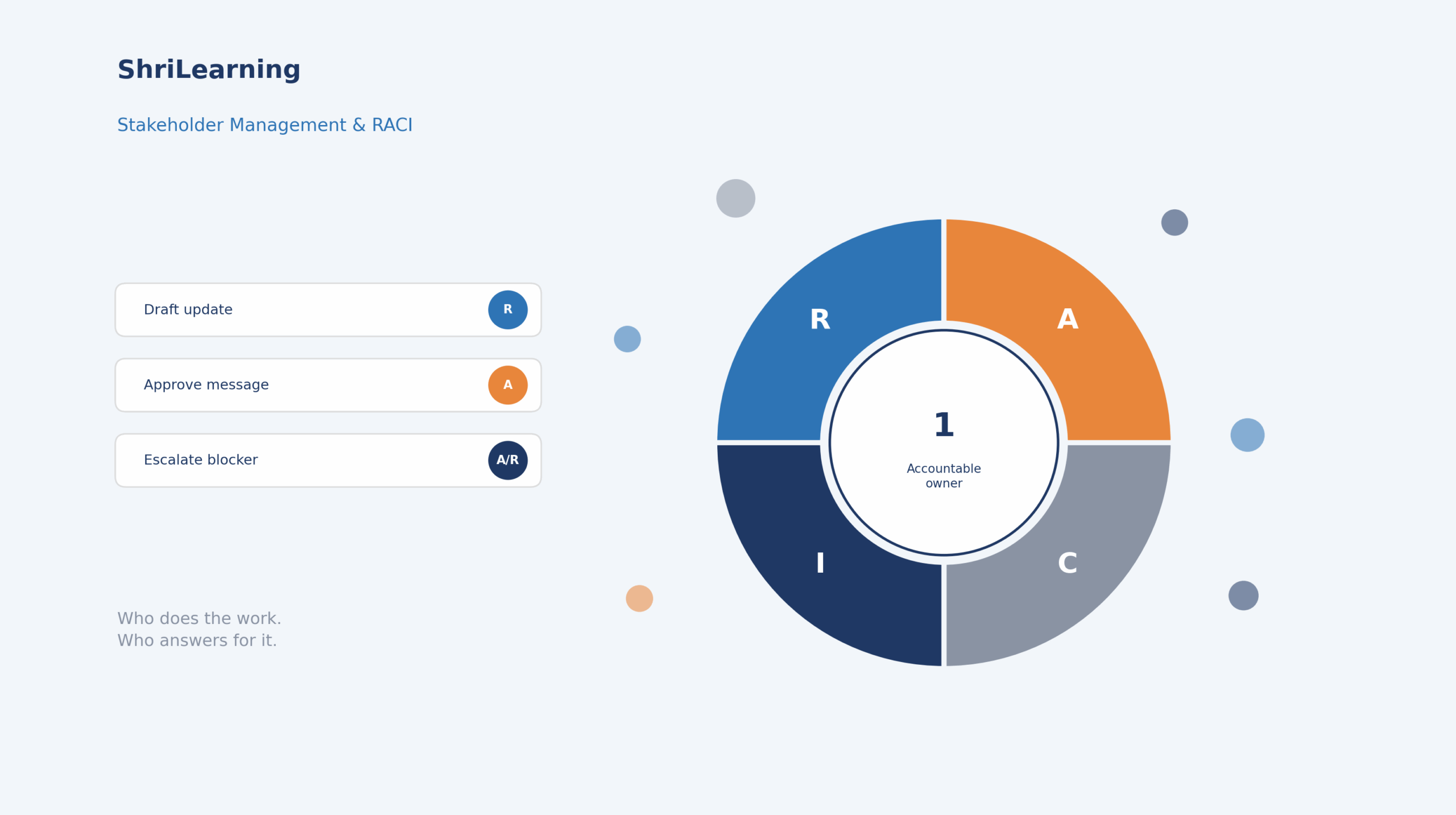
Stakeholder Management and RACI: The Complete PMP Guide (With a Worked Example)
saketpratapsinghdm2026-09-21T15:07:42+05:30September 21st, 2026|
How to Write a Problem Statement (With a PMP-Ready Template and Examples)
saketpratapsinghdm2026-09-21T14:42:27+05:30September 21st, 2026|

Earned Value Management: How to Actually Read CPI and SPI (Not Just Calculate Them)
saketpratapsinghdm2026-09-17T15:32:44+05:30September 17th, 2026|

Agile Practice Guide – Second Edition: What Changed, and What It Means for Your PMI-ACP Prep
saketpratapsinghdm2026-09-17T14:45:53+05:30September 17th, 2026|

Why the PMP People Domain Dropped to 33% (And How to Master It in 2026)
saketpratapsinghdm2026-08-27T21:18:31+05:30August 27th, 2026|