Benefits of Agile Project Management for Small and Medium-Sized Businesses
Benefits of Agile Project Management for Small and Medium-Sized Businesses
Operating a small or medium-sized business can sometimes feel like “constructing an airplane while already in flight.” Business owners and managers, along with their teams, juggle numerous moving parts in daily operations as they work to stay ahead of quickly shifting market demands. We have watched many entrepreneurs struggle to introduce fresh ideas and initiatives through project management methods that feel overly rigid or complicated for their agile operations. Here is the positive part? Agile project management could be precisely what your company requires to succeed in the rapidly evolving business landscape.
Initially created for software development teams, these practices have demonstrated their value across numerous industries—from manufacturing and marketing to all professional services. Within smaller and medium-sized companies, these adaptable frameworks provide a means to create value more quickly, adapt to changes effectively, and maintain team motivation and productivity.
Why Agile Is Especially Effective for Small and Medium-Sized Businesses
Built-In Flexibility for Uncertain Factors
Traditional project management usually assumes that you know precisely what you need and how to achieve it before the project begins. Agile methodology works well for small and medium-sized businesses because it accepts uncertainty and shifting priorities throughout the project and incorporates an element of what is called Design Thinking that guides teams to recognize and prioritize the requirements of the project.
A key advantage of this Agile project management approach has been its ability to help teams remain flexible. The Agile methodology is iterative, giving smaller teams greater flexibility while emphasizing value delivery across the project through small increments instead of one major “launch” when the project is finished. This iterative method enables teams to rapidly adjust workflows and strategy without disrupting the entire project.
When business or customer needs change, market conditions shift, or fresh opportunities arise, Agile enables projects to shift without having to begin again from scratch. This flexibility is essential for all the smaller businesses that must react quickly to remain competitive.
Smaller but More Focused Teams
Larger organizations often face challenges with Agile because of the complexity involved in coordinating across several teams and hierarchical levels. The smaller size of your team will become a competitive benefit here! Agile works best with cross-functional, compact teams where communication moves smoothly and decision-makers are easily accessible.
With fewer bureaucratic layers, your team will be well positioned to self-organize, work closely together, and react quickly to change. This implies problem-solving on a real-time basis, clearer accountability, and improved outcomes for your customers and projects.
Key Advantages of Agile for Business Operations
The benefits of Agile in project management go well beyond simply finishing projects on schedule. When applied effectively, these methodologies can reshape the way your entire business functions.
Speed up market entry and gain a competitive edge
The top priority of Agile project management has been to satisfy customers through early and ongoing delivery of value. It means an initial version of a completed product or service will be able to enter the market sooner, with the better understanding that additional value is being developed and has to be released in the future. This approach allows you to test ideas with actual customers and collect feedback before making major investments in an end-to-end solution.
For smaller businesses that are competing with bigger players, speed can become your strongest advantage. Agile helps you:
- Launch least feasible products to assess market demand
- Make changes using real customer feedback instead of assumptions
- Take advantage of market opportunities ahead of competitors
- Lower the risk of creating something customers do not require
Improved Customer Collaboration and Satisfaction
By working very closely with the customers throughout the lifecycle of the project, Agile teams can respond to customer needs more effectively and quickly while creating products and services suited to their target audience. This approach ultimately leads to more satisfied customers.
This continuous communication helps Agile teams to understand what matters most to the customers and then adjust requirements of the project accordingly. Instead of delivering a completed product that fails to meet expectations, the Agile team continually checks the direction of the project and adjusts as required.
Better Motivation and Productivity of the Team
Employees working within self-organized Agile teams tend to be happier, highly motivated, and more focused. Agile methodologies prioritize people rather than processes, allowing team members greater independence and responsibility for their work.
When employees feel liberated to make choices and recognize the direct effect of their contributions, employee engagement naturally grows. This is particularly vital for small-sized businesses, where each team member’s performance can have a significant effect on overall success.
Constructing the Plane While it’s Flying: The Way Agile Structure Differs
Traditional project management depends on a linear process—plan everything, then execute based on that plan. Agile follows a fundamentally different method that is frequently described as “constructing the plane while it’s flying.”
Iterative Development Cycles
Rather than handling one huge project with fixed milestones and a far-off deadline, Agile divides work into brief, focused cycles known as “sprints” (usually 2-4 weeks). Each sprint aims to create something tangible and valuable that stakeholders will be able to review and give feedback on. This enables regular progress reviews and adjustments.
This structure provides several benefits:
- Ability to provide value through small increments, instead of waiting for months for a major reveal perhaps not satisfy customer needs
- Frequent chances to solve problems, correct course, and re-prioritize the project activities according to stakeholder feedback
- Ongoing confirmation that you are developing the right solution
- Consistent momentum and a feeling of progress for stakeholders and your team
Turning Change Into a Competitive Advantage
One key advantage of this Agile project management has been its ability to keep teams adaptable. Instead of treating changes as interruptions, Agile views them as opportunities to achieve improved outcomes for stakeholders.
This change in perspective can be highly valuable for small businesses. For instance, when a request from the customer arrives that could enhance your service or product, you don’t need to explain to anyone why it cannot be supported—you can assess it alongside your current preference and possibly include it in the upcoming sprint.
Introducing Agile Within Your Organization
Shifting toward Agile methodologies involves more than simply altering how you conduct meetings. Successful adoption relies on getting your team ready and establishing a suitable environment where these practices can thrive.
Training and Skill Building
The first step will be developing an understanding of these practices of Agile among the internal stakeholders – your own teams. Members of the team need to understand both the mechanics of using Agile for project management and the team mindset and principles that support them. This will not necessarily mean costly, prolonged training programs. Training pathways extend from single-weekend credentials to advanced, long-term industry qualifications.
Consider these approaches:
- Begin with online workshops or courses covering Agile principles and essential skills
- Choose one or two members of the team to serve as internal trainers and champions– “Agile Scrum Masters”
- Hire an Agile coach to offer practical guidance throughout your initial implementation
- Attend professional groups or local meet-ups centered around Agile practice
Starting Small and then Scaling Gradually
Most of the businesses begin implementing Agile in limited areas and test it within smaller groups. With this approach, instead of transforming your whole operation all at once, you can select one team or project to act as a pilot.
This lets you:
- Learn what works within your particular business context
- Improve your approach before expanding it more widely
- Build momentum and confidence through initial successes
- Recognize and resolve implementation hurdles on a small scale
Common Challenges and the Way to Navigate Them
Every methodology comes with its own challenges, and understanding possible obstacles can help you tackle them proactively. Usually, small businesses have some unique factors to consider when adopting Agile practices.
Managing Scope and Specifications
Agile’s flexibility allows scope to change frequently, which can affect cost, quality, or timelines. For small businesses operating with limited budgets and strict deadlines, this adaptability may sometimes feel more like a limitation than an advantage. The key is to set clear-cut boundaries around what may change, when, and the way requests for changes should be made, and which stakeholder(s) have the authority to approve them. While Agile welcomes change, it will not mean everything is open to negotiation at all times. Work with your stakeholders to establish which elements remain fixed (such as launch date or budget) and which could be modified based on the learning and feedback.
Balancing Structure with Flexibility
Some teams find Agile challenging because they understand “flexible” to mean “unstructured.” At its very core, Agile provides a framework to organize work and manage complex projects. Successful implementation of Agile depends on discipline and consistent use of Agile processes and tools. Flexibility is incorporated into these tools and processes, enabling teams to respond quickly to new insights and feedback from stakeholders. Flexibility lies in the way the Agile team responds to what it learns, rather than abandoning the process completely.
Set clear rhythms for all your sprints, decision-making criteria, and regular check-ins. This framework supports flexibility by creating predictable opportunities to review and make adjustments.
Creating Stronger Team Dynamics
The strongest Agile teams consist of motivated, self-directed people who take responsibility for their work. When your team is used to detailed guidance and close oversight, moving toward greater autonomy may be difficult.
Help team members become comfortable with:
- Taking action instead of waiting for guidance
- Working together beyond traditional role boundaries
- Raising concerns when they notice problems or opportunities
- Sharing responsibility for overall outcomes
Choosing the Correct Agile Framework for Business
Agile isn’t one specific methodology; it is a broad term that includes different frameworks, or “paths of working.” The best option depends on factors such as team size, project lifecycle, complexity, and business objectives.
Scrum for Structured Iteration
Scrum is one structured but adaptable method of project management that divides work into brief, time-boxed periods, or “sprints.” Scrum is useful when defined roles are essential (e.g., Scrum Master, Development Team, Product Owner), and it offers clear milestones (“ceremonies”) along with consistent sprint cycles. It has been especially effective for service delivery and product development projects.
Kanban for Ongoing Workflow
If your project has been more service-focused, or doesn’t align well with time-boxed sprints, then Kanban may be a better option. This method emphasizes completing tasks instead of taking on too many at once. It enables teams to maintain a steady and predictable workflow, improving both quality and speed over time. Kanban depends on visualizing the workflow and then limiting the work in progress.
Kanban is particularly useful for teams that must manage incoming tasks dynamically (e.g., operations teams, support, or maintenance).
Lean Six Sigma cuts project waste, boosting company competitiveness
Lean Six Sigma has been a proven approach for creating competitive advantage by encouraging innovation, optimizing processes, and then empowering people to perform at their best.
For much of the past century, the manufacturing industries have used a particular philosophy (Lean) and a methodology (Six Sigma) for improving operational excellence and encourage innovation while lowering costs. The Lean philosophy focuses on improving efficiency by continually removing process waste, while this Six Sigma methodology emphasizes ongoing quality improvement through the process optimization. The actual “magic” comes from combining Lean’s emphasis on efficiency with Six Sigma’s dedication to quality. This can be especially valuable for businesses seeking to streamline all their operations.
Measuring Agile Success Through Metrics
Traditional project metrics usually emphasize whether the original plan was delivered on schedule and within budget. Agile calls for different ways of measuring success that consider learning and also adaptation.
Key metrics to weigh:
- Customer satisfaction ratings and feedback
- Time between an idea and its market delivery
- Team capacity and velocity to accept additional work
- Frequency of course adjustments and their effects
- Business value delivered during each iteration
These metrics will help you determine not only whether Agile practices are being followed effectively, but also whether they are producing the business results your organization needs.
Long-Term Effects on Your Business
Bringing Agile project management into your organization can change much more than the way you finish projects. Many businesses discover that Agile practices shape their broader approach to strategy, daily operations, and growth.
Businesses that use Agile project management tend to be better prepared for what lies ahead. Your team develops skills such as rapid experimentation, a customer-focused mindset, and adaptive planning, creating competitive strengths that extend beyond the individual initiatives.
As your business expands, these capabilities grow even more valuable. Being able to react quickly when markets change and apply customer feedback effectively while keeping teams engaged will benefit you whether you are expanding operations, entering unfamiliar markets, or handling unexpected challenges.
A Fresh Direction for Your Project Management Strategy
Agile project management gives smaller and medium-sized businesses an effective way to achieve stronger results quickly while developing adaptable, resilient operations. Success begins with a clear grasp of your objectives, proper team preparation, and dedication toward continuous improvement throughout the process.
The transition toward Agile practices may not always be easy, but the advantages—quicker delivery, satisfied customers, engaged teams, and stronger business results—make the effort worthwhile. Your company’s scale and agility are strengths during this transformation, rather than barriers.
Related reading on ShriLearning.
- 7 Renowned Development Methodologies Of Agile
- Confused Between Agile, Hybrid, and Predictive? Here’s a Clear Comparison
- Scrum And Agile Applicable In Only software Teams? Or it can be applied in non-software Teams also?
- Why Most Transformations Fail — And What Agile Leadership Actually Looks Like
Your first project is calling—will you answer? Join the ShriLearning Community Connect with fellow PMP aspirants and expert instructors. Crete your study plan for free from ShriLearning study-plan-generator.
FAQs
More for you
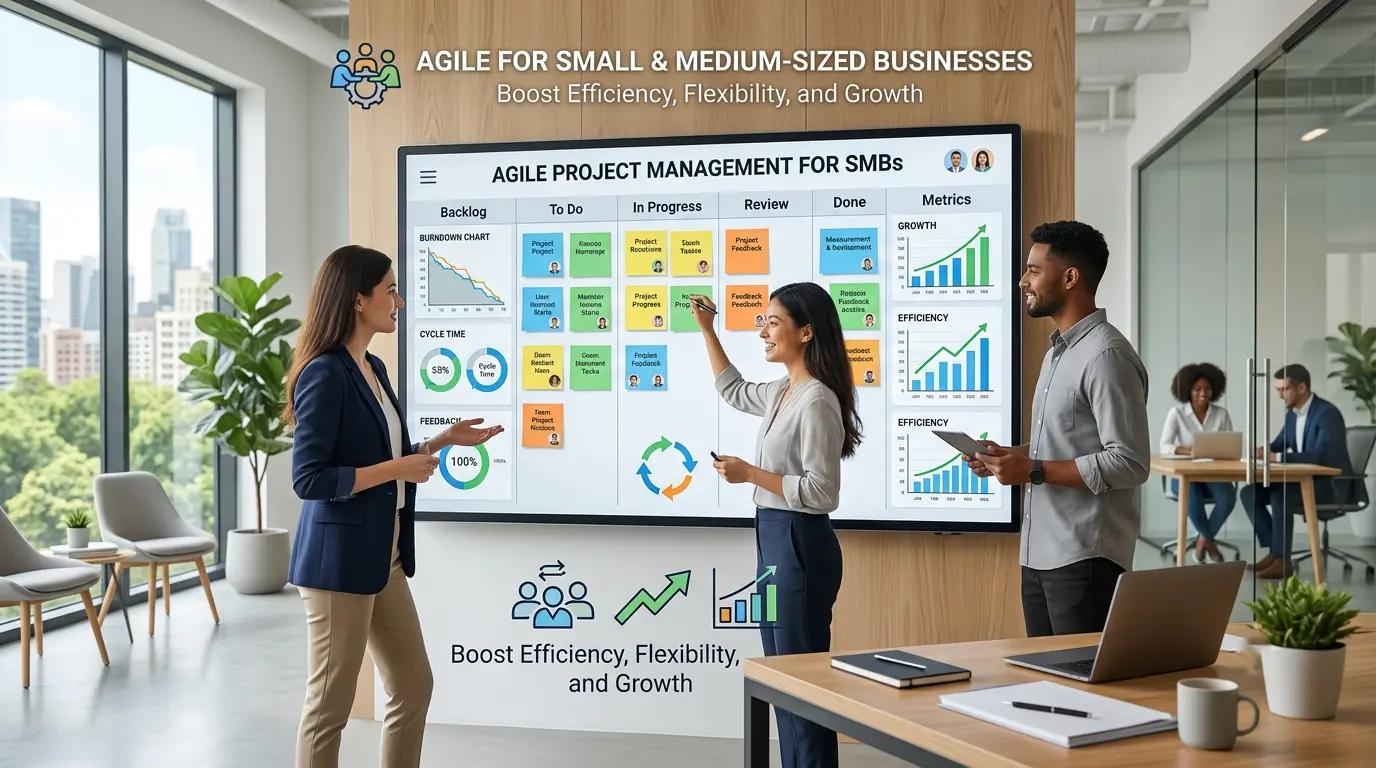
Benefits of Agile Project Management for Small and Medium-Sized Businesses
saketpratapsinghdm2026-09-28T10:12:30+05:30September 28th, 2026|

Work Breakdown Structure (WBS): The Complete PMP Guide, With a Worked Example
saketpratapsinghdm2026-09-21T16:48:15+05:30September 21st, 2026|
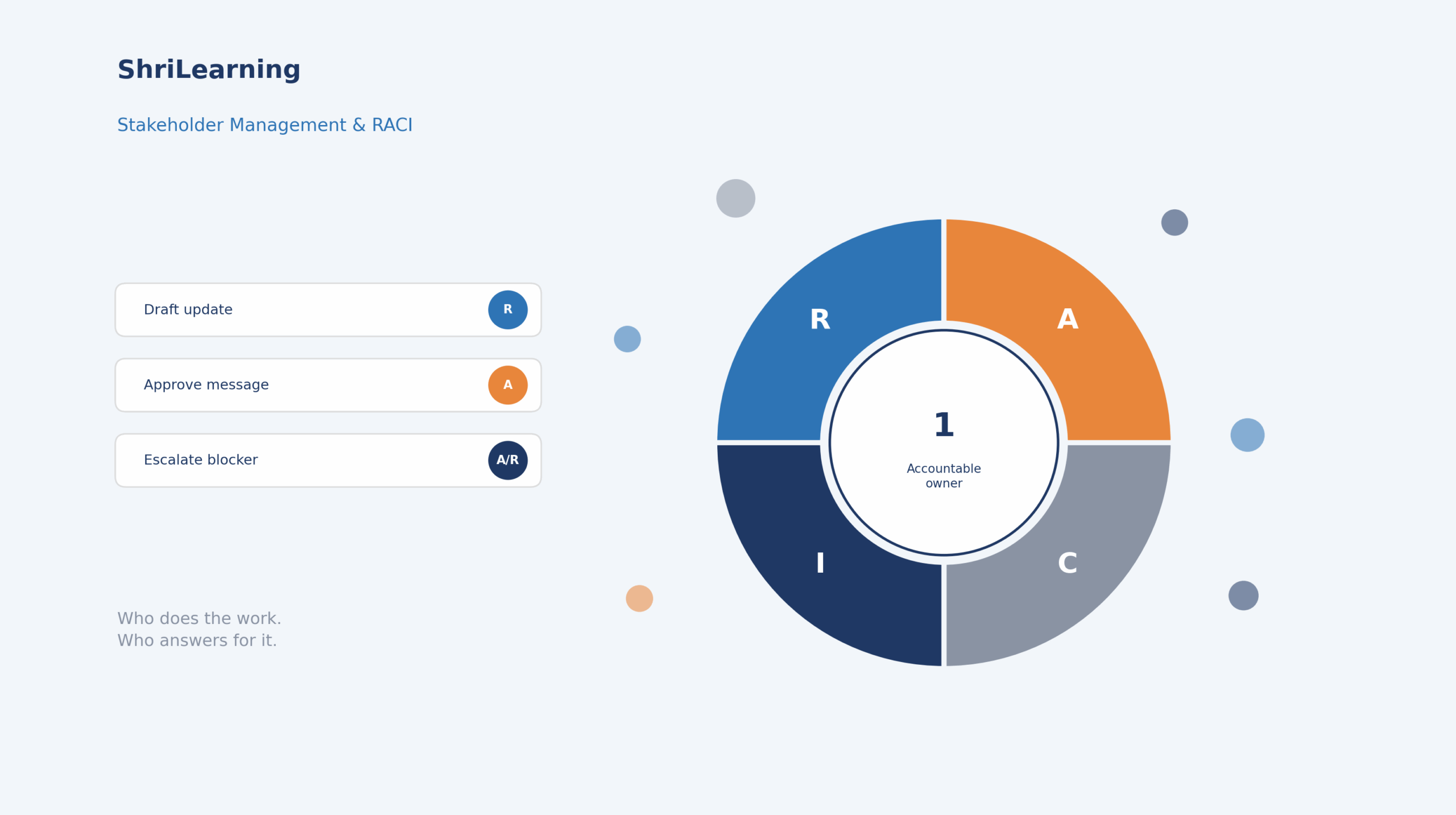
Stakeholder Management and RACI: The Complete PMP Guide (With a Worked Example)
saketpratapsinghdm2026-09-21T15:07:42+05:30September 21st, 2026|
How to Write a Problem Statement (With a PMP-Ready Template and Examples)
saketpratapsinghdm2026-09-21T14:42:27+05:30September 21st, 2026|

Earned Value Management: How to Actually Read CPI and SPI (Not Just Calculate Them)
saketpratapsinghdm2026-09-17T15:32:44+05:30September 17th, 2026|

Agile Practice Guide – Second Edition: What Changed, and What It Means for Your PMI-ACP Prep
saketpratapsinghdm2026-09-17T14:45:53+05:30September 17th, 2026|

Why the PMP People Domain Dropped to 33% (And How to Master It in 2026)
saketpratapsinghdm2026-08-27T21:18:31+05:30August 27th, 2026|

CSM Certification Guide India (2026): Cost, Eligibility, Salary & Exam Steps
saketpratapsinghdm2026-09-17T15:37:52+05:30August 21st, 2026|