AI Questions in the PMP Exam 2026: What to Actually Expect
AI Questions in the PMP Exam 2026: What to Actually Expect
Before July 2026, artificial intelligence barely appeared in PMP exam preparation. It showed up, if at all, as a side note in a Business Environment chapter, mentioned once and then forgotten. That has changed. Under the updated Exam Content Outline effective July 9, 2026, artificial intelligence is now an explicitly named topic area within the exam, tested through scenario questions rather than definitions.
This does not mean the exam has turned into a technology certification. PMI is not asking you to explain how a machine learning model works. What it is asking is whether you, as a project manager, understand how AI tools are used within project environments today, what decisions they can support, and where human judgment still has to take over. That distinction matters for how you prepare.
What PMI actually means by AI in the PMP context
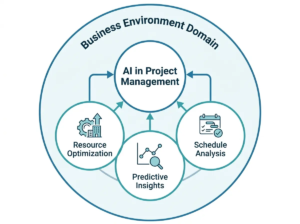
The updated exam frames artificial intelligence around three practical areas of project work: resource optimization, predictive insights, and schedule analysis. In plain terms, this covers how AI tools help project managers allocate people and budget more efficiently, forecast risks or delays before they happen, and analyze schedule data to flag potential slippage earlier than a manual review might catch it.
This sits within the Business Environment domain, which itself expanded significantly under the new ECO, now covering governance, compliance, organizational change, sustainability, and AI awareness together as a connected set of topics rather than isolated chapters.
The framing to hold onto is this: the exam treats AI the same way it treats any other project management tool or technique. It is not testing whether you can build an AI system. It is testing whether you know when and how to apply one appropriately, and what a responsible project manager does when an AI-generated recommendation conflicts with human judgment, stakeholder needs, or ethical considerations.
The specific AI topics the exam covers
Based on PMI’s own communication around the updated Exam Content Outline, candidates should be prepared for scenario questions touching the following areas.
Using AI tools for resource optimization. Questions may describe a scenario where a project manager is deciding how to allocate limited team members or budget across competing priorities, with an AI tool suggesting one allocation. The correct answer usually tests whether you understand the tool provides a data-informed suggestion, not a decision that overrides the project manager’s accountability.
Interpreting AI-generated predictive insights. A scenario might present a risk forecast or delay prediction generated by an AI system, and ask what the project manager should do next. These questions test whether you treat predictive output as an input to your decision-making process, to be validated against real project context, rather than an instruction to follow blindly.
AI-assisted schedule analysis. Questions in this area test your understanding of how AI tools can flag potential schedule risks earlier than traditional critical path analysis alone, and what a project manager’s responsibility is once that flag is raised.
Ethical and governance considerations around AI use. Given that AI now sits alongside sustainability and compliance within the expanded Business Environment domain, expect at least some questions framing AI use through a governance lens: data privacy, bias in AI-generated recommendations, and organizational policy around AI tool usage in project reporting.
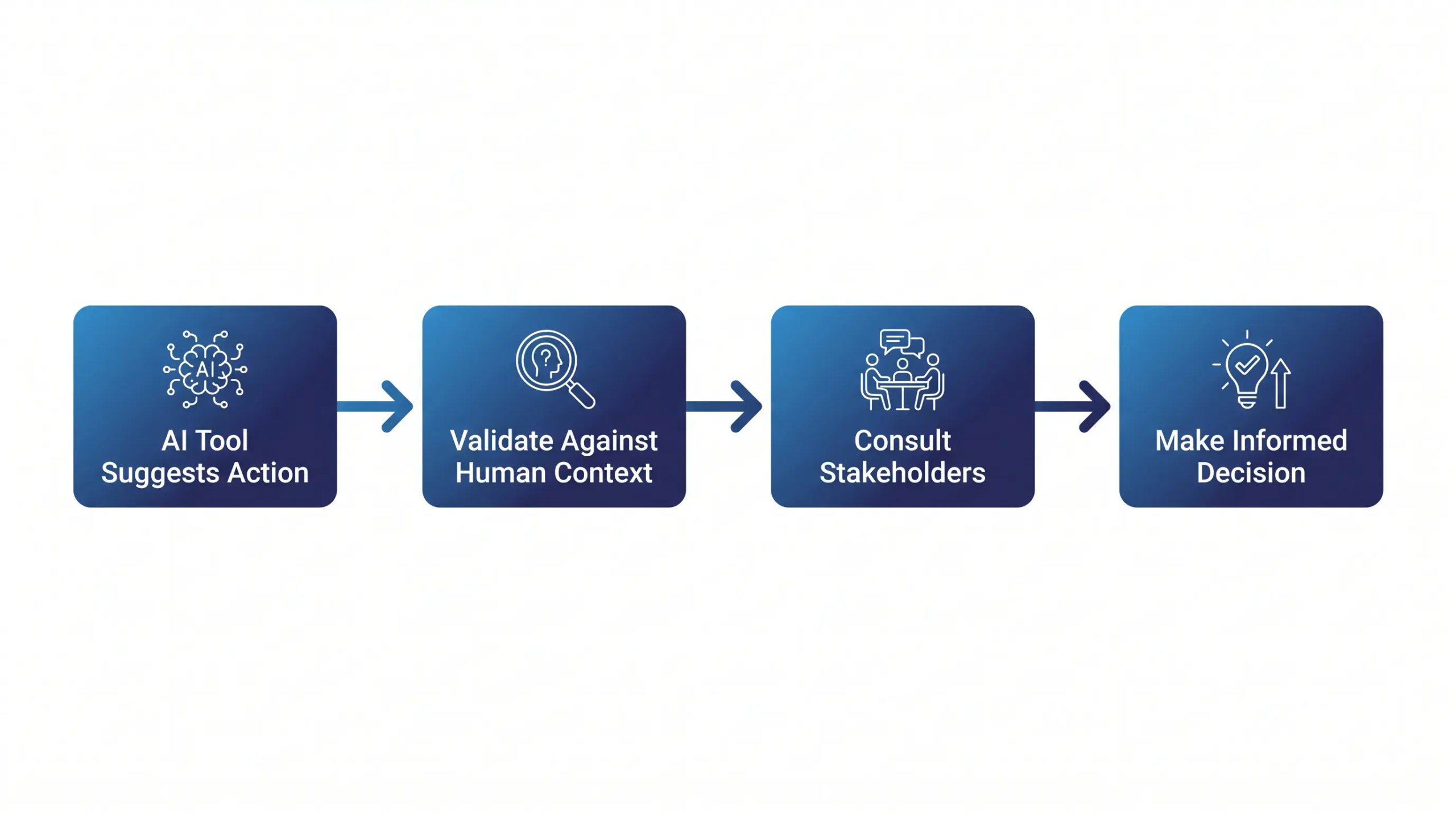
Human judgment versus AI recommendation. This is arguably the most consistent theme across AI-related content in the updated exam. Scenario after scenario is likely to place an AI-generated suggestion in front of the project manager and test whether the candidate defaults to the AI output or exercises independent professional judgment, particularly when stakeholder context the AI tool would not have access to is relevant.
What an AI-related scenario question actually looks like
PMI does not publish official exam questions, so no resource, including this one, can show you an actual question from the current exam bank. What can be shown accurately is the style and reasoning pattern these questions are built around, based on how PMI has described the new content areas.
A representative scenario might read something like this. A project manager is using an AI-powered scheduling tool that recommends reallocating two team members from a lower-priority workstream to accelerate a critical path task. The team members in question have raised concerns in a recent retrospective about being stretched too thin. What should the project manager do first?
The reasoning pattern the exam rewards here is not “follow the AI recommendation” or “ignore the AI recommendation.” It is validate the recommendation against the human and organizational context the AI tool does not have visibility into, likely by discussing capacity and wellbeing directly with the team before making a reallocation decision. This mirrors the same situational judgment pattern tested throughout the rest of the exam, simply applied to an AI-specific scenario.
How AI questions differ from general Business Environment questions
It is worth being precise about this distinction, since candidates sometimes conflate the two. General Business Environment questions test your understanding of organizational strategy, governance structures, compliance, and how a project fits into broader business context. AI-related questions are a specific subset within that domain, but they carry one additional reasoning layer: they almost always involve a tool or system output that the project manager must evaluate, rather than a pure organizational or stakeholder scenario.
In practice, this means AI questions often combine two skills at once: understanding what the AI tool is actually capable of assessing, and applying the same stakeholder and judgment-based reasoning that runs through the rest of the exam. Neither skill alone is sufficient to answer these questions correctly.
How to prepare without becoming a technologist
The reassuring part of this update is that PMI has been explicit that candidates do not need deep technical AI knowledge to pass. Preparation for this section looks different from studying, say, EVM formulas.
Read how AI is actually used in project management today, rather than studying AI as an abstract technical subject. Industry articles on AI-assisted scheduling, resource planning, and risk forecasting build the practical vocabulary the exam expects.
Practice the human-judgment-over-tool-output reasoning pattern deliberately. Whenever you encounter a practice question involving any tool, AI or otherwise, ask yourself what information the tool would not have access to, and how that gap should shape the project manager’s next step.
Do not memorize AI tool names or vendors. The exam is not testing brand familiarity with specific AI platforms. It is testing conceptual understanding of what these tools do and where their limits are.
Treat AI questions as an extension of stakeholder and ethics reasoning, not a separate subject. The same instincts that help you answer a difficult stakeholder engagement question, weighing competing interests, validating assumptions, and avoiding unilateral decisions, apply directly to AI-related scenarios.
Common mistakes candidates make on AI questions
Assuming the correct answer always rejects the AI recommendation. This is not accurate. Sometimes the right answer is to proceed with the AI-informed suggestion after appropriate validation. The exam is testing judgment, not blanket skepticism of AI tools.
Assuming the correct answer always accepts the AI recommendation. The opposite error is equally common. Candidates who treat AI output as authoritative miss the human-context layer these questions are specifically designed to test.
Overthinking the technical mechanics of the AI tool. Candidates sometimes spend mental energy trying to reason about how the AI system arrived at its recommendation. The exam does not require this. The relevant question is always what the project manager should do next, not how the AI model works internally.
Treating AI content as a small, skippable section. Given that AI sits within a Business Environment domain that now makes up a significantly larger share of the exam than in previous versions, under-preparing for this content area creates a real gap, not a minor one.
Related reading on ShriLearning:
- PMP Exam Updates 2026: What is Actually Altering with the PMBOK Guide 8th Edition
- Will AI Replace Project Managers? The Rise of the AI-Enabled PM in 2026
- Best Project Management Tools for PMP Professionals in 2026
- Top 9 AI Certifications in 2026 for Project Managers
- PMP Exam Time Management 2026: How to Pace the 180-Question Marathon
Your first project is calling—will you answer? Join the ShriLearning Community Connect with fellow PMP aspirants and expert instructors. Crete your study plan for free from ShriLearning study-plan-generator.
FAQs
More for you
Benefits of Agile Project Management for Small and Medium-Sized Businesses
saketpratapsinghdm2026-09-28T10:12:30+05:30September 28th, 2026|

Work Breakdown Structure (WBS): The Complete PMP Guide, With a Worked Example
saketpratapsinghdm2026-09-21T16:48:15+05:30September 21st, 2026|
Stakeholder Management and RACI: The Complete PMP Guide (With a Worked Example)
saketpratapsinghdm2026-09-21T15:07:42+05:30September 21st, 2026|
How to Write a Problem Statement (With a PMP-Ready Template and Examples)
saketpratapsinghdm2026-09-21T14:42:27+05:30September 21st, 2026|

Earned Value Management: How to Actually Read CPI and SPI (Not Just Calculate Them)
saketpratapsinghdm2026-09-17T15:32:44+05:30September 17th, 2026|

Agile Practice Guide – Second Edition: What Changed, and What It Means for Your PMI-ACP Prep
saketpratapsinghdm2026-09-17T14:45:53+05:30September 17th, 2026|

Why the PMP People Domain Dropped to 33% (And How to Master It in 2026)
saketpratapsinghdm2026-08-27T21:18:31+05:30August 27th, 2026|

CSM Certification Guide India (2026): Cost, Eligibility, Salary & Exam Steps
saketpratapsinghdm2026-09-17T15:37:52+05:30August 21st, 2026|