Am I Ready for the PMP Exam? A 2026 Career Readiness Checklist
Am I Ready for the PMP Exam? A 2026 Career Readiness Checklist
“Is PMP worth it?” isn’t really the question most people are stuck on — most professionals already believe it’s worth pursuing eventually. The harder, more useful question is: is now genuinely the right time for me? Meeting PMI’s formal eligibility criteria on paper is one thing. Being actually ready to commit, study, and pass is a different question entirely — and getting it wrong costs real time and money.
This isn’t a technical eligibility checklist — PMI already publishes those requirements clearly. This is a practical self-assessment for the question underneath: should you start now, or in six months?
Why This Question Actually Matters
Here’s the part most “just go for it” advice skips: industry estimates — PMI hasn’t published official first-attempt figures since 2005 — consistently place the first-attempt pass rate somewhere around 60-70%, meaning roughly 30-40% of candidates don’t clear it on their first try. That gap isn’t primarily about intelligence or even raw experience. Across training-provider data, the recurring pattern is inconsistent study, rushing from training straight to the exam date without a real practice-test cycle, and starting before the underlying bandwidth or experience was actually there. Readiness isn’t a formality before the real work starts — it’s the single biggest lever you control over that first-attempt outcome.
Why “Eligible” and “Ready” Are Different Questions
Plenty of professionals meet PMI’s experience requirements on paper but aren’t actually positioned to pass on their first attempt — or to sustain the 3-6 months of focused study the exam genuinely demands. Meanwhile, some professionals technically fall just short of the experience threshold but are close enough that a short, deliberate wait makes far more sense than rushing an application. Readiness is about your actual bandwidth, your career stage, and how substantive your project leadership experience really is — not just whether you clear the minimum bar.
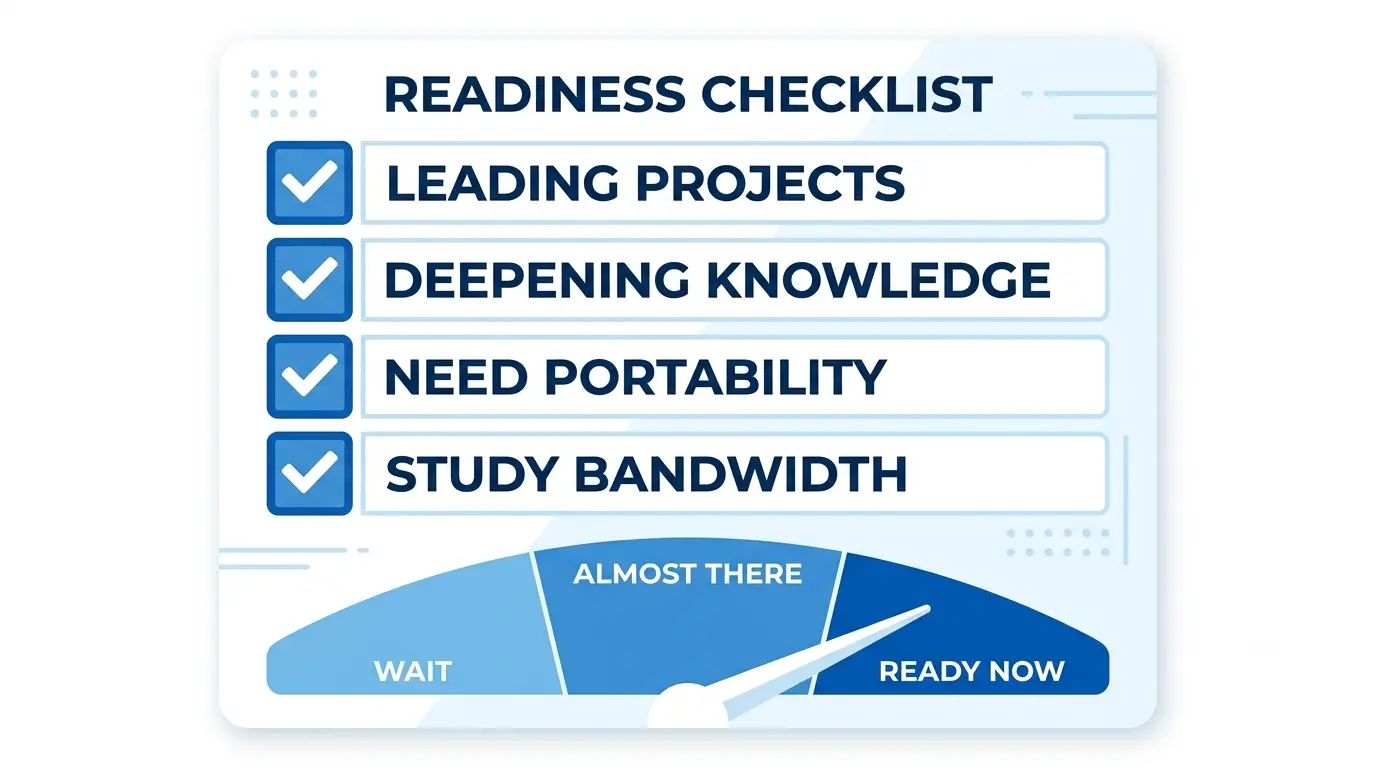
The 4-Question Readiness Check
| Question | What a genuine ‘Yes’ looks like |
|---|---|
| Are you already leading and managing projects — making decisions, managing stakeholders, owning outcomes? | You have real experience to draw on, so preparation becomes consolidation, not a first introduction to the concepts. |
| Are you deepening what you already know, rather than learning project management from scratch? | PMP prep works best as formalizing real practice. If you’re still learning basic PM concepts, that’s a signal to build more experience first. |
| Do you specifically need a globally portable, employer-recognized credential — not a company-specific or tool-specific one? | If portability isn’t actually part of your career goals right now, the urgency to start immediately is lower. |
| Do you have a realistic 3–6 months of consistent study bandwidth starting now? | This is the one people most often answer ‘yes’ to prematurely. Be honest about the next two quarters of your calendar, not a hypothetical ideal version of it. |
Three or four genuine yeses: you’re a strong candidate to start now. Two or fewer: that’s useful information too — it likely means either your timeline or your bandwidth, not your fundamental capability, is the real blocker.
Three Real Readiness Scenarios
Readiness rarely looks the same for two people. Here’s how it plays out in practice:
Scenario 1: “Overqualified on Paper, Unready in Practice”
A senior engineer with 8 years of informal project leadership meets the experience threshold easily. But their last 6 months have been consumed by a critical product launch, and they’re eyeing a promotion decision in the next quarter. On paper, this is an easy yes. In practice, the next 3 months have zero realistic study bandwidth. The right move isn’t to abandon PMP — it’s to target a start date after the launch stabilizes, and use the interim to start the 35 contact hours, which can be paced more flexibly than intensive exam prep.
Scenario 2: “The Career Changer”
A business analyst transitioning toward project management has been informally leading small initiatives for 14 months — short of the 36-month threshold, but genuinely growing into real ownership. Rushing toward PMP now would mean studying material that doesn’t yet map to lived experience, making retention far harder. The stronger sequence: pursue CAPM now, take on more ownership deliberately over the next 18-24 months, and let PMP prep begin once the experience is substantial enough to make it consolidation rather than first-exposure learning.
Scenario 3: “The Perpetual Waiter”
A project lead with 5 years of solid, well-documented experience keeps pushing their PMP start date back — “after this project,” “after the holidays,” “after things calm down.” Every individual reason sounds legitimate, but the pattern itself is the signal: there’s rarely a perfectly calm quarter in a real career. If your 4-question check comes back genuinely positive and the honest blocker is just inertia rather than a real scheduling conflict, that’s worth naming directly — the study plan doesn’t need a perfect starting line, just a realistic one.
The Experience Reality Check
This is where most readiness misjudgments happen — not in counting months, but in evaluating substance.
- The title trap: You don’t need a formal “Project Manager” title to qualify. Team leads, module leads, and senior coordinators often have genuinely substantial project leadership experience — the real test is whether you were directing decisions (scope trade-offs, stakeholder communication, risk calls), not just contributing tasks.
- The reverse trap: Having a PM title doesn’t automatically mean your experience is substantive enough. If your day-to-day was mostly status reporting and scheduling logistics rather than actual decision ownership, be honest about that gap before applying.
For the precise, formal breakdown of hours and documentation PMI requires, see our Achieving PMP Certification guide — this section is about whether your experience is strong enough to prep efficiently, not just whether it technically counts.
The Bandwidth Reality Check
PMP preparation realistically needs 100-200 hours of focused study, spread over 3-6 months for most working professionals. Before committing to a start date, be honest about what’s actually on your calendar for the next two quarters:
- A major project deadline, product launch, or team transition in the next 8-12 weeks — this typically means postponing your start date, not squeezing prep around it.
- A new job, promotion, or role change in progress — better to stabilize first, since inconsistent prep is the most common first-attempt failure driver.
- Significant personal commitments (a move, a new baby, a major life event) — legitimate reasons to target a later window rather than force a hard deadline.
None of these mean “don’t pursue PMP.” They mean choosing your start date deliberately instead of starting because a specific date felt arbitrary or urgent.
What a Realistic Study Week Actually Looks Like
Before committing to a start date, it helps to see the actual weekly time commitment rather than just a total hours figure:
| Weekly Commitment | Total Prep Timeline | Best Fit For |
|---|---|---|
| 5-7 hours/week | 5-6 months | Full-time job, family commitments, want a sustainable pace |
| 8-12 hours/week | 3-4 months | Moderate flexibility, some evenings and one weekend day free |
| 15+ hours/week | 6-8 weeks | Between roles, career break, or unusually light current workload |
Most working professionals underestimate how disruptive even one bad month — a busy sprint at work, a family emergency — is to a compressed timeline. Building in a buffer month is rarely wasted.
Green Flags vs. Red Flags
- Green flags you’re genuinely ready: You can name specific recent decisions you made as a project leader without hesitating. Your calendar for the next quarter has no major known disruptions. You’ve already looked at a sample question set and found it challenging but not incomprehensible.
- Red flags you might be rushing: You’re starting because of a deadline someone else set (a promotion cycle, a job posting) rather than your own readiness. You haven’t looked at a single practice question yet. You’re already unsure whether your last 6 months of work would count as “leading” a project.
If You’re Not Ready Yet: The CAPM Bridge
If your readiness check points to “not yet” — usually because of experience depth rather than capability — CAPM (Certified Associate in Project Management) is a genuine bridge, not a consolation prize. It requires no prior experience, and its 23 training hours count toward the 35 hours PMP eventually requires, so time spent on CAPM isn’t time spent starting over later. For the full comparison, see our CAPM certification requirements and salary guide.
Use the waiting period productively: keep documenting your project leadership experience as you accumulate it, and start your 35 contact hours early if your bandwidth allows — that way, when your experience threshold is met, you’re not starting the clock from zero.
If You Are Ready: What Happens Next
Once your readiness check comes back genuinely positive, the sequence is straightforward:
- 1. Lock your target exam date. Work backward from it to set a realistic study start date — most candidates need 3-6 months.
- 2. Complete your 35 contact hours. Starting late Q4 2026, PMI requires these from verified official channels for live training specifically — check current requirements before choosing a provider.
- 3. Submit your application with specific, detailed experience descriptions. Vague descriptions are the most common cause of audit delays.
- 4. Build a structured study plan rather than studying reactively — consistency beats intensity for material this dense.
Build yours in a few minutes with the ShriLearning Study Plan Generator, tuned to your specific target exam date.
Ready to Build Your Plan?
If your readiness check came back positive, don’t let momentum stall — build your study plan with the ShriLearning Study Plan Generator, join the ShriLearning Community to connect with fellow aspirants, or explore our upcoming PMP Online Training batches to lock in your 35 contact hours through a verified official channel. If your check pointed to “not yet,” our Is PMP Certification Worth It? Real ROI Data breaks down exactly what you’re working toward.
FAQs
More for you

How to Use AI in Project Management: 10 Practical Workflows
saketpratapsinghdm2026-10-24T15:48:41+05:30October 24th, 2026|
Benefits of Agile Project Management for Small and Medium-Sized Businesses
saketpratapsinghdm2026-09-28T10:12:30+05:30September 28th, 2026|

Work Breakdown Structure (WBS): The Complete PMP Guide, With a Worked Example
saketpratapsinghdm2026-09-21T16:48:15+05:30September 21st, 2026|
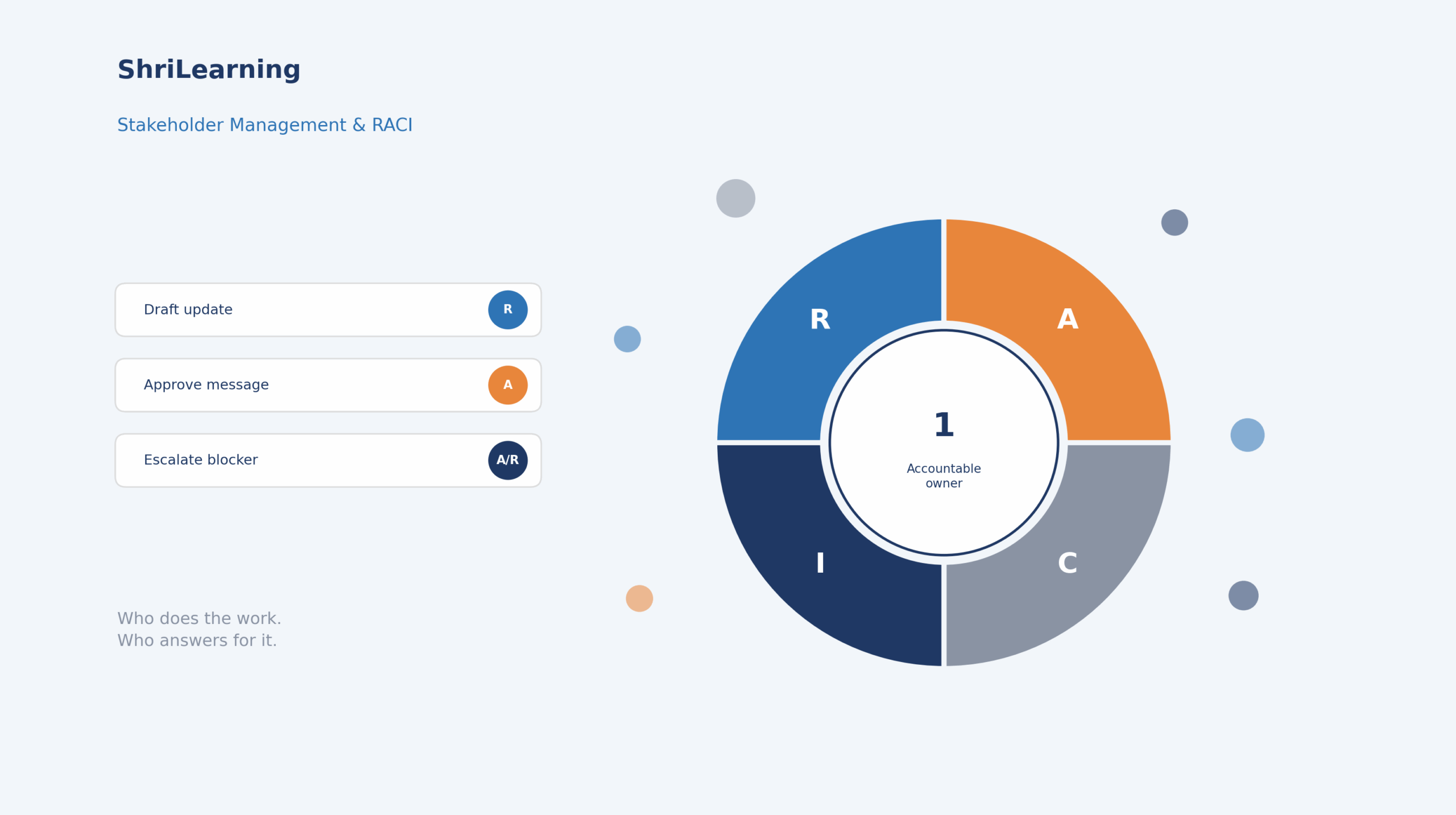
Stakeholder Management and RACI: The Complete PMP Guide (With a Worked Example)
saketpratapsinghdm2026-09-21T15:07:42+05:30September 21st, 2026|
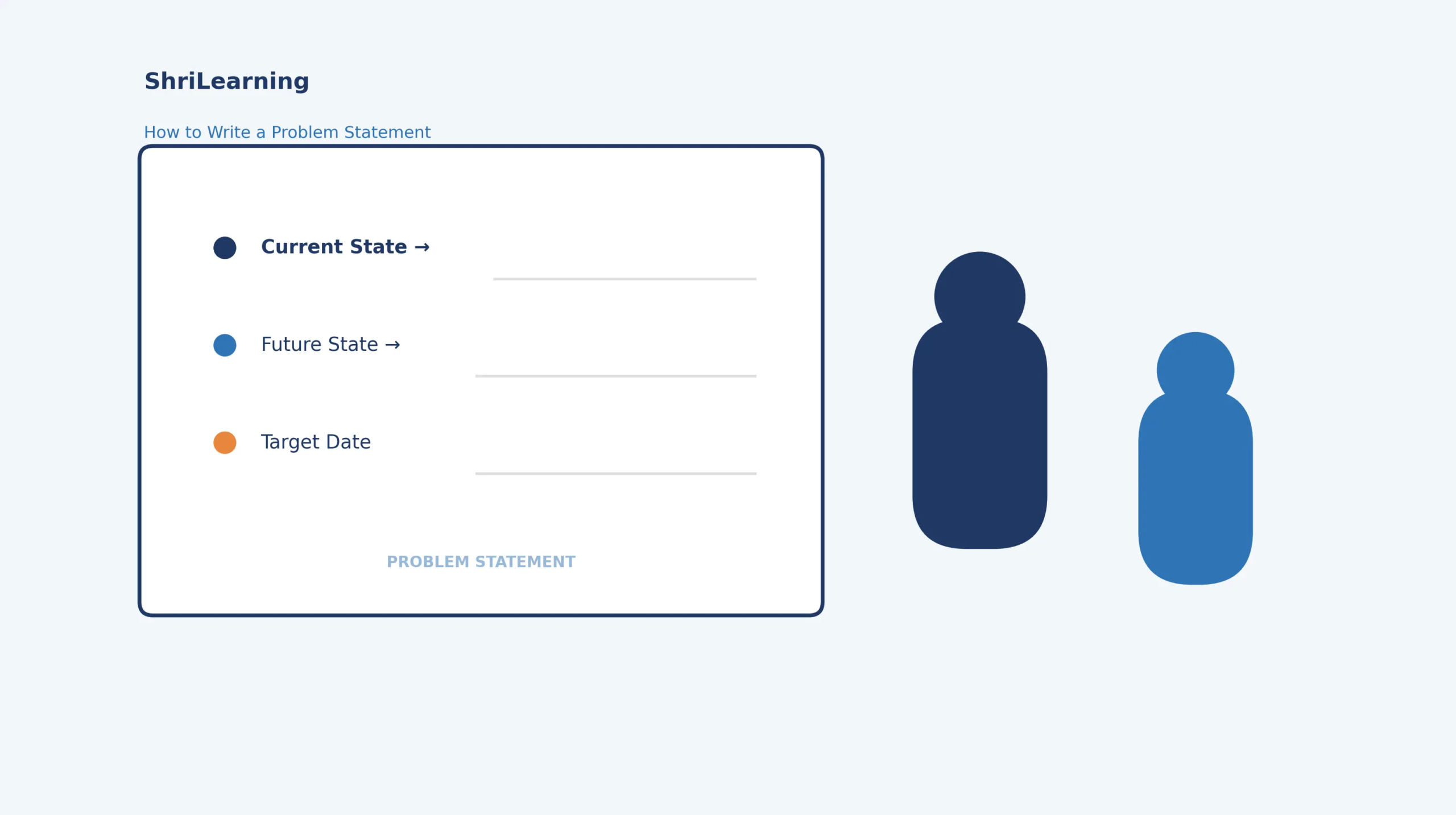
How to Write a Problem Statement (With a PMP-Ready Template and Examples)
saketpratapsinghdm2026-09-21T14:42:27+05:30September 21st, 2026|

Earned Value Management: How to Actually Read CPI and SPI (Not Just Calculate Them)
saketpratapsinghdm2026-09-17T15:32:44+05:30September 17th, 2026|

Agile Practice Guide – Second Edition: What Changed, and What It Means for Your PMI-ACP Prep
saketpratapsinghdm2026-09-17T14:45:53+05:30September 17th, 2026|

Why the PMP People Domain Dropped to 33% (And How to Master It in 2026)
saketpratapsinghdm2026-08-27T21:18:31+05:30August 27th, 2026|