Product Owner vs Product Manager: Salary & Career (2026)
Product Owner vs Product Manager: Salary & Career (2026)
- Defining the Roles Strategy vs. Tactics
- Essential PO vs PM Roles and Skills
- Product Owner vs. Product Manager Salary and Career Path
- Key Certifications for Success
In the world of Agile and product-centric organizations, two roles often cause confusion: the Product Manager (PM) and the Product Owner (PO). Both share the goal of maximizing product value, but their scope, daily work, and career trajectory are genuinely different — and in 2026, the rise of AI-driven products has widened that gap further, not closed it.
Understanding this difference matters whether you’re weighing a certification like CSPO (Certified Scrum Product Owner) or mapping out a longer-term move into product strategy. This guide breaks down the PO vs PM roles and skills, clarifies the distinction in each job description, and gives you current salary data across major markets.
Defining the Roles: Strategy vs. Tactics
The most fundamental difference between the two roles is focus: the Product Manager is the Strategist (external, long-term), and the Product Owner is the Tactician (internal, short-term).
| Role | Core Focus (The WHY) | Primary Scope |
| Product Manager (PM) | Defines the “Why,” “What,” and “When” for the entire market. Solves customer problems to achieve business goals. |
Works across the entire product life cycle
|
| Product Owner (PO) | Defines the “What” within a specific development team’s sprint cycle. Maximizes value through timely delivery of increments. |
Exists specifically within the Scrum framework
|
The Product Manager Job Description
The PM owns the product vision and long-term roadmap, operating at the intersection of business, technology, and user experience.
- Key responsibilities: Market research, competitor analysis, pricing and positioning, defining product vision, securing budget, measuring overall product success (profitability, market share).
- Key collaborators: Executives, Sales, Marketing, and external customers.
The Product Owner Job Description
The PO owns the Product Backlog and works directly with the development team during sprints, acting as the single source of truth for requirements.
- Key responsibilities: Creating and prioritizing user stories, defining acceptance criteria, refining the backlog, accepting or rejecting finished work at sprint end, participating in all Scrum events.
- Key collaborators: Development team, Scrum Master, and internal stakeholders.
Essential PO vs PM Roles and Skills
Both roles need strong communication, leadership, and analytical thinking — but how those skills get applied differs.
| Skill Area | Product Manager (Strategic) |
Product Owner (Tactical/Agile)
|
| Analytical | Market analysis, ROI assessment, large-scale profitability |
Data-driven prioritization using velocity and business value to order the backlog
|
| Technical | Conceptual grasp of underlying technology and system architecture |
Deep Agile fluency; translates strategic vision into clear user stories
|
| Soft skills | Leadership, empathy, influence — communicating vision to executives and cross-functional teams |
Availability, clarity, negotiation — fast decisions and resolving conflicting requirements
|
| Output | Product roadmap, business case, product strategy document |
Product backlog, user stories, accepted increments
|
A 2026 addition worth naming directly: for products built around AI features, both roles now need enough fluency to reason about model behavior, probabilistic outputs, and evaluation — PMs to scope what’s realistically buildable and defensible in the market, POs to write acceptance criteria for outcomes that aren’t always deterministic. This shows up increasingly as its own specialization (“AI Product Manager”) rather than a skill bolted onto the traditional role.
Product Owner vs. Product Manager Salary and Career Path
Compensation for both roles climbed further in 2026, and the gap between them — along with the emerging AI premium — is worth understanding before you pick a path.
United States (Base Salary)
- Product Owner: roughly $88,000–$138,000
- Product Manager (mid-level): roughly $101,000–$158,000
- AI Product Manager: significantly higher across the board — market data puts average total compensation in the $160,000–$230,000+ range, reflecting a 15–20% premium over generalist PM roles.
India (Base Salary)
- Product Owner (mid-level): typically ₹15–25 Lakhs
- Product Manager (mid-level): typically ₹18–30 Lakhs+
- Senior/Director-level (PM path): can exceed ₹40 Lakhs as the role moves into Director or VP of Product, overseeing multiple product lines and strategy.
Markets like Canada, the UAE, and the UK generally track the same relative pattern — PM compensation running ahead of PO compensation, with a further step-up for roles with an explicit AI or ML product scope — though absolute numbers vary by city and company stage.
Key salary factor: a PM’s compensation tends to track the product’s profitability (P&L ownership), while a PO’s tends to track the development team’s delivery efficiency. That structural difference is exactly why PM comp scales further at senior levels.
Career Path Progression
The typical progression moves from tactical to strategic:
- Start: Product Analyst or Junior Product Owner
- Product Owner: Master the Scrum framework, maximize the development team’s output (tactical mastery)
- Product Manager: Transition to owning long-term strategy, P&L, and market fit — often the natural evolution for a senior PO
- Advance: Director of Product Management, VP of Product, Chief Product Officer (CPO)
Key Certifications for Success
Certifications validate your skills for these roles, but it’s worth being precise about which certification maps to which path — they’re not interchangeable.
- For the Product Owner role: The industry standard is the Certified Scrum Product Owner (CSPO) from Scrum Alliance. It focuses on backlog management, user stories, and maximizing value within an Agile team.
- For the Product Manager role: CSPO alone won’t cover strategic scope. Look instead at certifications built for the PM path specifically — SAFe Product Owner/Product Manager (POPM) for candidates targeting large enterprise, scaled-Agile environments, or programs from bodies like the Pragmatic Institute for strategic roadmapping and go-to-market skills. For product managers moving into AI-heavy portfolios, a growing number of AI/ML-focused product certifications (from Coursera, Product School, and similar providers) are increasingly relevant alongside hands-on shipped experience — though no certification substitutes for a track record of shipped products when it comes to compensation.
Conclusion: Charting Your Product Career Path
The distinction between a Product Owner and a Product Manager comes down to doing the product right (PO) versus doing the right product (PM). Neither role is superior — they require different skill sets and different levels of strategic scope, and in 2026 both are being reshaped by how much AI capability sits inside the products they own.
Your path should follow your strengths: are you a tactician who thrives working directly with a development team (PO), or a strategist focused on market growth and P&L (PM)? Either way, formal training remains the fastest way to validate your skills and move up the Product Owner vs. Product Manager salary ladder.
Keep advancing in your PMP journey — explore our other in-depth guides:
- Agile vs Waterfall: Which Methodology is Right for Your Project?
- The 5 Scrum Events Explained: Purpose, Attendees, and Effective Execution
- Why PMP Aspirants Fail? — And How to Avoid Them
- Confused Between Agile, Hybrid, and Predictive? Here’s a Clear Comparison
- Why You Should Track Your Errors — and How to Do It Right
Your first project is calling — will you answer? Join the ShriLearning Community and connect with fellow PMP aspirants and expert instructors. Build your free study plan with the ShriLearning study plan generator.
FAQs
More for you

How to Use AI in Project Management: 10 Practical Workflows
saketpratapsinghdm2026-10-24T15:48:41+05:30October 24th, 2026|
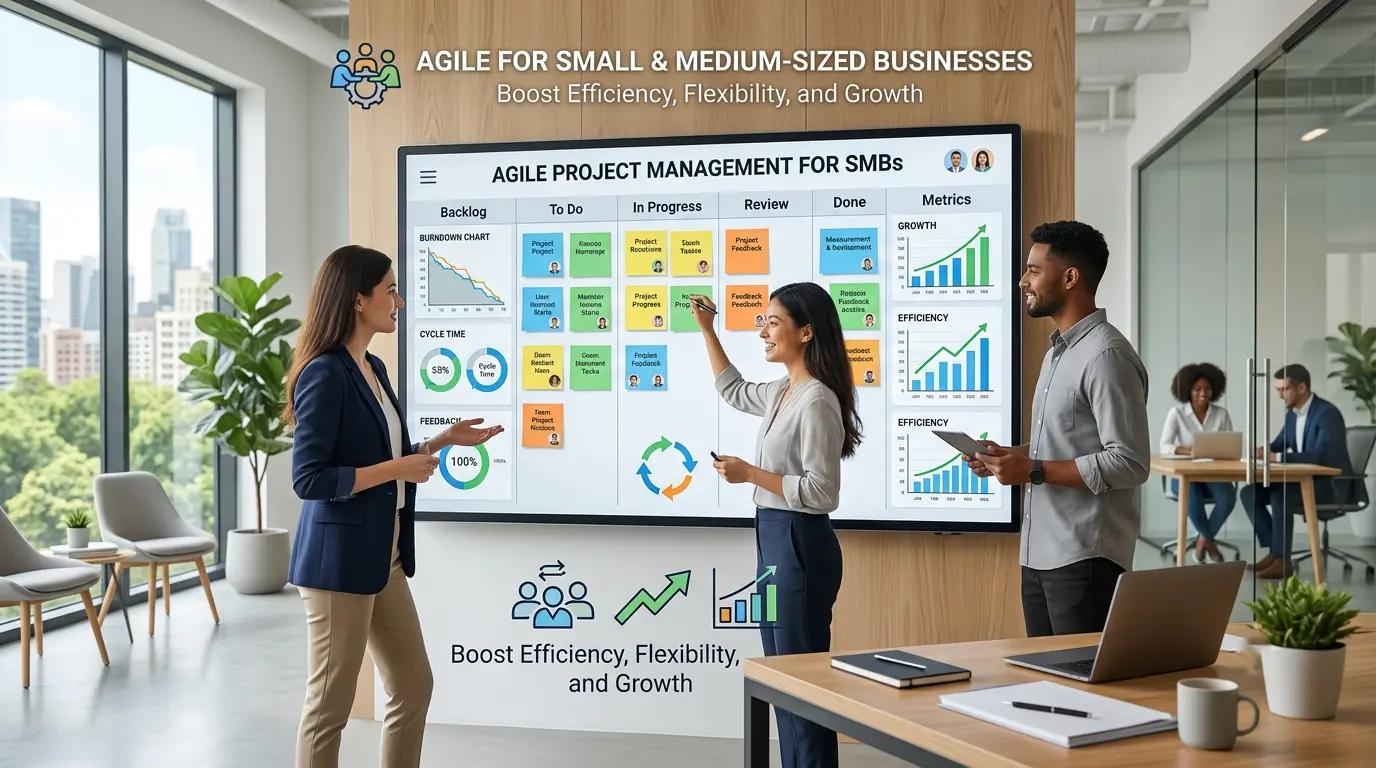
Benefits of Agile Project Management for Small and Medium-Sized Businesses
saketpratapsinghdm2026-09-28T10:12:30+05:30September 28th, 2026|

Work Breakdown Structure (WBS): The Complete PMP Guide, With a Worked Example
saketpratapsinghdm2026-09-21T16:48:15+05:30September 21st, 2026|
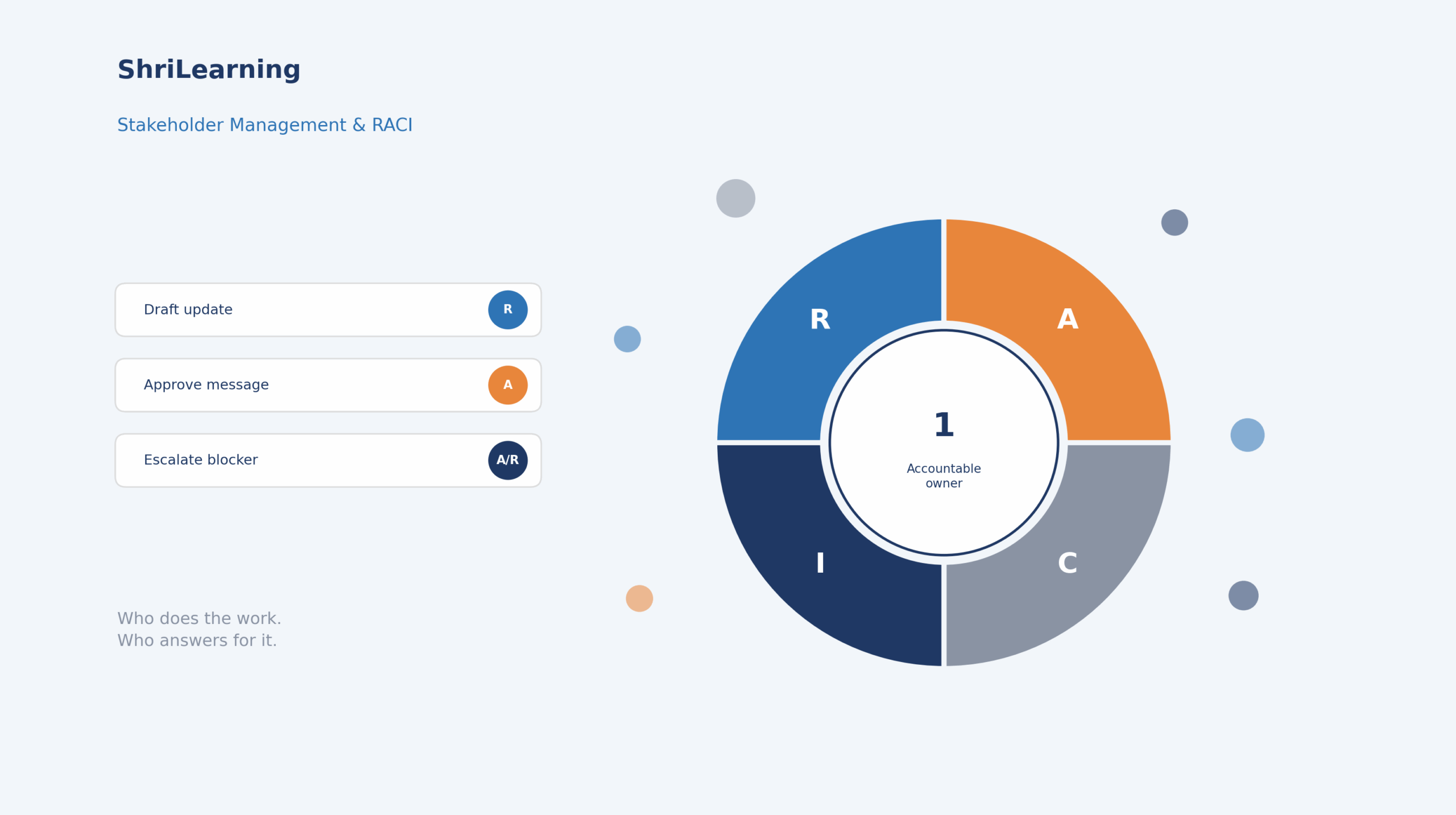
Stakeholder Management and RACI: The Complete PMP Guide (With a Worked Example)
saketpratapsinghdm2026-09-21T15:07:42+05:30September 21st, 2026|
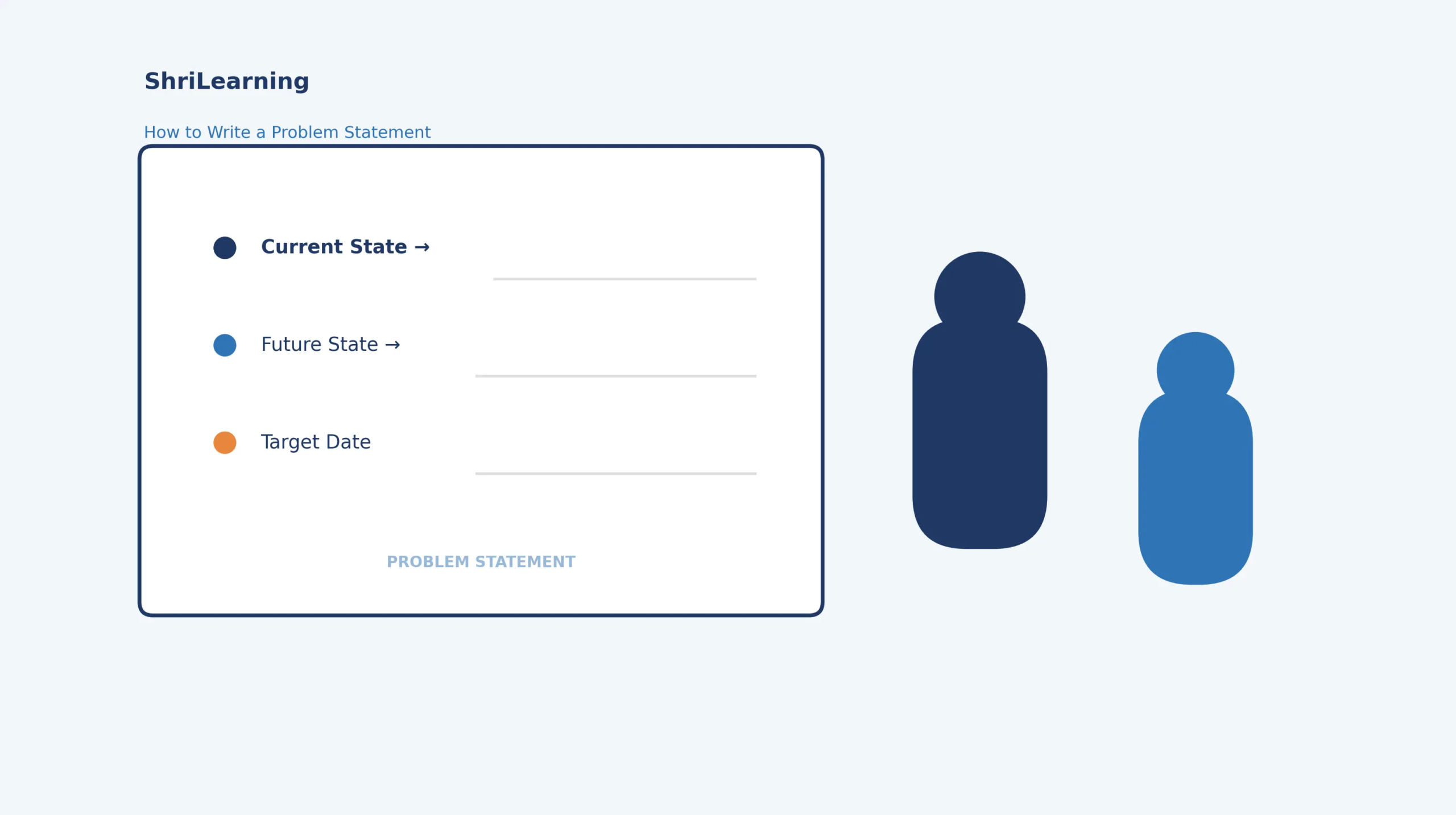
How to Write a Problem Statement (With a PMP-Ready Template and Examples)
saketpratapsinghdm2026-09-21T14:42:27+05:30September 21st, 2026|

Earned Value Management: How to Actually Read CPI and SPI (Not Just Calculate Them)
saketpratapsinghdm2026-09-17T15:32:44+05:30September 17th, 2026|

Agile Practice Guide – Second Edition: What Changed, and What It Means for Your PMI-ACP Prep
saketpratapsinghdm2026-09-17T14:45:53+05:30September 17th, 2026|

Why the PMP People Domain Dropped to 33% (And How to Master It in 2026)
saketpratapsinghdm2026-08-27T21:18:31+05:30August 27th, 2026|