PMBOK 8th Edition is Here: What’s New, Why It Matters, and Should You Panic?
PMBOK 8th Edition is Here: What’s New, Why It Matters, and Should You Panic?
It happened.
On November 13, 2025, the Project Management Institute (PMI) officially released the digital version of the PMBOK Guide – Eighth Edition.
If you are a PMP aspirant, your heart probably just skipped a beat. You are wondering: “Did all my study materials just become obsolete?”
If you are already certified, you are rolling your eyes, thinking: “Another one? I just got used to the 7th Edition.”
Relax. We have gone through the 8th Edition so you don’t have to. Here is the brutally honest breakdown of what has changed, why PMI did it, and—most importantly—what it means for your PMP exam.
1. The “Why”: Correcting the Course
To understand the 8th Edition, you have to understand the drama of the last few years.
- The 6th Edition (2017): Was a rigid instruction manual. It was 756 pages of processes, inputs, and outputs (ITTOs). It was “Waterfall” heavy and, frankly, boring.
- The 7th Edition (2021): PMI swung the pendulum completely the other way. They ditched the processes for abstract “Principles.” It was flexible and Agile-friendly, but it left many traditional project managers asking, “Okay, but how do I actually create a schedule?”
The 8th Edition is the correction.
PMI realized that while “principles” are nice, project managers still need structure on Monday morning. The 8th Edition is PMI admitting, “Okay, maybe structure isn’t a bad word after all.”
2. What’s New? (The “Hybrid” Fix)
This isn’t just a facelift; it’s a restructuring. Here are the three massive changes you need to know.
A. The Return of “Process” (Sort Of)
The 7th Edition killed the famous “5 Process Groups” (Initiating, Planning, Executing, etc.). The 8th Edition brings them back from the dead.
They are now called “5 Focus Areas,” but they look suspiciously like the old Process Groups. The difference? They aren’t a rigid checklist anymore. They are presented as a flexible framework. It’s PMI saying, “You need a plan, but you don’t need to plan everything on Day One.”
B. Simplified Principles
The 7th Edition had 12 Principles. The 8th Edition has streamlined them into 6 Actionable Principles.
Why? Because 12 abstract concepts were hard to remember and harder to apply. The new 6 are designed to be practical guidelines for decision-making, not just philosophical fluff.
C. The “Tech” Integration is Finally Real
This is the biggest practical update.
In previous editions, things like AI and data analytics were footnotes. In the 8th Edition, AI, Data Literacy, and Digital Transformation are integrated directly into the performance domains.
It finally acknowledges the reality that in 2025, you are likely using AI to draft your project charter, not just MS Word.
Related Read: Wondering how AI is actually used in the real world? Check out our guide: How AI Can Help Project Managers? (Practical Guide 2025).
3. The Big Question: How Does This Affect the PMP Exam?
This is what you came here for.
Here is the golden rule: The PMP Exam is not based on the PMBOK Guide. It is based on the Exam Content Outline (ECO). The PMBOK Guide is just one reference book.
Historically, PMI takes about 6–9 months after a new guide is released to update the ECO and the exam.
The official confirmation is out: The PMP Exam will change in July 2026.
- If you are taking the exam BEFORE July 2026:
- Ignore the 8th Edition. Seriously. Don’t even look at it.
- Your exam is based on the current ECO, which aligns with the 7th Edition and Process Groups Practice Guide. Studying the new book now will only confuse you with terminology that isn’t on your test.
- If you plan to take the exam AFTER July 2026:
- Welcome to the “new normal.” You will be the first wave tested on the new ECO, which will incorporate the 8th Edition’s structure and its heavier focus on AI and data.
4. Our Honest Verdict
We think this update was necessary.
The 8th Edition feels like the mature middle ground. It keeps the value-delivery mindset of Agile but brings back the governance safety net of Waterfall.
It effectively kills the tired “Agile vs. Waterfall” debate by baking both philosophies into the core standard. It’s not exciting, but it is practical. And in project management, practical wins.
Your Next Move
If you are sitting on the fence about getting certified, you just got a deadline.
You have a solid 7-month window (until July 2026) to pass the PMP exam using the current, well-understood materials. After that, everything changes.
Don’t wait for the exam to get harder. 👉Book a Free PMP Strategy Call with ShriLearning to Plan Your Exam Before the Change
Keep advancing in your PMP journey — explore our other in-depth guides
- Agile vs Waterfall: Which Methodology is Right for Your Project?
- The 5 Scrum Events Explained: Purpose, Attendees, and Effective Execution
- Why PMP Aspirants Fail? – And How to Avoid Them
- Confused Between Agile, Hybrid, and Predictive? Here’s a Clear Comparison
- Why You Should Track Your Errors — and How to Do It Right
Your first project is calling—will you answer? Join the ShriLearning Community Connect with fellow PMP aspirants and expert instructors. Crete your study plan for free from ShriLearning study-plan-generator.
FAQs
More for you
6 Phases to Run a Successful AI Project
saketpratapsinghdm2026-10-25T15:57:35+05:30October 25th, 2026|

How to Transition From Project Manager to PMO Leader
saketpratapsinghdm2026-10-25T14:09:58+05:30October 25th, 2026|

Sustainable AI Starts with Trustworthy AI: A 2026 Guide for Project Managers
saketpratapsinghdm2026-10-24T17:34:12+05:30October 24th, 2026|

Leading Teams Through Change: How Project Managers Can Drive Successful Transformation in 2026
saketpratapsinghdm2026-10-24T16:59:20+05:30October 24th, 2026|
How to Use AI in Project Management: 10 Practical Workflows
saketpratapsinghdm2026-10-24T15:55:17+05:30October 24th, 2026|
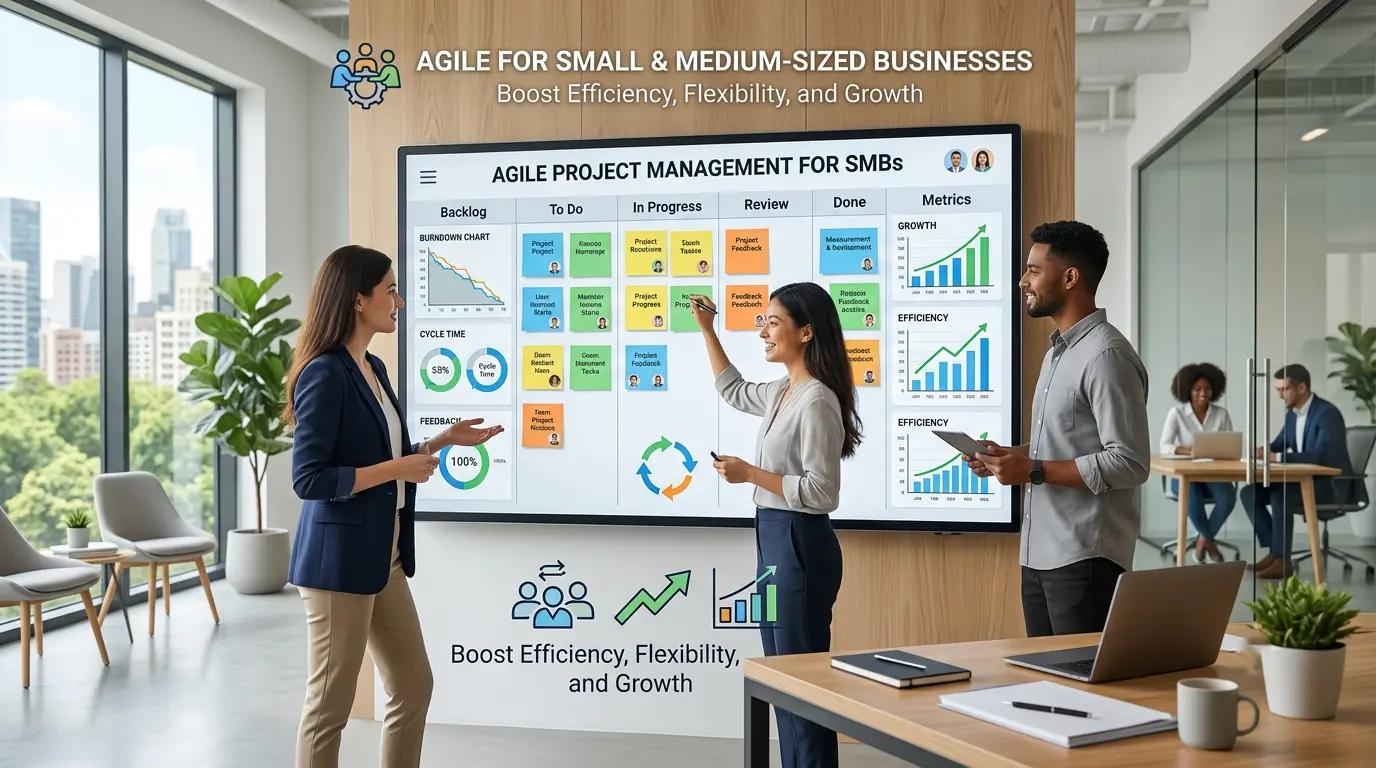
Benefits of Agile Project Management for Small and Medium-Sized Businesses
saketpratapsinghdm2026-09-28T10:12:30+05:30September 28th, 2026|

Work Breakdown Structure (WBS): The Complete PMP Guide, With a Worked Example
saketpratapsinghdm2026-09-21T16:48:15+05:30September 21st, 2026|
Stakeholder Management and RACI: The Complete PMP Guide (With a Worked Example)
saketpratapsinghdm2026-09-21T15:07:42+05:30September 21st, 2026|