Modular Prompting in Practice: Better AI Results for Project Managers
Modular Prompting in Practice: Better AI Results for Project Managers
Many project professionals waste countless hours hunting for the “perfect” AI prompt template. They scour forums and LinkedIn posts, searching for a magic combination of words that will instantly generate a flawless risk register, draft the perfect stakeholder update, or build a bulletproof project schedule.
But the reality of working with Generative AI is much different. There are no magic words.
The true value of artificial intelligence in project management does not come from a one-off viral prompt. It comes from structured, reusable patterns. By adopting a Modular Prompting framework, project managers can stop guessing and start building reliable AI interactions that scale across their entire team.
As the industry shifts, knowing how to communicate with AI is no longer a bonus skill. It is a baseline requirement. Here is exactly how to move beyond basic ChatGPT questions and start engineering prompts like a true project leader.
The End of the “Magic Prompt” Trap
Templates are a trap. When professionals rely on static templates, they often spend more time trying to force a generic prompt to fit their specific project constraints than they would actually thinking through the problem themselves.
Why do templates fail? Because Generative AI is probabilistic, not deterministic. It predicts the next most logical word based on the data it has been fed. If a user feeds it generic data, it spits out generic advice.
Modular Prompting shifts the focus from rigid templates to structural logic. It treats AI exactly the way a senior project manager would treat a junior project coordinator. You would never tell a junior colleague, “Write a project plan,” and walk away. You would give them the background, define their role, set the parameters, and dictate the format. AI requires the exact same level of disciplined instruction.
Deep Dive: Want to understand exactly which platforms you should be using to test these frameworks? Read our breakdown of the Top Eight AI Tools That Every Project Manager Has To Know In 2026.
The Core Building Blocks of Modular Prompting
To stop generating fluff and start generating actual project deliverables, prompts must be broken down into specific “bricks.” When assembled correctly, these bricks form a command that leaves zero room for the AI to guess or hallucinate.
1. The “Role” Brick
Never let the AI decide its own persona. You must assign it a specific perspective. A prompt that starts with “Act as a strict, compliance-focused procurement manager” will yield vastly different results than one starting with “Act as an empathetic Agile coach.” The role sets the tone, vocabulary, and baseline assumptions for the output.
2. The “Context” Brick
This is where most project managers fail. They ask the AI to solve a problem without providing the constraints. The Context Brick must include the reality of your project: industry, team size, budget constraints, current roadblocks, and historical data. Without context, the AI will default to textbook theory. With context, it provides actionable strategy.
3. The “Task” Brick
What exactly needs to be done? The task must be an active verb. Do not say “Help me with risk.” Say, “Identify five potential scope creep risks based on the provided requirements document and suggest two mitigation strategies for each.”
4. The “Output Format” Brick
AI loves to write long, sweeping paragraphs. In project management, nobody reads long paragraphs. You must dictate the exact structure of the response. Tell the system to output a three-column table, a bulleted executive summary, or a specific comma-separated data set.
Related Read: Structuring your AI outputs is a lot like structuring your own study habits. You need a system that works. Discover How to Create a PMP Study Plan That Will Actually Get You to Pass!
Building a Reusable “Brick Library”
The biggest productivity gain in Modular Prompting comes from reusing context.
Writing out the nuances of a complex software integration every single time you open an AI chat is exhausting. Instead, project managers should build a “Brick Library.” This is simply a dedicated document (like a Word doc or Notion page) where the most effective prompt components are saved.
For example, a project manager can write a comprehensive project background—including objectives, key stakeholders, constraints, and assumptions. They save this paragraph as their “Project X Context Brick.”
Next week, when they need to draft an urgent meeting agenda, they do not start from scratch. They simply copy the pre-written Context Brick and add a new Task Brick. The AI is instantly grounded in the reality of the project. The goal is not to build a complex, 500-word prompt from scratch every single day, but to assemble reliable building blocks in seconds.
Trust, but Verify: Beating AI Hallucinations
A perfectly structured prompt is not a guarantee of absolute accuracy.
AI hallucinations—where the system generates highly confident but completely incorrect data, fake citations, or nonexistent project management frameworks—are the biggest risk to any timeline. Detecting them requires professional skepticism and deep domain expertise.
Modular Prompting inherently reduces hallucinations because it grounds the AI in heavy context. However, project managers must enforce an additional safeguard: The Human-in-the-Loop principle.
Treat the first response as a rough draft. Add a hard constraint to the prompt itself: “If you are missing information to answer this accurately, list what is missing. Do not guess.” Furthermore, ask the AI to explicitly cite the materials it used to generate the answer.
If the output involves a high-stakes decision, it must be cross-checked against the actual project documentation. Think of it as auditing the AI.
Sharpen Your Skills: Understanding how to audit a process is critical, whether it is an AI output or a project risk. Learn the difference in our guide on Risk Audit vs Risk Review PMP: A Professional Guide to Clearing the Confusion.
Prompting as a Team Sport: The Ensemble Approach
As AI adoption grows, prompting is shifting from a solo activity to a shared team practice. When an entire PMO establishes a shared set of prompt bricks, they create a single source of truth. This prevents team members from generating wildly conflicting AI outputs based on different personal prompting styles.
For critical, high-stakes project decisions, a single AI model might have blind spots. In the AI field, researchers use an “ensemble approach.” A project manager can feed the exact same structured prompt into multiple models—like ChatGPT, Claude, and Gemini.
By comparing the diverse outputs, it becomes exponentially easier to spot outliers, hidden assumptions, and hallucinations. It acts as an automated peer-review system.
Team Alignment: Getting your team on the same page with AI usage requires excellent communication. Brush up on your leadership skills with Mastering Collaboration Within a Team.
Responsible Usage in Corporate Environments
Efficiency cannot come at the expense of corporate security. As Modular Prompting becomes standard practice, strict data hygiene is mandatory. AI tools are hungry for data, and project managers must ensure they are not inadvertently feeding confidential company information into public training models.
Avoid Public Tools for IP
Never paste confidential client data, financial forecasts, or proprietary code into public, consumer-facing AI models. Project managers must only use enterprise-approved AI environments where data is shielded by commercial privacy agreements.
Smart Anonymization
If an enterprise tool is unavailable, project managers can still use AI by stripping out identifiers. Mask company names, replace exact financial figures with percentages, and remove employee names. You can preserve the core structure and dependencies of the problem without exposing sensitive data.
Full Transparency
If an AI assisted in drafting a major communication, a baseline analysis, or a risk assessment, disclose it. Human verification remains essential, especially when sheer volume hides subtle errors. Never pass off unedited AI generation as finished human analysis.
Avoid Costly Errors: Misusing tools is a fast track to project failure. Ensure you are sidestepping common pitfalls by reading Five Mistakes Which Has To Be Avoided By Every Project Manager.
The Future: From Prompts to Agents
Artificial intelligence is fundamentally reshaping project management. It mitigates human biases in decision-making and allows leaders to tailor communication to highly specific stakeholder preferences instantly.
The Modular Prompting logic developed today will serve as the foundational instructions for the autonomous AI agents of tomorrow. Mastering this structural logic now prepares project managers to lead in an environment where routine administrative decisions are automated, leaving the human leader to focus entirely on strategy, negotiation, and team dynamics.
Structure beats tricks. Define the task, equip the AI with context, shape the output, and refine iteratively. By treating AI as a collaborative partner rather than a search engine, project managers can unlock unprecedented efficiency and accuracy.
Keep advancing in your PMP journey — explore our other in-depth guides
- PMP Exam Updates in 2026: What is Actually Altering with the PMBOK® Guide – 8th Edition | ShriLearning
- The PMP Formulas Cheat Sheet 2026: The Only Math You Actually Need
- The 5 Scrum Events Explained: Purpose, Attendees, and Effective Execution
- Why PMP Aspirants Fail? – And How to Avoid Them
- Why You Should Track Your Errors — and How to Do It Right
Your first project is calling—will you answer? Join the ShriLearning Community Connect with fellow PMP aspirants and expert instructors. Crete your study plan for free from ShriLearning study-plan-generator.
FAQs
More for you

How to Use AI in Project Management: 10 Practical Workflows
saketpratapsinghdm2026-10-24T15:48:41+05:30October 24th, 2026|
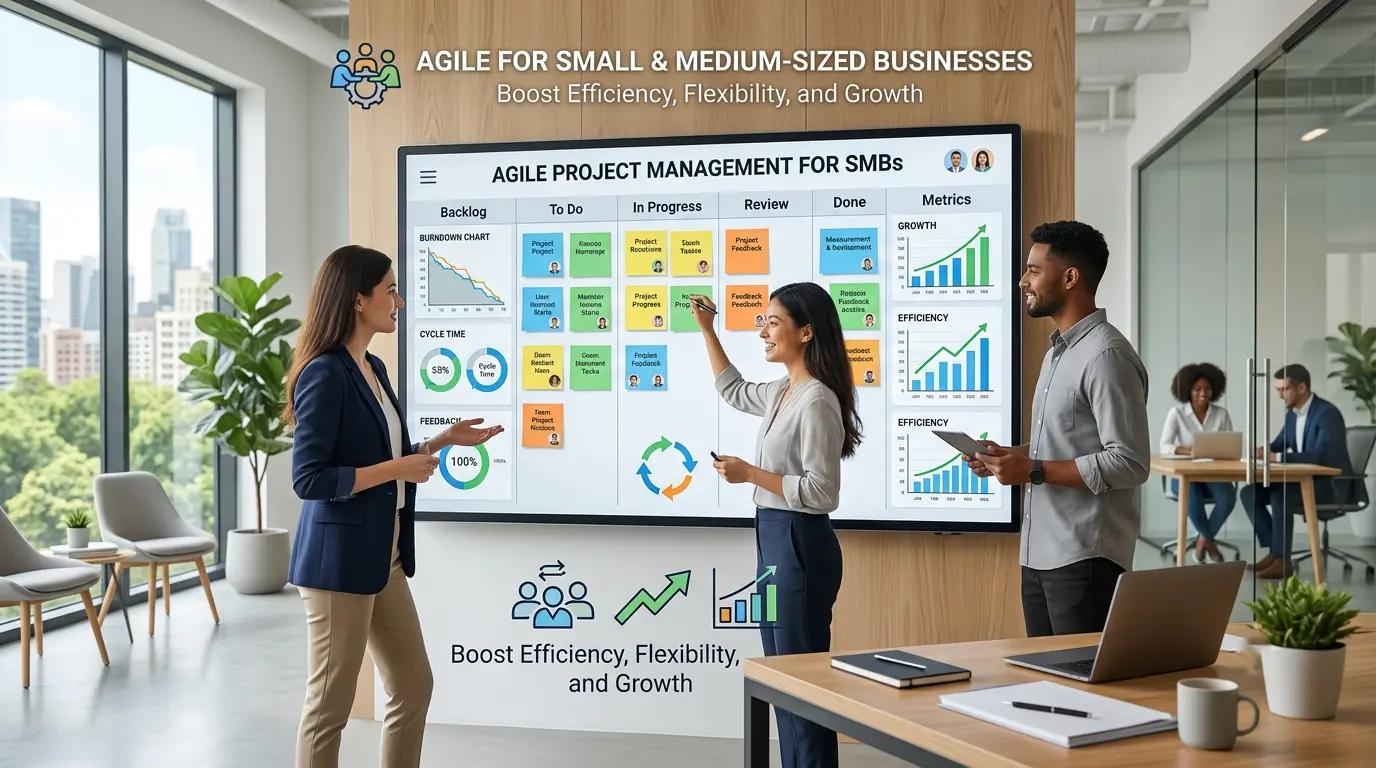
Benefits of Agile Project Management for Small and Medium-Sized Businesses
saketpratapsinghdm2026-09-28T10:12:30+05:30September 28th, 2026|

Work Breakdown Structure (WBS): The Complete PMP Guide, With a Worked Example
saketpratapsinghdm2026-09-21T16:48:15+05:30September 21st, 2026|
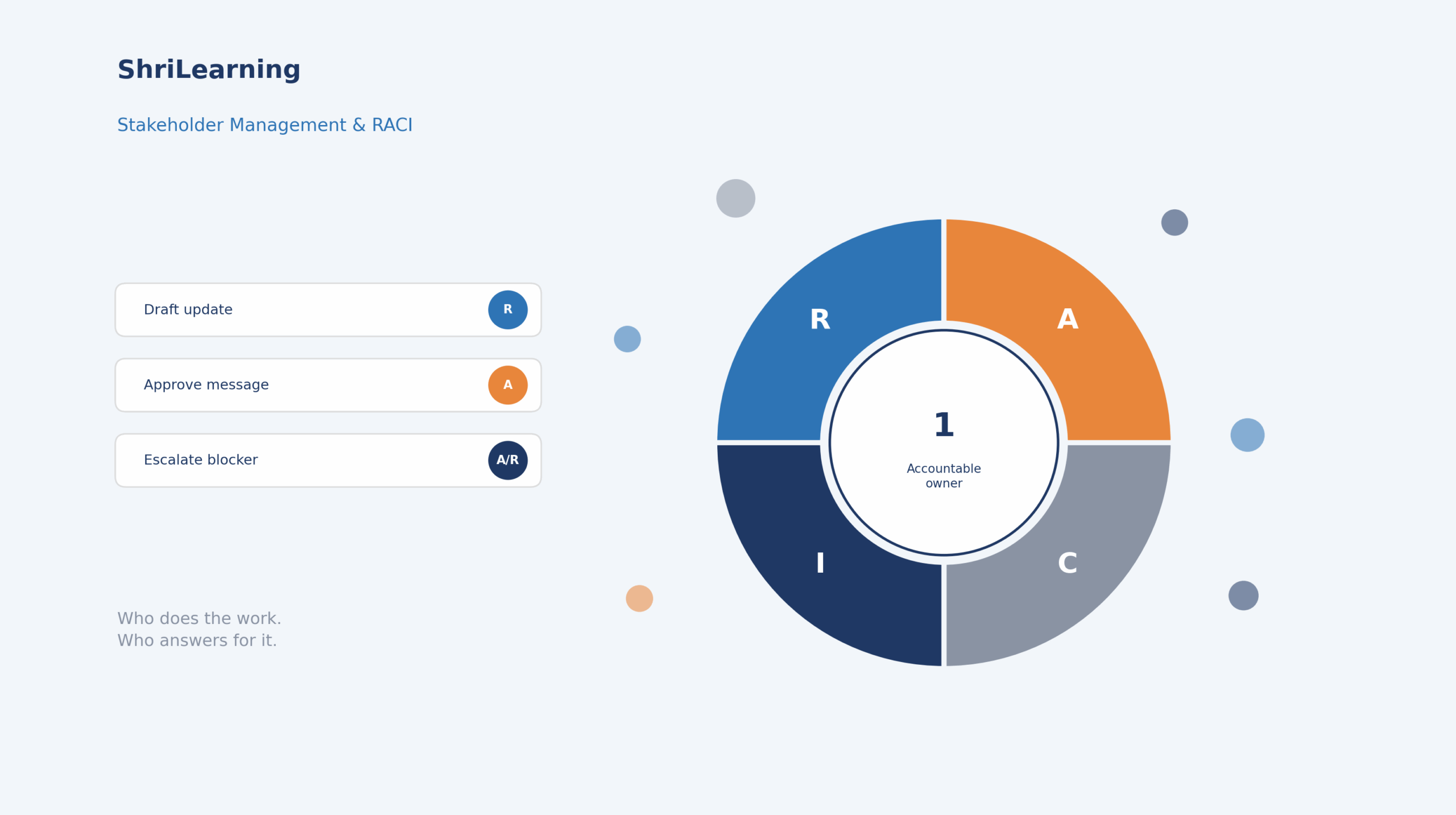
Stakeholder Management and RACI: The Complete PMP Guide (With a Worked Example)
saketpratapsinghdm2026-09-21T15:07:42+05:30September 21st, 2026|
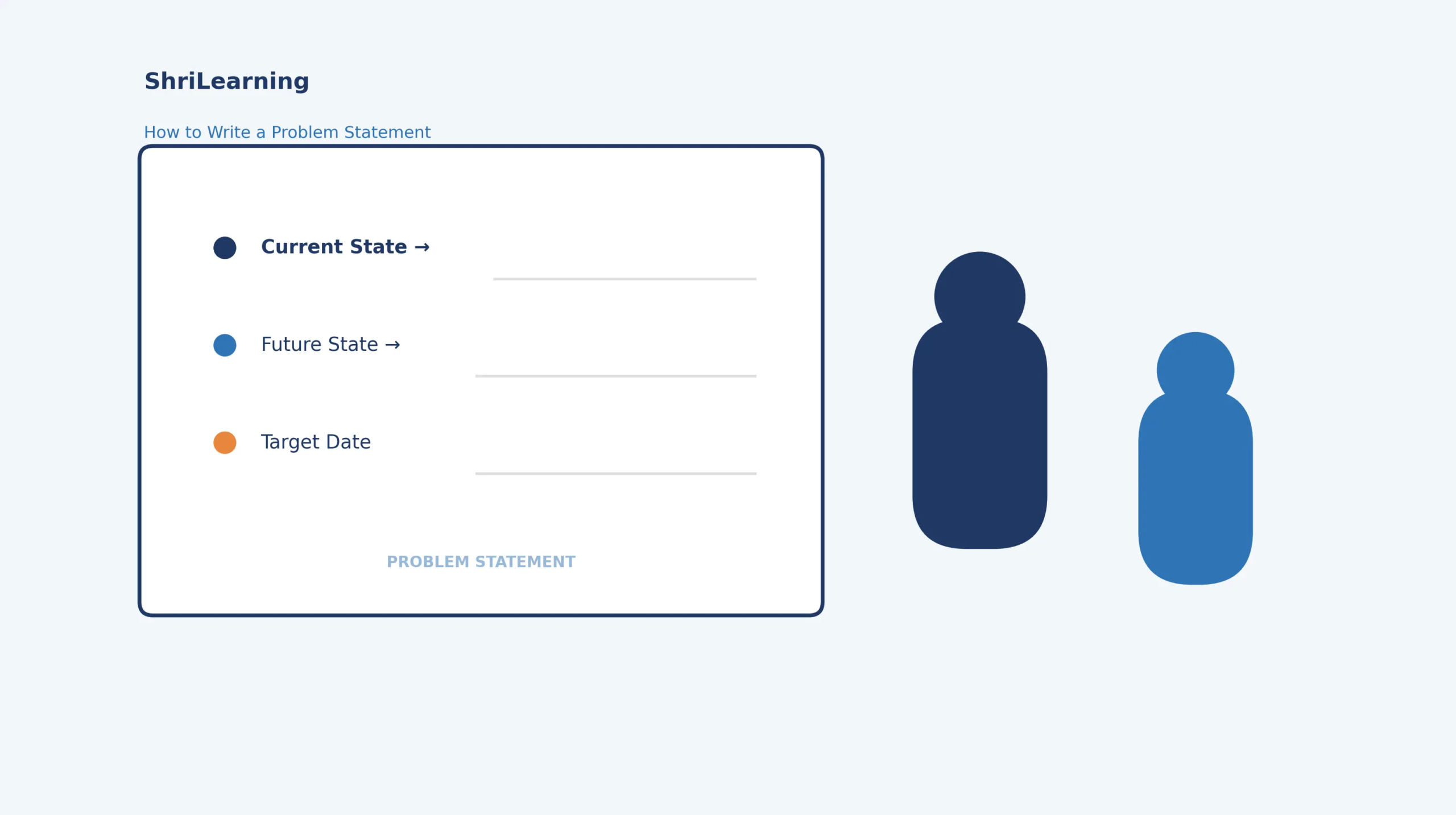
How to Write a Problem Statement (With a PMP-Ready Template and Examples)
saketpratapsinghdm2026-09-21T14:42:27+05:30September 21st, 2026|

Earned Value Management: How to Actually Read CPI and SPI (Not Just Calculate Them)
saketpratapsinghdm2026-09-17T15:32:44+05:30September 17th, 2026|

Agile Practice Guide – Second Edition: What Changed, and What It Means for Your PMI-ACP Prep
saketpratapsinghdm2026-09-17T14:45:53+05:30September 17th, 2026|

Why the PMP People Domain Dropped to 33% (And How to Master It in 2026)
saketpratapsinghdm2026-08-27T21:18:31+05:30August 27th, 2026|