AI Agents in the Field of Project Management: A Complete Guide to Helpful Use Cases
AI Agents in the Field of Project Management: A Complete Guide to Helpful Use Cases
AI agents for project management automate routine coordination activities, allowing project leaders to dedicate significantly more time to high-level planning, strategy, and decision-making.
Have projects become more difficult to manage as your teams, tools, and requirements continue to grow? Are your current toolsets actually capable of keeping pace with this increasing organizational complexity?
Maintaining alignment, visibility, and progress across an enterprise should be straightforward. Yet, the reality is that many project teams still struggle daily with manual updates, fragmented information across different platforms, and the massive manual effort required to generate meaningful performance insights.
This is exactly where AI agents are beginning to fundamentally reshape the project management industry. These intelligent assistants can completely automate repetitive coordination tasks, identify potential risks through deep data analysis, and keep project documentation up to date with almost zero manual effort.
By drastically reducing the administrative workload, AI agents enable teams to spend their time on strategic thinking, innovation, and problem-solving—the very activities that create the greatest long-term value for projects and organizations.
Although the market currently offers a rapidly growing number of AI-powered solutions, understanding exactly how AI agents fit into your specific project workflows is becoming increasingly critical. This comprehensive guide examines how these systems can be effectively integrated into your environment and outlines the key considerations you need to maximize their potential.
Table of Contents
- What Exactly Are AI Agents? (Beyond Basic Automation)
- How AI Agents Support Continuous Project Management
- Improving Daily Workflows as Digital Collaborators
- Executing Actions with Human Accountability and Boundaries
- How to Successfully Implement AI Agents (5-Step Framework)
- The Future of Agentic AI in Project Management
1. What Exactly Are AI Agents? (Beyond Basic Automation)
AI agents are intelligent systems designed to observe their environment, evaluate available information, make decisions, and perform actions to achieve specific objectives.
To understand their true value, you must understand how they differ from the conventional software tools you are likely already using.
Traditional automation relies entirely on fixed rules and predefined instructions. For example, if a specific event occurs, the system performs a predetermined action (like a simple “if/then” trigger). Similarly, standard AI chatbots primarily respond to direct user prompts and generally do not gain knowledge from your interactions or take independent decisions in the background.
AI agents offer vastly more advanced capabilities. They can independently examine project information, recognize historical trends, learn from previous outcomes, and adjust their responses over time.
When project challenges arise, an AI agent is able to evaluate your historical data and recommend required solutions based on approaches that have proven successful in comparable situations in the past. These systems operate with a degree of autonomy that extends far beyond traditional automation tools, while still functioning strictly within the rules, permissions, and governance structures established by your organization.
For project management teams, the benefits of agentic AI are both practical and immediate. By reducing manual effort, improving decision support, and continuously monitoring project conditions, AI agents help organizations manage projects more efficiently and respond much more effectively to changing circumstances.
2. How AI Agents Support Continuous Project Management
AI agents operate through a continuous, unbroken cycle of collecting information, interpreting it, and responding appropriately.
They actively gather data from your project management platforms, collaboration tools, documentation systems, software repositories, and communication channels to maintain an up-to-date, real-time view of project activities and team performance.
Their greatest operational strength lies in their ability to analyze information intelligently. By examining massive amounts of project data, AI agents can identify recurring trends, detect potential bottlenecks, and highlight issues long before they negatively affect your project outcomes. As they process more information over time, their underlying machine learning models become increasingly accurate and better aligned with your team’s specific working patterns.
For project managers, AI agents act as an early warning system. They provide proactive recommendations, suggest corrective actions, and automate routine responses. For example, they may identify projects at risk of delay, highlight high-priority issues, or automatically group related tasks together to simplify your planning and prioritization.
Furthermore, when project objectives, priorities, or Agile processes suddenly change, AI agents can quickly adjust their analysis and support activities. This adaptability makes them especially valuable for organizations operating in dynamic environments where requirements, workloads, and priorities frequently shift.
3. Improving Daily Workflows as Digital Collaborators
AI agents integrate directly into your established project management processes as intelligent support systems that assist with planning, execution, monitoring, and project delivery. Their purpose is to enhance the capabilities of project teams, rather than replace human involvement.
The most successful implementations view AI agents as digital collaborators with specialized expertise.
Simplifying Daily Project Activities AI agents help project managers reduce the time spent on repetitive administrative tasks that often consume a massive portion of the workweek. They can monitor action items across meetings, discussions, and communication channels, ensuring that important follow-ups are never overlooked.
These systems can interpret information and context directly from platforms such as Jira, Confluence, Loom, and other collaboration tools. During sprint planning sessions, an AI agent can identify related tasks, provide concise summaries of complex tickets, and surface historical decisions that may influence your current planning activities.
When preparing project status updates, the agent can automatically gather the relevant performance metrics, organize the information, and present it in a standardized format for your stakeholders.
Watch It In Action: Want to see exactly how to set up AI tools that handle your administrative reporting and workflow automation while you sleep? Check out our exclusive masterclass on the ShriLearning YouTube channel.
Reducing Time Spent on Repetitive Administration Instead of spending a considerable amount of time each morning reviewing overnight project updates, categorizing new issues, and organizing work items, project managers can rely on an AI agent to perform the initial analysis. The project manager then only needs to review the agent’s recommendations, address exceptional cases, and make the final decisions where human judgment is actually required.
The time saved through this level of automation can be redirected toward higher-value activities. Project managers can use this additional capacity to optimize delivery approaches, improve team collaboration processes, coordinate with the PMO, and manage complex inter-project dependencies.
4. Executing Actions with Human Accountability and Boundaries
A common hesitation regarding AI agents is the fear of losing control over the project. However, AI agents function according to predefined goals, policies, permissions, and operational guidelines established by your team or the organization.
These controls help ensure that their actions remain completely predictable, consistent, and aligned with project requirements and governance standards.
For instance, an organization may configure an AI agent to assist with backlog management while strictly preventing it from modifying high-priority items without explicit approval from a project manager or product owner. Similarly, an agent can be authorized to recommend schedule modifications based on resource availability, while leaving the final decisions entirely to human stakeholders.
The Human-in-the-Loop Review Process Organizations can require project managers to review and approve any recommended changes before they are implemented or communicated to the wider project team. This approval process helps maintain accountability while ensuring that important decisions remain under human control.
While AI agents can carry out a variety of actions—including creating Jira issues, updating project records, modifying predefined fields, and organizing Confluence documentation—significant actions are configured to require authorization.
Most AI agent platforms also offer total transparency through detailed audit trails and activity records. Project managers can review actions taken by the agent, reverse changes when necessary, and refine permissions over time as trust in the system grows. This gradual approach helps organizations adopt AI responsibly while minimizing operational risks.
5. How to Successfully Implement AI Agents (5-Step Framework)
Before introducing AI agents into your project workflows, you must conduct an honest assessment of your current project management practices and data quality. Teams with well-defined workflows achieve faster and more meaningful results.
AI agents enhance existing practices rather than correcting fundamentally ineffective processes. If your documentation is incomplete or your project data is highly inconsistent, AI systems may simply reinforce those existing challenges.
Once your foundation is solid, follow this practical 5-step framework for successful adoption:
- Step 1: Begin with Targeted Pilot Use Cases Start by identifying one or two areas where AI agents can deliver meaningful value with minimal risk. Suitable initial use cases often include automated status reporting, risk flagging, or backlog grooming. Pilot programs should run long enough to generate useful insights and measurable results.
- Step 2: Choose Tools That Suit Your Ecosystem Select AI tools that work seamlessly with the platforms already used by your teams. For organizations relying heavily on tools like Confluence and Jira, native AI tools such as Rovo can simplify adoption and reduce implementation complexity. Avoid introducing unnecessary tool duplication.
- Step 3: Establish Clear Objectives, Permissions, and Metrics Define the agent’s responsibilities, expected outcomes, and operational limits before deployment. Determine exactly which activities can be performed autonomously and which require human review. Establish measurable success indicators such as time savings, reporting accuracy, or reduced administrative effort.
- Step 4: Support Adoption Through Training and Change Management Successful implementation depends on people as much as technology. Team members should clearly understand how AI agents function and how to work effectively alongside them. Training, communication, and ongoing support are essential for encouraging adoption and building team trust.
- Step 5: Optimize Continuously AI agents should be treated as evolving systems rather than one-time deployments. Organizations should regularly review performance, collect user feedback, and refine configurations based on actual project outcomes to ensure they remain aligned with changing business needs.
6. The Future of Agentic AI in Project Management
The role of AI agents in project management continues to evolve rapidly, and their full potential is still being discovered. Many organizations are only just beginning to explore how these intelligent systems can support execution and decision-making.
As AI technology advances, agents are expected to become increasingly capable of handling complex tasks, providing deeper insights, and supporting project teams with even greater autonomy.
For project managers, this means the focus will increasingly shift away from task management and toward strategic leadership, stakeholder engagement, governance, and high-level decision-making.
Although this transformation will occur gradually, the trend is undeniable. Organizations that begin experimenting with AI agents today will be significantly better positioned to understand their capabilities, develop best practices, and benefit from massive future advancements. The key is to approach AI adoption with curiosity and a willingness to adapt.
Are you ready to stop acting as a human administrator and start leading like a strategic executive? Join the ShriLearning Mentorship Program today, and master the frameworks required to lead AI-native project teams.
Keep advancing in your PMP journey — explore our other in-depth guides
- 2026 PMP Exam Changes: The “Practicum” Revolution & Why 4 Hours Changes Everything
- The 5 Scrum Events Explained: Purpose, Attendees, and Effective Execution
- Why PMP Aspirants Fail? – And How to Avoid Them
- Why You Should Track Your Errors — and How to Do It Right
Your first project is calling—will you answer? Join the ShriLearning Community Connect with fellow PMP aspirants and expert instructors. Crete your study plan for free from ShriLearning study-plan-generator.
FAQs
More for you
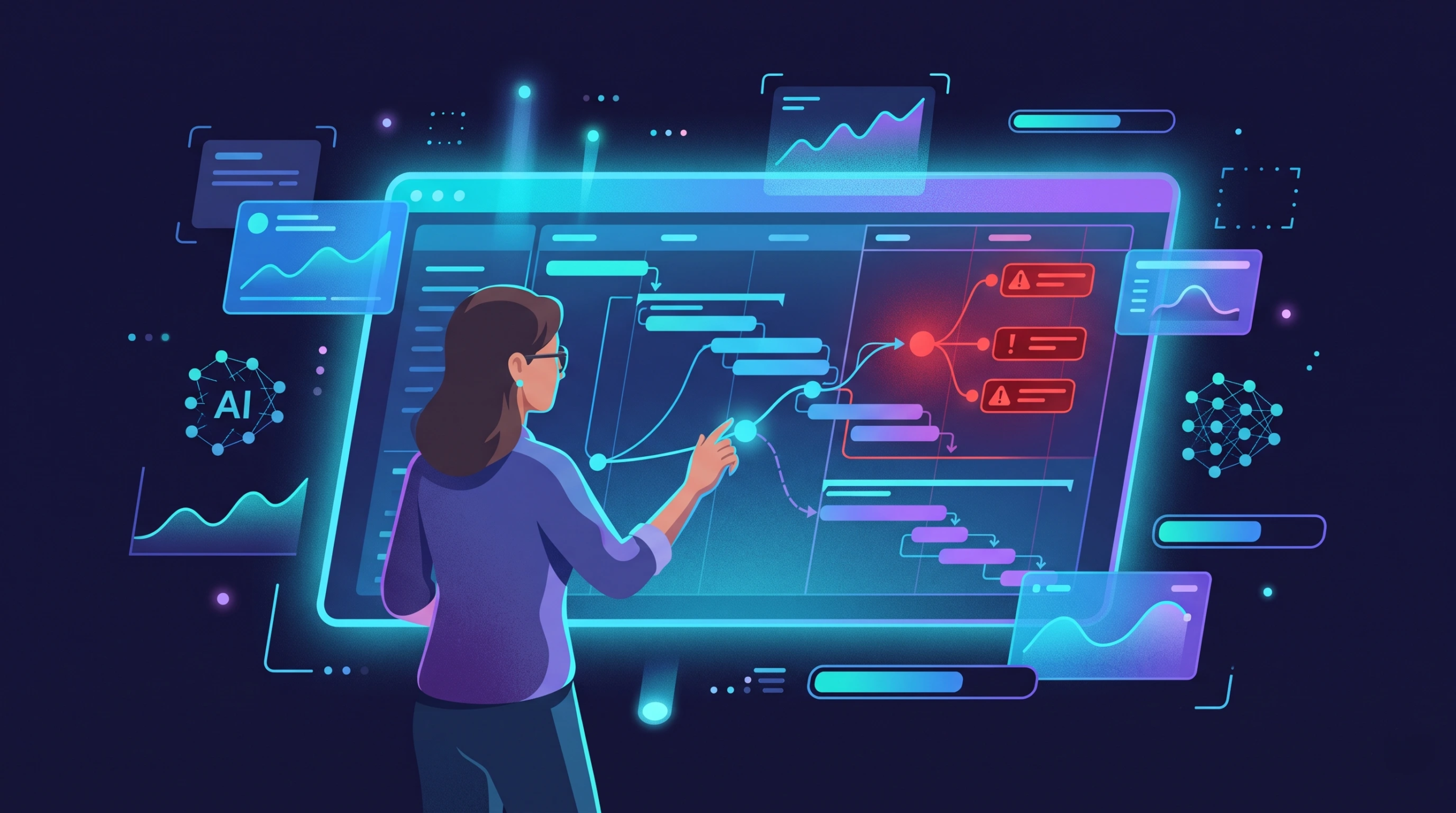
How to Use AI in Project Management: 10 Practical Workflows
saketpratapsinghdm2026-10-24T15:48:41+05:30October 24th, 2026|
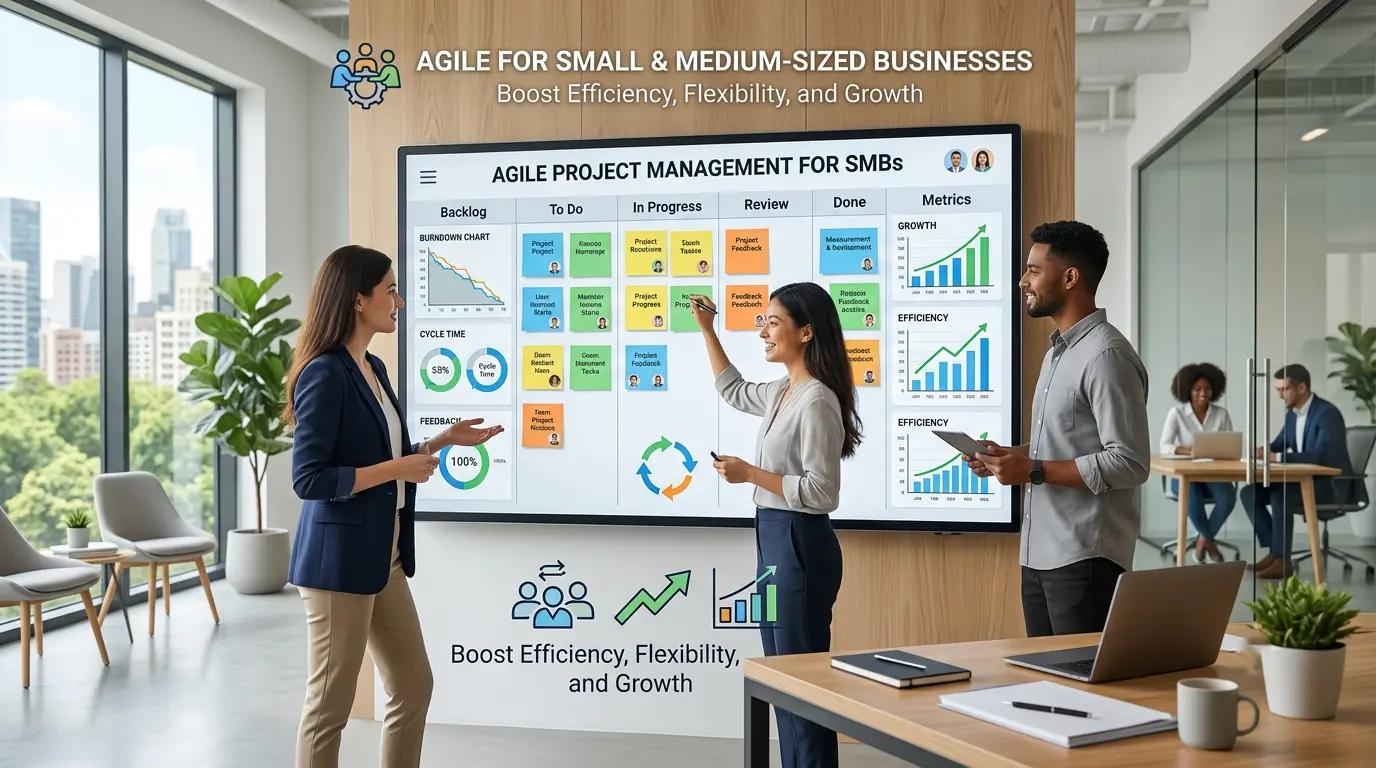
Benefits of Agile Project Management for Small and Medium-Sized Businesses
saketpratapsinghdm2026-09-28T10:12:30+05:30September 28th, 2026|

Work Breakdown Structure (WBS): The Complete PMP Guide, With a Worked Example
saketpratapsinghdm2026-09-21T16:48:15+05:30September 21st, 2026|
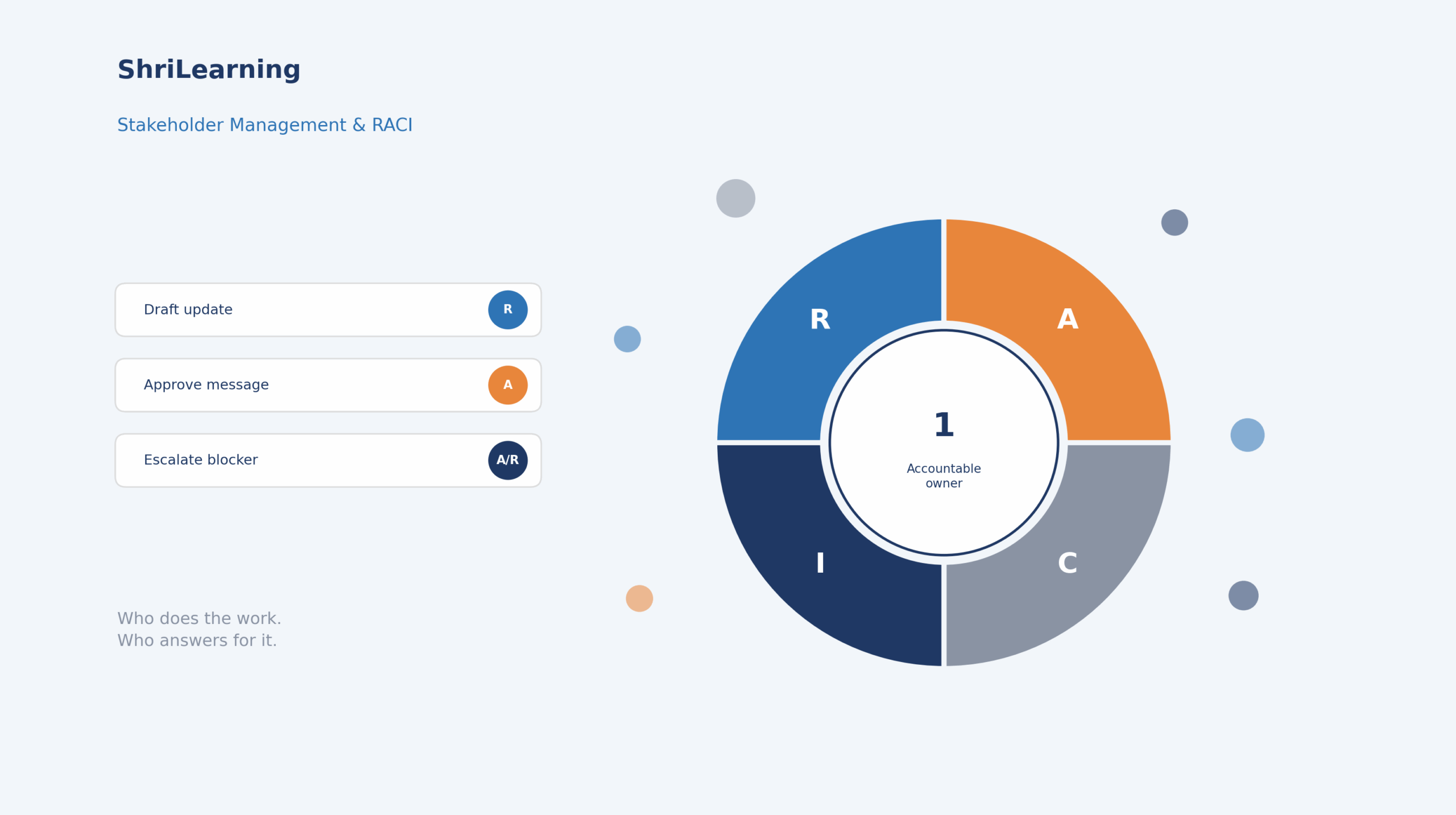
Stakeholder Management and RACI: The Complete PMP Guide (With a Worked Example)
saketpratapsinghdm2026-09-21T15:07:42+05:30September 21st, 2026|
How to Write a Problem Statement (With a PMP-Ready Template and Examples)
saketpratapsinghdm2026-09-21T14:42:27+05:30September 21st, 2026|

Earned Value Management: How to Actually Read CPI and SPI (Not Just Calculate Them)
saketpratapsinghdm2026-09-17T15:32:44+05:30September 17th, 2026|

Agile Practice Guide – Second Edition: What Changed, and What It Means for Your PMI-ACP Prep
saketpratapsinghdm2026-09-17T14:45:53+05:30September 17th, 2026|

Why the PMP People Domain Dropped to 33% (And How to Master It in 2026)
saketpratapsinghdm2026-08-27T21:18:31+05:30August 27th, 2026|